

Keeping a drip system tidy is usually less about fancy parts and more about getting the right connectors and emitters in the right places. You want steady flow, tubing that stays put, and parts that fit your yard, pots, raised beds, or repair project without constant fiddling.
This roundup focuses on those everyday use cases. Some options suit a simple faucet-to-tubing setup, while others make more sense for container rows, shrubs, mixed beds, or a patchy line that needs repair work.
The Shortlist At A Glance

Rain Bird FCKIT-1PK Faucet Connection Kit

MIXC 60pcs Quick-Connect Drip Irrigation Emitters

60pcs Drip Irrigation Emitters and Drippers

Topiverse Circle Spray Drip Irrigation Emitters

Mudder 60 Pcs Flag Drip Emitters
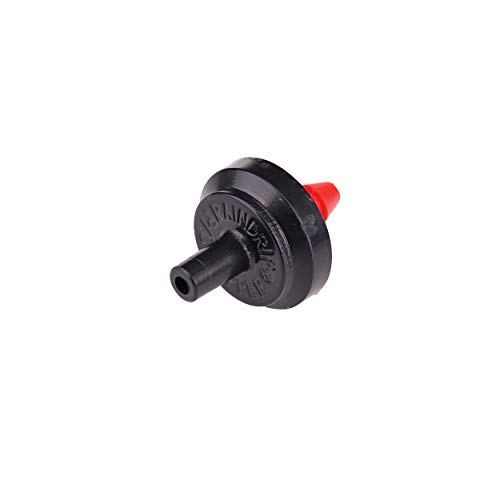
Raindrip PC2010B 1/2 GPH Pressure Compensating Drippers

One Stop Outdoor 50-Pack Pressure Compensating Drip Emitters

50 pcs Drip Irrigation Emitters for 1/4″ Tubing

Rain Bird DRIPKITBAG Drip Irrigation Repair Kit
More Details On Our Top Picks
Starting a drip line from a faucet usually turns messy fast, and this kit is built to keep that first step orderly. The pressure regulator helps reduce incoming water pressure, while the filter helps trap debris before it reaches 1/2-inch tubing. For a patio row or a beginner setup, that combination saves a lot of fiddling at the tap.
The honest read is that this is a connection piece, not a full irrigation system. You still need compatible tubing and emitters downstream, so the payoff is strongest for anyone assembling or refreshing a simple layout. Compared with the more emitter-focused options below, it plays the role of the doorway, not the whole house.
Strong Points
- Regulates pressure at the faucet, which helps reduce stress on a simple drip line.
- Built for 1/2-inch tubing, so it suits many starter garden layouts.
- The filter adds a useful layer before water reaches small passages and emitters.
- Good fit for quick system starts in beds, borders, or container runs.
Things To Consider
- It’s a connection kit, so you still need the rest of the line and emitters.
- Best results depend on matching the rest of your system to 1/2-inch tubing.
- Filter upkeep matters, since debris can build up over time in outdoor water lines.
Feature Snapshot
Who It Suits Best
You benefit most here if you’re starting a faucet-fed drip layout and want a tidy, uncomplicated connection point.
A Better Fit Elsewhere
MIXC 60pcs Quick-Connect Drip Irrigation Emitters suits you better if the main need is fast emitter swapping in a small garden run.
The quick-connect angle matters here, because swapping small parts on a cramped line can be awkward. These emitters are made for 1/4-inch tubing and use a push-to-connect style, which makes layout changes feel less tedious in a busy garden bed. The 5.5-inch stake also gives the head a more stable perch than a loose insert sitting near the soil surface.
You may find this especially helpful around mixed plantings where one zone gets moved around often. Compared with Rain Bird’s faucet kit, this is about the business end of watering, not the supply end. The trade-off is that quick-connect convenience is most useful in systems that already follow the same tubing size.
What We Like
- Push-to-connect design makes setup changes less fussy.
- Works with 1/4-inch tubing, a common size for branch lines.
- The 5.5-inch stake helps keep each emitter upright in soil.
- 360-degree output suits clustered plants and circular coverage needs.
- Useful for gardeners who adjust plant spacing through the season.
Points To Note
- Quick-connect parts depend on a clean fit, so tubing ends need to be cut neatly.
- More moving pieces can mean a little more attention during maintenance.
- Stake placement matters in loose soil, since shallow insert depth can affect stability.
Core Details
Who Should Grab It
You’re in the sweet spot here if you want flexible emitters for potted herbs, bed edges, or changing plant rows.
Another Choice May Suit
Topiverse Drip Irrigation Emitters fits better for gardeners who want adjustable flow numbers and a wider spray pattern.
This set leans into general-purpose flexibility, which is useful in a yard that mixes flowers, small shrubs, and container plants. The 360-degree output gives you more spread around the base of each plant, so the water lands in a broader circle rather than a single line. That makes it easier to cover a bed with uneven spacing.
Compared with MIXC’s quick-connect approach, this one feels more like a straightforward parts set for a standard 1/4-inch line. The honest trade-off is that you get breadth more than a fancy attachment system, so it’s better for simple builds than frequent reconfiguration. For everyday home watering, that’s often enough.
Bright Spots
- 60-piece pack gives you plenty of spares for multiple zones.
- Adjustable emitters help you tune coverage for different plants.
- 360-degree spray behavior works well around wider plant bases.
- Fits 1/4-inch tubing, which keeps it useful in common home layouts.
Small Caveats
- Adjustment can take a bit of trial and repeat checking in uneven soil.
- It’s geared toward simple branch lines, not a more elaborate supply setup.
- Small parts are easier to misplace during seasonal storage or line repairs.
Quick Facts
Built With In Mind
You’ll get the most from this set in a home garden that needs simple, adjustable coverage without much hardware drama.
Where A Sibling Pick Shines
Raindrip PC2010B 1/2 GPH Pressure Compensating Drippers suits you better when steady output matters more than broad spray behavior.
Circle spray heads like these make sense for beds that need a wider watering footprint without a complicated manifold. The adjustable flow range from 0 to 20 GPH gives you room to dial in output, and the 30 PSI maximum keeps the setup in a defined operating range. For patios and mixed planting zones, that kind of control is handy.
Compared with the simpler 360-degree emitters above, this one adds a clearer sense of tuning, which is useful when plant sizes are uneven. The catch is that more adjustability means more attention during setup, especially in a line that already has variable pressure. Still, for someone who likes shaping coverage by plant type, it’s a solid fit.
Upsides
- Adjustable flow range gives you more control over delivery.
- Circle spray pattern helps cover a wider space around each plant.
- Works with 1/4-inch tubing, so it fits many branch lines.
- Stakes help keep the emitter positioned in the garden bed.
- Useful for patios, lawns, and beds with mixed planting needs.
Areas To Watch
- Adjustment adds a little more setup time than fixed-output emitters.
- 30 PSI maximum means you need to stay within the stated range.
- More control points can mean more cleaning attention over a season.
Spec Overview
Whose Shelf It Belongs On
You’ll like this most in a yard where one watering zone has both delicate starts and sturdier plants.
Swap It Out When
Mudder 60 Pcs Flag Drip Emitters is the better match when you want fixed flow-rate choices that are easier to sort at a glance.
Color-coded flow rates are the main draw here, and that’s useful when you’re managing trees, shrubs, and pots in one run. The 1, 2, and 4 GPH options help you separate watering needs without digging through a mixed pile of parts. In a backyard with several plant types, that kind of sorting saves time.
Compared with Topiverse’s adjustable heads, this set leans more toward clear selection than on-the-fly tuning. The trade-off is less flexibility per emitter, but the upside is simpler planning and easier replacement later on. For many home layouts, that balance feels easier to live with.
Best Bits
- Three flow-rate choices make plant matching more straightforward.
- Color coding helps you spot the right emitter quickly.
- Works well for trees, shrubs, and pots in the same yard.
- 60-piece count gives you enough parts for a broad layout.
Worth Noting
- Fixed rates mean less fine-tuning than adjustable emitters.
- Sorting and storing small color-coded parts takes a little organization.
- Best results depend on keeping the chosen flow rate aligned with plant needs.
Details At A Glance
Perfect Match For
You’re a strong fit for this set if you want straightforward emitter choices for a yard with several plant categories.
Look Elsewhere When
Topiverse Drip Irrigation Emitters suits you better when one zone needs more adjustable coverage than fixed-rate flags can offer.
Pressure compensating drippers are built for steadier output across a line, which matters in longer runs or uneven terrain. “Pressure compensating” means the emitter is designed to reduce the effect of changing pressure on flow, so plants farther away are less likely to get noticeably different delivery. That makes this 10-pack especially useful in a line where consistency matters more than a wide spray pattern.
Compared with the more adjustable sets earlier in the list, this one feels more disciplined and less decorative. The 1/2 GPH rate suits slower, more deliberate watering, which is useful for small plants or systems that need a measured pace. For tidy, repeatable watering, it does the job without extra fuss.
Highlights
- Pressure compensation helps keep flow steadier along the line.
- 1/2 GPH is a good slow-feed rate for delicate plant setups.
- Small 10-pack works well for targeted zones or line repairs.
- Simple red body makes part identification easier during installation.
Room For Improvement
- Ten pieces may feel modest for a larger planting layout.
- Fixed flow gives you less freedom than adjustable emitter styles.
- Slow output suits careful watering, but it’s not built for fast coverage.
Technical Sheet
Best Suited To
You’ll get the most from these in a tidy garden line where steady output matters more than wide-area spray.
Reach For A Different Pick When
One Stop Outdoor 50-Pack Pressure Compensating Drip Emitters is the better match for a larger setup that needs more pieces in reserve.
Forty-nine? No, this one is a 50-pack, which makes it a more comfortable fit for a small orchard row or a garden with several drip branches. The 1/2 gallon per hour rate gives you a middle-ground pace that works well for many common plantings, and the pressure compensating design helps keep delivery steadier across the line. That combination is practical, not flashy.
Compared with Raindrip’s smaller 10-pack, this option suits you better once the layout gets bigger or you want spare pieces on hand. The trade-off is that fixed flow leaves less room for individual tuning, so it’s a better match for consistent plant groups than mixed-demand zones. For many home systems, that’s the cleaner choice.
Reasons To Buy
- 50-pack size supports wider systems and future replacements.
- 1/2 gallon per hour offers a middle-ground delivery rate.
- Pressure compensation helps maintain steadier output across the run.
- Works well for shrub lines and other repeat plant groupings.
Softer Spots
- Fixed flow is less flexible than adjustable emitter designs.
- Bulk quantity takes a little storage discipline after setup.
- Best for consistent zones, not plantings with very different water needs.
Core Details
Made For
You’re the right fit for this set if your beds or shrub rows need a consistent, medium-slow drip across several points.
Skip It When
MIXC 60pcs Quick-Connect Drip Irrigation Emitters works better for you when frequent line changes matter more than a fixed-output pack.
Small planting pockets are exactly where compact emitters start to make sense. This set is built for 1/4-inch tubing and gives you adjustable 360-degree water flow, so the coverage can spread around the base without taking much room. In narrow beds or tightly packed pots, that low-profile shape is useful.
Compared with the larger spray and flag styles above, this one feels more discreet and easier to place in close quarters. The trade-off is that compact heads can be less forgiving in cluttered layouts if tubing routing is already crowded. Still, for small patio containers or tight rows, it’s a sensible fit.
Standout Traits
- Small footprint works well in tight planting areas.
- Adjustable 360-degree flow helps match coverage to the pot or bed.
- Fits 1/4-inch tubing, which suits common branch runs.
- 50-piece count gives you enough parts for several small zones.
Minor Gripes
- Compact parts can be easier to misplace during maintenance.
- More crowded layouts may take a little more patience to route cleanly.
- Fine adjustment works best when the tubing is already neatly arranged.
Feature Card
Who Will Love This
You’re the best match for this set if your garden space is tight and you want adjustable coverage without bulky hardware.
Where A Sibling Pick Shines
Topiverse Drip Irrigation Emitters is the better fit for you when a wider circle spray and a stated flow range matter more.
Repair kits do a different job than standalone emitters, and that’s the point here. This set is aimed at fixing weak points and extending a drip system, so it suits you when lines need patching or a small expansion is on the list. For a home system that already has a few seasons behind it, that practicality matters.
Compared with the emitter packs above, this is less about choosing one flow pattern and more about keeping the whole network usable. The trade-off is that it serves maintenance and expansion rather than focused watering on its own. If your system needs a refresh more than a new watering style, it makes sense.
Positives
- Useful for both repairs and small additions to an existing line.
- Helps keep a drip setup working without replacing everything.
- Good fit for systems that need seasonal touch-ups.
- Handy for gardeners who want one kit for multiple small fixes.
Areas To Watch
- It’s a maintenance kit, so it won’t replace emitter packs on its own.
- Best value shows up when you actually need repair parts and expansion pieces.
- System upkeep still depends on matching parts carefully to the existing line.
Core Details
Right Fit For
You fit this kit best if your current drip line needs a tune-up, patching, or a small extension.
Another Choice May Suit
Raindrip PC2010B 1/2 GPH Pressure Compensating Drippers is the better choice when you want new emitters with a defined slow-flow rate instead of repair parts.
How To Choose The Right Drip Emitters
Match Flow To Plant Size
Flow rate is the first thing to sort out, because a thirsty shrub and a small herb pot do not want the same delivery pace. Fixed rates such as 1/2 GPH or 4 GPH are easier to plan around, while adjustable emitters give you more room to fine-tune a mixed bed.
You also want to think about how long the line runs and how even the terrain is. Longer runs and uneven pressure often favor pressure compensating drippers, since they help keep the output more stable from one end to the other.
Choose The Right Coverage Pattern
Some drip emitters send water in a tight stream, while others spread it in a circle or across a wider pattern. Narrow streams suit focused watering near roots, but circle spray styles make more sense when you want coverage around a pot or the base of a larger plant.
That choice matters in real use, because crowded beds can waste water when the coverage shape is wrong. A compact head can be a clean fit in a container cluster, while a stake-mounted emitter stays easier to position in loose soil.
Check Tubing Size And Connection Style
Most home systems rely on 1/4-inch branch tubing, but some setups start from 1/2-inch main tubing at the faucet or manifold. A good fit here saves time later, since mismatched parts lead to loose connections and annoying rework.
Connection style matters too. Push-to-connect parts make changes faster, while simple insert-style parts can feel more basic but are easier to understand at a glance.
Think About Maintenance And Layout Changes
A drip system usually gets better with a little upkeep, not less. Filters collect debris, emitters can clog, and small parts are easy to lose during seasonal storage, so simpler designs often suit gardeners who want less hands-on attention.
Frequent layout changes point you toward quick-connect parts or adjustable emitters. A fixed-flow pack works better for a stable bed or shrub row that stays arranged the same way through the season.
A Quick Reality Check Before You Order
Mistakes Worth Dodging
The most common slip-up is matching the wrong emitter to the wrong plant. A high-output spray head can overwhelm a small container, while a very slow dripper can leave a larger shrub short on water.
Another easy miss is buying parts that do not match your tubing size. A few minutes with the line diameter on your existing system saves a lot of frustration once the parts arrive.
The Case For Spending Up
Higher-tier drip emitters usually cost more because they solve a more specific problem. Pressure compensation, better connectors, stakes, and tighter flow control all add convenience and help a system behave more predictably.
That extra spend makes sense in longer lines, mixed plantings, or any setup that gets adjusted often. For a simple row of similar plants, a basic fixed-rate emitter often does enough without adding clutter.
Frequently Asked Questions
What’s The Difference Between Drip Emitters And Drippers?
Drip emitters is the broader term for the parts that control water delivery at the plant. Drippers is a common way to describe the same family of parts, especially the small outlet pieces.
Are Adjustable Emitters Better Than Fixed-Flow Ones?
Adjustable emitters are helpful when your plants need different amounts of water in the same zone. Fixed-flow parts are usually simpler to manage when the whole line serves similar plants.
Why Use Pressure Compensating Drippers?
Pressure compensating drippers help keep output steadier across longer runs or uneven terrain. That makes them a smart fit for lines where the far end can otherwise behave differently from the start of the run.
What Tubing Size Do Most Home Setups Use?
Many branch lines use 1/4-inch tubing, while some system starts use 1/2-inch tubing. The right size depends on where the emitter sits in the overall line.
Do Emitter Stakes Matter?
Stakes help keep the emitter in place, which is useful in loose soil or around pots. They also make it easier to aim coverage without the part tipping or shifting around.
