Container gardening solves a familiar problem, you want fresh vegetables but don’t have open ground to spare. The right planters can turn a patio, balcony, windowsill, or sunny entryway into a useful growing spot without making care feel like a second job.
This roundup focuses on practical shapes, materials, and watering setups that fit real homes. You’ll see compact herb boxes, fabric grow bags, raised planters with trellises, and self-watering kits, each suited to a different kind of space and routine.
Quick Look At Our Top Containers
LINEX Raised Garden Bed Planter Box with Trellis
OurWarm Windowsill Herb Planter Box Indoor Set of 3

NACHLYNN 5-Pack 7 Gallon Grow Bags

Land Guard 10-Pack Fabric Grow Bags 5 Gallon

EarthBox 80153 Garden Kit, Organic, Chocolate

EarthBox 80156 Garden Kit, Organic, Eggplant

EarthBox 80151 Garden Kit, Organic, Green

LOCONHA 7 Pack Window Box Planter 17 Inches
More Details On Our Top Picks
The tall trellis turns this planter into a tidy vertical station for tomatoes, peas, and other climbing crops. At 41.3 inches high, it suits patios where floor space is tight but you still want plants to grow upward instead of spilling into a walkway.
The self-watering setup helps keep moisture more even, and the wheels make it easier to shift the bed for sun or cleanup. The honest trade-off is that a vertical planter asks for a bit more attention to staking and balance than a low tub, so it fits gardeners who want structure more than a bare-bones box.
Strong Points
- Trellis support keeps vining crops organized and off the ground.
- Wheels make seasonal repositioning less awkward on a patio or deck.
- The self-watering design helps reduce dry spots between checks.
- The 41.3-inch height gives climbing plants room to rise cleanly.
Things To Consider
- Vertical growth calls for more setup care than a simple planter tote.
- The taller profile can feel out of place in a very low, wide garden layout.
- Moving it while fully planted may take a little planning.
Feature Snapshot
Who It Suits Best
You’ll get the most out of this planter on a sunny patio, deck, or balcony where climbing vegetables need both support and a small footprint.
A Better Fit Elsewhere
EarthBox 80153 Garden Kit, Organic, Chocolate suits gardeners who want a more guided, low-fuss setup without a vertical trellis.
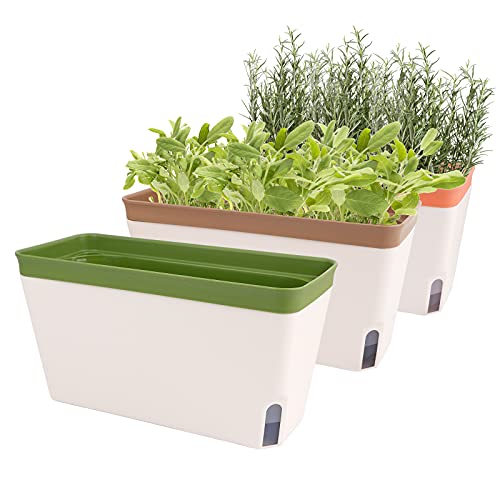
Three 10.5-inch planters give you a neat way to split herbs, salad greens, or small vegetable starts across a windowsill. The visual water level window is the useful part here, because you can see moisture status without guessing every time you pass by the kitchen sink.
The self-watering principle uses cotton ropes to move water into the soil, which helps when weekday watering slips your mind. That setup is handy for busy kitchens and short trips, although it still suits lighter indoor crops better than big, thirsty vegetables.
What We Like
- The set of three makes it easy to separate crops by need or growth speed.
- The water window gives a quick read on refill timing.
- Self-watering design supports steadier moisture for indoor herbs.
- The compact size fits narrow ledges and bright counters.
Room For Improvement
- These planters suit smaller indoor crops more than sprawling vegetables.
- Plastic construction may feel less substantial than thicker pot styles.
- Window placement takes a little familiarization before it feels second nature.
Core Details
Who Should Grab It
You’re in the sweet spot for this set when you want indoor herbs or compact greens near natural light.
Swap It Out When
LOCONHA 7 Pack Window Box Planter 17 Inches suits you better for a longer row of shallow plants along a sill or railing.
The fabric build gives these bags a more breathable feel than rigid plastic pots, which helps roots get air at the container wall. At 7 gallons, they suit crops that need a bit more room than a starter pot, and the 13.8-inch by 11-inch size lands in a useful middle ground for tomatoes, peppers, or mixed vegetables.
Handles matter more than they sound, especially when you’re shifting soil-filled bags around a deck or lift them to clean the growing area. Root spiral growth is one of the common issues in tight containers, so the broader fabric shape is a sensible fit for gardeners who want healthier root direction without a bulky planter.
Upsides
- The breathable fabric supports stronger root development.
- Handles make short moves and rearranging less awkward.
- Five bags let you stagger crops across a season.
- The size works well for medium vegetables and fruiting plants.
Softer Spots
- Fabric pots need more careful handling than rigid containers.
- They can dry faster than deeper, enclosed planters.
- Bulk watering needs a little attention during hot spells.
Details At A Glance
Made For
You’ll like this set most for medium-height vegetables and fruiting plants that benefit from airflow around the roots.
Where A Sibling Pick Shines
Land Guard 10-Pack Fabric Grow Bags 5 Gallon makes more sense for a larger count of smaller plantings across a tight garden rotation.
This set leans into quantity, which helps when you want several planting spots without committing to big raised beds. The non-woven fabric construction uses high-strength weaving, so the bags stay light while still handling the weight of soil and a growing crop.
That balance is useful for porch gardens, row-style patios, or a backyard corner where you swap crops through the season. The trade-off is the same one you see with most fabric containers, they’re easy to move but usually ask for more watering attention than heavier, closed planters.
Bright Spots
- Ten bags give you plenty of planting slots.
- The light build is easier to move than rigid pots.
- Handles help with setup, cleanup, and repositioning.
- The format suits vegetables, flowers, and mixed beds.
Small Caveats
- Fabric sides can dry quicker in direct sun.
- They need a level base for neat patio placement.
- Long-term wear depends on how often you shift them around.
Core Details
The Right Fit
You’re in the right lane for this set when you want a simple, flexible way to grow several crops at once.
Another Choice May Suit
NACHLYNN 5-Pack 7 Gallon Grow Bags fits better for gardeners who want fewer but roomier bags for larger plants.
This garden kit stands out because it behaves more like a guided growing system than a plain pot. For patio gardeners who want less second-guessing, that kind of structure can feel like a sturdy rail under your hands, especially when you’re starting tomatoes, greens, or other container crops.
The “maintenance free” wording on the listing suggests a lower-effort routine, though real-world care still depends on plant choice, sun, and water habits. The upside is that EarthBox tends to suit people who want one organized container instead of juggling separate pieces, while the trade-off is a less flexible layout than loose bags or simple boxes.
Reasons To Buy
- The kit format keeps the growing setup more organized.
- It suits gardeners who prefer a single, structured container.
- The design works well for patio placements with limited room.
- It can simplify the day-to-day rhythm of container gardening.
Areas To Watch
- It takes up more commitment than a basic fabric bag.
- The fixed format leaves less room for rearranging parts.
- It makes the most sense for gardeners ready to build around one system.
Feature Rundown
Whose Shelf It Belongs On
You’ll appreciate this most when you want a guided container garden and prefer structure over mix-and-match parts.
Look Elsewhere When
NACHLYNN 5-Pack 7 Gallon Grow Bags fits better for gardeners who want more movable, softer-sided containers.
This EarthBox follows the same structured idea as the Chocolate version, but the finish gives it a darker, more saturated look. That matters more than it sounds in visible spaces, because a planter that sits on a deck or beside a door becomes part of the room’s feel as much as part of the garden.
For compact vegetable growing, the appeal is the system-like layout rather than loose, improvised parts. The honest read is that you’re paying for convenience and a more contained process, which suits steady home gardeners better than someone who wants to swap container styles every season.
Highlights
- Structured format keeps the growing area tidy.
- The darker finish blends well with many patios.
- It suits vegetables that do better with a dedicated container.
- The setup feels more intentional than a simple pot.
Worth Noting
- It shares the same fixed-format trade-offs as the other EarthBox kit.
- The look is more matter-of-fact than decorative.
- It works best for someone committed to a single planter system.
Spec Overview
Perfect Match For
You’re a good fit for this kit when you want a tidy, fixed planter for vegetables in a smaller outdoor space.
Skip It When
LOCONHA 7 Pack Window Box Planter 17 Inches makes more sense for gardeners who want lighter, more decorative sill planters.
The green version keeps the same EarthBox shape, but the color softens the look a bit for yards and balconies that lean more natural. That’s useful in visible spots where you want the planter to sit quietly rather than look like a separate utility item.
For first-time container gardeners, this kit offers a familiar sort of structure without asking you to assemble a complex system from scratch. The compromise is the same one that comes with the other EarthBox options, it’s more committed than grow bags, but the trade feels reasonable for gardeners who want a stable setup.
Best Bits
- The green finish blends well with plants and outdoor settings.
- The kit format keeps the growing area more orderly.
- It suits beginners who want a guided container.
Points To Note
- It shares the more fixed style of the EarthBox line.
- It takes up more visual presence than slim window planters.
- It works best for gardeners ready to commit one spot to growing.
Technical Sheet
Built With In Mind
You’ll like this best for a small home garden that needs a stable planter with a softer visual tone.
Reach For A Different Pick When
Land Guard 10-Pack Fabric Grow Bags 5 Gallon is the better move for gardeners who want more flexibility and a larger count of containers.
This seven-pack is the most straightforward window-ledger option in the group, especially for herbs and shallow-rooted vegetables. The 17-inch rectangular shape helps you line up planters neatly, and the included saucers reduce the usual mess that comes with indoor-outdoor watering.
Army green gives the set a muted look that works on a sill, balcony rail, or patio shelf without shouting for attention. For most homes, that quiet flexibility is the selling point, though deeper crops still need a roomier container than this shape can offer.
Positives
- The seven-planter set gives you a tidy row of growing space.
- The rectangular form fits ledges and narrow shelves well.
- Saucers help catch runoff and keep surfaces cleaner.
- The muted color works in both indoor and outdoor spots.
Minor Gripes
- The shape suits shallow-rooted plants more than larger vegetables.
- Plastic construction may feel lighter than some gardeners prefer.
- The set makes the most sense where long, narrow spacing is available.
Feature Card
Who Will Love This
You’re the right match for this set when you want an orderly row of herb or veggie planters for a bright sill or patio edge.
Where Another Pick Suits Better
OurWarm Windowsill Herb Planter Box Indoor Set of 3 suits you better when you want self-watering help for a smaller indoor setup.
How To Choose The Right Containers To Grow Vegetables
Start With Root Space And Crop Type
Vegetables do not all want the same depth, and that’s the first detail worth sorting out. Leafy greens and herbs can live happily in shallower boxes, while tomatoes, peppers, and other fruiting crops usually ask for more room below the surface.
Grow bags in the 5 to 7 gallon range suit many mid-size plants, while taller or guided systems work better for vines and climbing crops. A shallow window box can still be useful, but it belongs to herbs, baby greens, and compact salad plants, not sprawling roots.
Match The Watering Style To Your Routine
Self-watering planters help smooth out a busy schedule, especially on patios or sunny windowsills where soil dries fast. That built-in reservoir style can reduce daily guesswork, though it still needs refilling and occasional cleaning.
Fabric bags behave differently. They breathe well, which helps roots, but they also dry faster than rigid planters, so they fit gardeners who check moisture often.
Think About Placement Before Shape
Balconies, decks, kitchen ledges, and backyard corners all favor different container shapes. A tall trellis planter works in a tight footprint, while a long window box makes better use of a narrow rail or sill.
Mobility matters too. Wheels help when you chase sunlight or need to sweep underneath, and handles matter when a container gets heavy with wet soil.
Choose Materials For The Kind Of Care You Want
Plastic boxes usually stay lighter and wipe clean quickly, which helps indoors. Fabric pots feel more flexible and airy, but they ask for a little more attention during hot spells and usually look best on flat, stable surfaces.
Structured kits cost more because you’re paying for a more guided setup, not just a shell to fill with soil. That extra structure makes sense for gardeners who want a steadier routine and fewer loose parts to manage.
Things Worth Knowing First
Common Shopping Slip Ups
Many people match the container to the space and forget the crop. A narrow box sounds handy until you try to grow a root-heavy tomato in it.
Another easy miss is ignoring drainage or water management. A planter that fits your shelf but holds water poorly can make daily care more annoying than it needs to be.
When Paying More Pays Off
Higher-tier containers often bring better structure, built-in water control, or more complete gardening kits. That extra spend tends to make sense for patios, long growing seasons, and anyone who wants a cleaner routine.
Simple fabric bags and plastic boxes still cover a lot of ground. The upgrade only matters when you want a planter that trims friction, saves time, or handles a more demanding crop plan.
Frequently Asked Questions
Which containers work best for tomatoes?
Taller planters, 7-gallon fabric bags, and trellis-supported boxes are the most sensible fits. Tomatoes need room for roots and a structure that keeps growth organized.
Are self-watering planters worth it?
They help most in sunny spots or for anyone with an inconsistent watering routine. The trade-off is a little more hardware to maintain and refill.
Do fabric grow bags dry out too fast?
They can dry faster than rigid pots, especially in heat and wind. That makes them better for gardeners who check soil moisture often.
Can you grow vegetables indoors?
Yes, compact herb boxes and window planters can handle herbs, greens, and other smaller crops near bright light. Bigger vegetables usually need more room than a typical windowsill setup provides.
What size container suits most beginners?
A 5-gallon to 7-gallon container is a sensible starting point for many vegetables. It gives enough room for roots without becoming hard to move or manage.