Digital sprinkler timers help you keep lawns, beds, and drip lines on a steady schedule without standing outside with a hose. That matters most for busy homes, vacation weeks, and yards that dry out fast in warm weather. The right timer should feel clear to program, sturdy enough for outdoor use, and simple enough that you do not need to relearn it every season.
This roundup focuses on practical fit, not flash. You will find compact single-outlet options, two-zone controls for separate beds, and a few models that lean into stronger inlet and outlet materials for a more durable feel.
Quick Look At The Shortlist

Sprinkler Timer Outdoor, Digital Programmable for Garden Hose

RAINPOINT Sprinkler Timer with Brass Inlet & Outlet

DEWENWILS 2-Zone Hose Timer with Rain Delay
BN LINK Outdoor Water Timer for Garden Hose

Rain Bird 1ZEHTMRP Premium Professional Grade Electronic Digital Hose End Timer

Sprinkler Timer Outdoor, Digital Programmable for Garden Hose (2 Outlets)

Orbit 62067 1-Outlet Programmable Digital Hose Watering Timer
RAINPOINT Sprinkler Timer, 100% Metal Pipe Water Timer

Hose Faucet Water Timer for Outdoor Garden, Ortis Programmable Sprinkler Timer
Sprinkler Timer, Programmable Hose Timer with Automatic Watering System
More Details On Our Top Picks
For a straightforward yard setup, this Tiffcofio timer keeps the focus on the basics, with rain delay, manual mode, and water volume control doing the heavy lifting. That kind of layout suits you well when you want a simple program for flower beds or a front lawn without a lot of menu digging.
The trade-off is that the listing stays light on extra detail, so this feels more like a no-nonsense utility than a feature-rich controller. Compared with the RAINPOINT and DEWENWILS picks, it looks better suited to uncomplicated schedules than to split-zone control or more rugged fittings.
What We Like
- Rain delay helps you pause a watering cycle after weather shifts.
- Manual mode gives you quick control for odd jobs at the hose.
- Water volume control makes it easier to tune output for different spots.
- The simple layout works well for basic home watering routines.
Things To Consider
- The listing leaves out a lot of build detail, so durability is harder to judge from specs alone.
- Single-zone control means it suits a single watering path better than a multi-bed layout.
- Cleaning and storage should stay simple, though the outdoor body will still need the usual seasonal care.
Feature Snapshot
Who It Suits Best
You want a simple digital timer for a single hose line, especially for casual lawn and garden care.
A Better Fit Elsewhere
DEWENWILS 2-Zone Hose Timer with Rain Delay fits you better when you need independent control for two different watering areas.
The brass inlet and outlet are the reason this RAINPOINT model stands out early, because metal fittings usually feel better suited to repeated hose changes than all-plastic hardware. In a garden where the timer stays outdoors through the season, that detail carries real weight.
Compared with the Tiffcofio pick, this one looks like a stronger choice for shoppers who care about connection feel and long-term handling around soaker hose or drip lines. The brass parts do add appeal, though you still want to keep threads clean and avoid cross-threading during setup.
Highlights
- Brass inlet and outlet bring a sturdier feel at the connection points.
- It suits soaker hose and drip-style watering layouts.
- Rain delay and manual watering support flexible day-to-day use.
- The programmable format helps you keep a steady schedule without constant resets.
Points To Note
- Brass fittings feel more premium, but they still need careful threading during installation.
- The listing text focuses more on fittings than on detailed programming depth.
- Seasonal storage matters, because any hose-end controller lasts longer with dry off-season keeping.
Details At A Glance
Who It Suits Best
You want a hose timer for regular outdoor watering and care more about metal fittings than extra controls.
A Better Fit Elsewhere
Rain Bird 1ZEHTMRP Premium Professional Grade Electronic Digital Hose End Timer fits you better when you want a more established hose-end controller with 7-day scheduling.
Two zones make this DEWENWILS timer feel much more versatile than the single-outlet picks ahead of it. That matters in a yard with a front border bed and a back lawn, because each area can need a different watering pattern without sharing one schedule.
The pressure rating and independent control give it a more technical edge, though you will spend a little more time setting it up than you would with a basic timer. For most homes with separate plant areas, that extra control is worth the added attention.
Reasons To Buy
- Two zones let you run separate watering plans from one controller.
- Independent control helps you treat lawn and beds differently.
- Rain delay and manual mode keep daily use flexible.
- The 1 to 360 minute range covers short rinses and longer runs.
- Pressure handling up to 120Psi broadens compatibility for typical hose setups.
Room For Improvement
- The dual-zone layout can feel more involved than a single-outlet timer during first setup.
- More options usually mean more menu steps, which some casual users will not love.
- Like most outdoor controllers, it benefits from being removed or sheltered during harsh off-season weather.
Technical Sheet
Who Will Love This
You manage two distinct watering areas and want one timer that can treat them differently.
Another Choice May Suit
BN LINK Outdoor Water Timer for Garden Hose suits you better when you only need one outlet and a more straightforward controller.
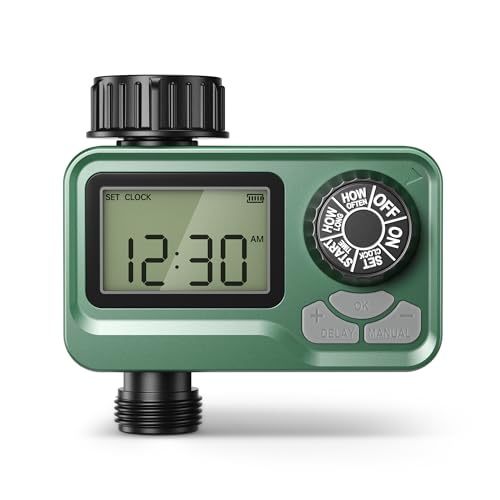
BN LINK keeps things clean and direct with one outlet, which is exactly what many small yards need. The rain delay, manual mode, and auto mode combination covers the everyday watering rhythm without asking you to manage extra zones.
Compared with the DEWENWILS unit, this one is easier to picture in a simpler setup where you water a strip of lawn or a single planting bed. The catch is that one outlet limits how far you can stretch it, so larger gardens will outgrow it fast.
Upsides
- One outlet keeps the setup easy to follow.
- Automatic, manual, and rain delay modes cover common watering needs.
- It fits smaller yards and single-hose routines well.
- The simple control set reduces the chance of overcomplicated scheduling.
Small Caveats
- Single-outlet design limits flexibility in larger yards.
- The listing does not lean into advanced scheduling details.
- Outdoor placement still calls for regular checks on hose connections and seasonal storage.
Core Details
Made For
You want a plain, easy timer for one outdoor hose without a lot of setup layers.
Look Elsewhere When
Orbit 62067 1-Outlet Programmable Digital Hose Watering Timer fits better when you want two timers in one package for separate spots around the yard.
Rain Bird leans more professional than the plastic-leaning timers earlier in the list, and the brass inlet and outlet help reinforce that impression. It also brings 7-day scheduling, so you can keep a steady weekly rhythm for sprinklers, soaker hose, or drip irrigation.
That kind of control suits you well in a yard that stays on the same watering cadence most weeks. The trade-off is that the single-zone design keeps it focused on one station, so it works best where reliability matters more than multi-zone flexibility.
Best Bits
- Brass inlet and outlet add a more substantial connection feel.
- 7-day scheduling fits repeat weekly watering habits.
- It works with hose-end sprinklers, drip irrigation, and soaker hose.
- Automatic programming reduces the need for constant manual resets.
Honest Caveats
- One zone means you are managing a single watering area at a time.
- Professional-grade positioning usually comes with a more serious setup mindset.
- Battery-operated gear benefits from regular battery checks before the season gets busy.
Quick Facts
Right Fit For
You want a hose-end timer that feels sturdy and fits a steady weekly watering routine.
A Better Fit Elsewhere
DEWENWILS 2-Zone Hose Timer with Rain Delay fits you better when two separate areas need different schedules from one controller.
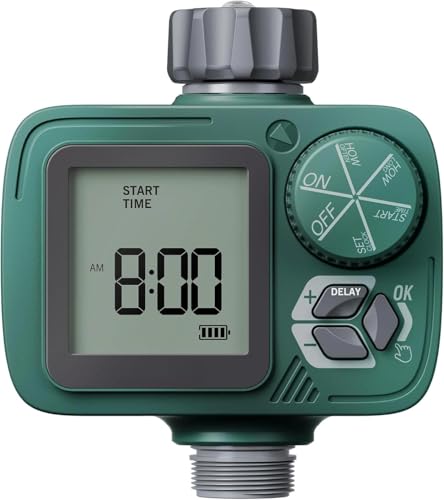
This Tiffcofio version steps up from the first model by adding two outlets, which immediately makes it more useful for mixed watering tasks. You can split duties between a front bed and a side yard line without swapping hoses around mid-week.
The setup still sounds friendly enough for a typical home, especially because the listing points to a simple knob-based programming flow. That said, two outlets can tempt you into more complex schedules, so it fits best where you want flexibility without moving into a full multi-zone system.
Bright Spots
- Two outlets make it easier to manage more than one watering path.
- Rain delay and manual mode keep the controller useful in changing weather.
- The knob-driven setup sounds approachable for routine home use.
- It works well for yards that need split watering without a larger controller.
Areas To Watch
- Two outlets add flexibility, but they can also add a little more planning.
- The listing is light on deeper build and scheduling detail.
- Outdoor timers like this still benefit from tidy hose routing and dry off-season storage.
Feature Rundown
The Right Fit
You want a two-outlet timer that stays fairly simple while still giving you split-zone flexibility.
Where A Sibling Pick Shines
BN LINK Outdoor Water Timer for Garden Hose suits you better when one outlet is enough and you want a leaner setup.
The two-pack format is the draw here, especially for homes that need more than one watering station without stepping up to a larger controller. That can be useful around a side garden and a lawn edge, where separate timers are often easier than sharing one.
Compared with the single-timer picks, this gives you more coverage in one purchase, though each unit still stays straightforward and single-outlet. The honest read is that you are getting quantity and convenience more than flashy controls.
Positives
- Two timers in one package help you cover more than one spot.
- Single-outlet design keeps each timer easy to understand.
- It suits basic yard and garden watering without complex programming.
- The Orbit name will feel familiar to many hose-timer shoppers.
Worth Noting
- Each unit still handles just one outlet, so larger layouts need more hardware.
- The listing does not highlight advanced control features.
- Keeping two units in service means double the battery and storage attention.
Feature Card
Perfect Match For
You need two basic timers for separate hose areas and want to keep each one easy to manage.
Swap It Out When
Rain Bird 1ZEHTMRP Premium Professional Grade Electronic Digital Hose End Timer fits you better when one sturdier hose-end controller matters more than having two basic units.
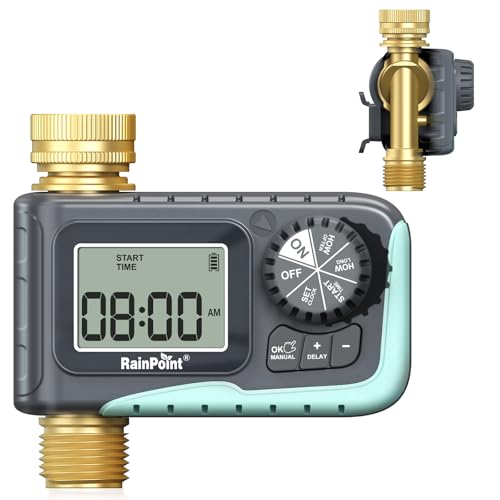
The all-metal pipe construction gives this RAINPOINT timer a different feel from the brass-fitted model earlier in the list. It looks aimed at shoppers who want a more substantial hose-end setup and do not want the connection hardware to feel like an afterthought.
That matters in a yard where the timer sits at the faucet and gets handled often through the season. You still get manual watering and rain delay, so the sturdier build does not come at the expense of basic control.
Strengths
- Metal pipe construction gives the timer a sturdy outdoor presence.
- Manual watering and rain delay keep daily use flexible.
- Programmable control supports routine garden and lawn schedules.
- The build style should appeal to anyone who wants more substantial hardware at the faucet.
Minor Gripes
- All-metal parts can feel heavier than basic plastic-bodied units.
- The listing emphasizes construction more than advanced scheduling depth.
- Metal still needs periodic cleaning around threads and hose contact points.
Spec Overview
Whose Shelf It Belongs On
You prefer a hose timer that leans toward stronger hardware and a more durable feel at the connection point.
Reach For A Different Pick When
BN LINK Outdoor Water Timer for Garden Hose makes more sense when you want a lighter, simpler one-outlet controller instead.
Ortis brings a full-view LCD display, which matters more than it sounds like when you want to set watering fast and check the schedule at a glance. The listing also gives clear timing flexibility, from short 3-minute setup windows to longer cycles up to 300 minutes.
For travel weeks or a busy work schedule, that range can make the yard feel a lot less hands-on. The IP67 leak-proof design adds another layer of appeal, although outdoor gear still needs the usual care around hose tightening and battery checks.
What We Like
- Full-view LCD display makes the schedule easier to read quickly.
- Timing range from 1 to 300 minutes supports short and longer watering runs.
- Frequency options cover every 6 hours, every 12 hours, or intervals from 1 to 7 days.
- Rain delay, manual, and automatic modes give you useful everyday flexibility.
Areas To Watch
- The many timing choices may feel like more than you need for a tiny patio setup.
- Fast setup still depends on reading the display carefully the first time.
- Leak-proof design helps, but hose connections still deserve routine checks.
Core Details
Built With In Mind
You want a readable timer for travel weeks, frequent schedule checks, and flexible outdoor watering.
Another Choice May Suit
BN LINK Outdoor Water Timer for Garden Hose suits you better when you want fewer setup choices and a simpler one-outlet controller.
Sprobil focuses on a familiar single-outlet format, then adds a low-battery warning that helps take some guesswork out of seasonal upkeep. The large LCD display makes that alert easier to catch, which is handy for anyone who does not want to walk out and discover the valve has already closed.
That feature set feels especially useful for set-and-forget watering on a side yard or garden bed. Compared with the more basic one-outlet timers earlier in the roundup, this one earns points for giving you a clearer heads-up before the battery runs low.
Strong Points
- The low-battery warning helps you stay ahead of power changes.
- The LCD display is easier to read at a glance.
- Automatic watering with manual mode covers common yard routines.
- One outlet keeps the timer simple for basic hose use.
Areas To Watch
- Single-outlet design keeps it focused on one watering line.
- The battery alert is useful, but you still need to replace batteries before the season gets busy.
- As with most hose timers, occasional cleaning around the connection point helps keep things smooth.
Feature Rundown
Who Should Grab It
You want a simple timer with a battery warning that helps you keep tabs on upkeep.
Skip It When
DEWENWILS 2-Zone Hose Timer with Rain Delay suits you better when two separate watering schedules matter more than battery alerts.
How To Choose The Right Digital Sprinkler Timers
Match The Timer To Your Yard Layout
A single-outlet timer works well for a compact lawn edge, a raised bed, or a simple soaker hose line. Two-zone models fit yards that need separate schedules, like a sunny front strip and a shadier back garden. The layout matters more than the brand name here, because the wrong outlet count turns a tidy routine into a daily workaround.
Connection material matters too. Brass or all-metal fittings usually feel better for frequent hose swapping, while lighter plastic builds can still be fine for lighter duty use. The trade-off is plain, sturdier hardware often costs more and adds some weight at the faucet.
Choose Controls You Can Live With
Rain delay is useful in real weather, because it lets you pause a cycle after a storm or a humid week without rebuilding the schedule. Manual mode matters just as much for washing down a path or giving a dry bed a quick drink outside the programmed routine. A timer that sounds smart on paper but feels clumsy in the yard will quickly become background clutter.
Look closely at the programming style. Knob-based controls are friendlier for casual setup, while more layered digital menus tend to reward you with finer control. You do not need every feature under the sun, you need a control panel that you can read once and trust later.
Think About Timing Range And Frequency
Run time range tells you how long each watering cycle can last, and that matters for both short top-ups and longer deep watering. A narrow range can work for one planting bed, while a broader range helps you cover lawns, shrubs, and drip lines with one controller. That flexibility is often the difference between “good enough” and “actually convenient.”
Frequency options matter in the same way. Some timers run every day or every few days, while others let you set intervals down to hours or stretch them across a week. For anyone who travels or keeps a strict routine, wider frequency control makes the timer feel more dependable.
Do Not Skip The Small Maintenance Details
Outdoor timers live at the hose bib, so they collect dust, moisture, and mineral buildup over time. A clean connection point and fresh batteries usually do more for reliability than extra features do. Storage also matters, especially in colder months or during long stretches when the yard is not in use.
That is where a simple unit can be a smart match for first-time setups, while a sturdier, higher-feature model makes sense for more demanding garden plans. The best fit is the one that matches your watering pattern, not the one with the most buttons.
What To Weigh Before You Decide
Mistakes Worth Dodging
One common slip is choosing a timer with too few outlets for the yard layout. Another is overlooking how easy the display is to read outdoors, especially in direct sun.
It also helps to avoid pairing a high-feature controller with a very simple watering job. You save hassle by matching the timer to the number of hoses, the schedule pattern, and the amount of fine tuning you actually want.
The Upgrade Payoff
More expensive models usually bring stronger fittings, broader scheduling control, or a more polished display. Those upgrades matter most in yards that see frequent hose changes, multiple watering zones, or seasonal routines that stay consistent week after week.
For a basic patio line, a simpler unit is often enough. For a larger garden or a setup you plan to leave in place, the extra money usually goes toward convenience, sturdier connection points, and fewer annoyances over time.
Frequently Asked Questions
What does a digital sprinkler timer actually do?
It opens and closes watering on a schedule so you do not have to stand at the hose each time. That makes it useful for lawns, beds, and drip lines that need a steady routine.
Are two-zone timers worth it?
They are worth it for yards with different watering needs in separate areas. A single-zone timer is usually enough for one bed or one hose line.
Does rain delay matter for everyday use?
Yes, because it lets you pause a programmed cycle after wet weather without rebuilding the schedule. That keeps the timer more practical across changing weeks.
What should you look for in outdoor build quality?
Connection material is a big clue, especially brass or all-metal inlet and outlet parts. Those details often feel better on a hose-end setup that gets handled often.
How hard are these timers to maintain?
Most need only basic care, like clean threads, dry storage during off-season months, and battery checks. A quick seasonal lookover usually helps more than anything fancy.