Starting seeds indoors is easier when your mix matches the job. You want airy texture, steady moisture, and a blend that gives young roots room to move without turning soggy or compacted.
This roundup focuses on practical mixes, pellets, and coir formats for small trays, indoor shelves, and backyard starts. You’ll also see which picks suit gardeners who want a ready-to-use bag, a compressed pellet system, or a more expandable base for custom blends.
Quick Look at the Shortlist

Jiffy Natural & Organic Seed Starting Soil Mix 10 QT

MAQIHAN 50PCS Peat Pellets for Seedlings 30MM

Jiffy Natural & Organic Starter Mix 12 Quart
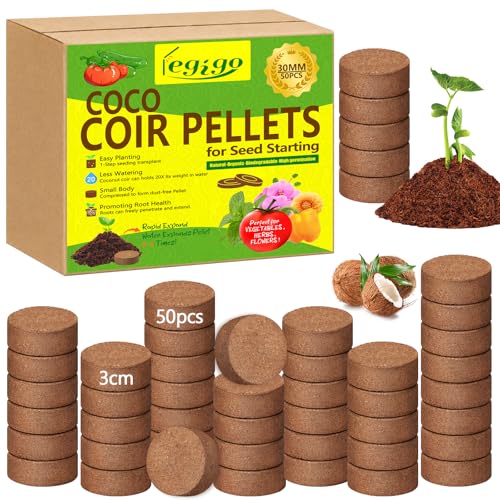
50 Pcs 30mm Coco Coir Pellets Seed Starter Soil Mix


Organic Seed Starter Soil and Potting Mix 1qt

Jiffy Natural & Organic Seed Starting Soil Mix 16 QT

Back to the Roots 100% Organic Vermiculite

Doter Organic Seed Starter Premium Potting Soil Mix 1qt
More Details On Our Top Picks
Jiffy’s 10-quart bag suits the gardener who wants a straightforward seed-starting base without extra fuss. The mix uses peat moss, vermiculite, and lime, so you get the light texture seedlings need, plus a material blend that’s familiar in trays on a windowsill or a basement rack.
That combination makes sense for small batches and first rounds of herbs, tomatoes, or flowers. The trade-off is simple, too, since a peat-based mix can dry out faster at the surface, so steady moisture matters more than with denser potting soil.
Strong Points
- Peat, vermiculite, and lime give you a classic seed-starting blend.
- Light texture helps tiny roots move through the mix.
- The 10-quart bag fits modest indoor tray setups.
- Works well for common seeds started in flats or cells.
Things To Consider
- Peat-heavy mixes can need closer watering once the top layer dries.
- The bag size is better for smaller starts than large garden runs.
Feature Snapshot
Who It Suits Best
Home growers starting a few trays at a time will get the most out of this bag.
Where A Sibling Pick Shines
Jiffy Natural & Organic Seed Starting Soil Mix 16 QT suits gardeners who want the same style of mix with more room for extra flats.
Pellet systems like this save setup time, because each 30 mm plug starts small and tidy before it expands for sowing. That’s useful on a crowded shelf, and it keeps the soil volume uniform across cells, which helps make watering a little more predictable.
You may find these especially handy for herbs, quick greens, or a classroom-style tray where clean handling matters. The trade-off is the limited size per pellet, so larger seedlings will outgrow them sooner than a loose mix in a deeper tray.
What We Like
- Pre-formed plugs make sowing neat and fast.
- Each pellet starts at a consistent 30 mm size.
- Good fit for shelf growers who want tidy spacing.
- Handy for transplanting because the plug shape stays organized.
Minor Gripes
- Pellet volume is modest, so strong seedlings can need potting up sooner.
- Compressed formats usually need careful soaking before use.
- Storage is easiest in a dry spot, since moisture can affect shape.
Core Details
Made For
Gardeners who like clean, compact seed starts will appreciate the simple plug format.
Swap It Out When
Jiffy Natural & Organic Seed Starting Soil Mix 10 QT suits you better when you want a looser medium for broader tray filling.
This 12-quart starter mix leans into a nursery-style formula that should feel familiar to anyone who has filled flats before. The listing points to Canadian peat moss and a consistent blend, which matters because even texture helps seedlings settle in with fewer dry pockets.
It’s a comfortable middle-ground choice for spring sowing or a few rounds of indoor starts. The honest read is that it isn’t the most specialized format in the lineup, but for steady home use, that plain approach can be exactly what you want.
Positives
- Canadian peat moss is part of the mix, which supports root-friendly texture.
- The uniform blend helps you fill trays with the same material across cells.
- 12 quarts gives a little more working room than the smaller 10-quart bag.
- Good for gardeners who want a conventional starter medium without extra steps.
Room For Improvement
- Like many peat-based mixes, surface drying can happen sooner than you expect.
- The formula is basic, so custom add-ins may matter to more advanced gardeners.
Technical Sheet
Who Should Grab It
Home gardeners who want a familiar starter mix for regular seasonal sowing will feel at home here.
Look Elsewhere When
Back to the Roots 100% Organic Vermiculite fits better for gardeners who want a texture additive rather than a full seed-starting base.
These coco coir pellets keep things tidy, and that’s the main appeal. Each 30 mm disc expands from a compressed form, so you can store a lot in very little space before spring planting starts crowding the shelf.
They fit well for indoor herbs, bonsai starts, or vegetable transplants where neat handling matters more than a loose bag of soil. One thing worth considering is that coir pellets usually ask for good hydration control, so they reward a gardener who pays attention at watering time.
Bright Spots
- Compressed discs store neatly until you need them.
- 30 mm size keeps each start uniform.
- Useful for indoor and outdoor seed starting setups.
- Good match for herbs, bonsai, and small vegetable starts.
Softer Spots
- Expanded coir needs close water management to avoid drying unevenly.
- The pellet format gives less volume than a loose starter mix.
Details At A Glance
Best Suited To
Space-conscious gardeners who want a neat pellet format for small starts will get the most from this pack.
A Better Fit Elsewhere
Jiffy Natural & Organic Seed Starting Soil Mix 16 QT suits gardeners who want a larger loose mix for wider tray coverage.
A coir brick changes the game a little, because you start with a compressed block and expand it only as needed. That makes storage simple, and it gives you a flexible base for seed starting, potting, or mixing your own medium for houseplants.
The listing also notes pH balance and low EC, with EC meaning electrical conductivity, a rough way to describe how much dissolved material sits in the mix. For gardeners who want more control over the base material, that’s a useful detail, though you still need to add your own nutrients or blend partners as your plants grow.
Upsides
- Compressed form stores cleanly before you expand it.
- Works as a base for seed starting or general potting.
- pH balance and low EC suit gardeners who like a controlled starting medium.
- Useful for custom mix building in containers or trays.
Small Caveats
- You’ll need to hydrate and break it up before use.
- As a base material, it may need extras for feeding later on.
- Storage is easy, but preparation takes a little more attention than pellets.
Feature Card
The Right Fit
Gardeners who like to mix their own planting media will find this brick especially handy.
Reach For A Different Pick When
MAQIHAN 50PCS Peat Pellets for Seedlings 30MM suits you better when you want a ready-made pellet format with less prep.
For gardeners sowing a lot of seeds at once, the 100-count format brings easy scale. The pellets are already loaded with pre-mixed nutrients, so you’re working with a ready-to-plant setup rather than building every cell from scratch.
That’s especially handy for indoor or outdoor batches where uniformity matters and time is short. The trade-off is straightforward, because a pellet system like this usually gives you less room to customize the medium than a loose soil bag such as Jiffy’s 12-quart blend.
Reasons To Buy
- 100-count pack supports larger sowing rounds.
- Pre-mixed nutrients make the starting step more self-contained.
- Ready-to-plant setup saves time during batch seed work.
- Works for both indoor and outdoor starting plans.
Areas To Watch
- Pellet formats give less room for mix tuning than loose soil.
- Bulk packs need dry storage space to stay organized.
Quick Facts
Built With In Mind
Gardeners who sow in volume and want a ready-made pellet system will appreciate this format.
Where Shoppers Go Wrong
Back to the Roots 100% Organic Vermiculite is the smarter fit for gardeners who need a blending ingredient instead of a full pellet start.
This 1-quart bag is the tight-space answer in the group. It suits a small indoor setup, a handful of seedlings, or a gardener who wants to try a fresh round without opening a large bag that might sit around too long.
The listing points to fast rooting and germination support, which aligns with what you’d want from a starter mix in a windowsill tray. The size is the clear trade-off, since you’ll outgrow it quickly once your seed count climbs.
Best Bits
- Small bag size works well for limited planting runs.
- Easy to store on a shelf or in a utility bin.
- Fits tiny indoor setups where a large sack feels awkward.
- Designed for seed starting rather than general garden fill.
Points To Note
- One quart is modest, so it suits smaller seed batches.
- You may need a second bag quickly for multiple trays.
At A Glance
Whose Shelf It Belongs On
This fits gardeners who only start a few cells at a time or want a compact backup bag.
Another Choice May Suit
Jiffy Natural & Organic Seed Starting Soil Mix 16 QT makes more sense for gardeners filling multiple trays in one round.
The 16-quart size gives this Jiffy mix more breathing room than the 10-quart bag, which is useful once your seed starts turn into multiple flats. The formula again leans on peat moss, vermiculite, and lime, so you’re staying in familiar territory while covering more trays at once.
That extra volume helps for succession planting or a backyard gardener who starts herbs, annuals, and vegetables in stages. Like the smaller version, it still asks for sensible watering, because lightweight starter mix dries differently than heavier garden soil.
Highlights
- Larger 16-quart size handles more starting trays.
- Peat moss, vermiculite, and lime create a familiar seed mix.
- Good for staggered planting through the season.
- Helps you stay in one blend instead of switching bags mid-project.
Honest Caveats
- The larger bag still needs careful moisture management once opened.
- It’s better for dedicated starting than for heavy-duty general potting.
Core Details
Who Will Love This
Gardeners who start several flats each season will appreciate the larger bag and familiar formula.
Skip It When
Omitgoter Organic Seed Starter Soil and Potting Mix 1qt makes more sense for tiny shelf projects that only need a little mix.
Vermiculite is an add-in, not a complete seed-starting mix, and that’s the key to judging this pick fairly. It’s a mineral that helps loosen texture and hold moisture, so it makes sense in custom blends where you want to tune drainage and softness by hand.
That makes this a smart companion for gardeners who already have a base medium and want more control over how it behaves in the tray. The trade-off is obvious: by itself, it won’t replace a full starter soil, so it belongs in the mix room rather than as the whole setup.
Best Bits
- Useful as a texture modifier in custom seed-starting blends.
- Helps create a lighter, airier growing medium.
- Can support moisture retention in tray-based starts.
- Made in the USA, which may matter to shoppers who care about source details.
Worth Noting
- It is not a full seed-starting soil on its own.
- You need another medium to build a complete mix.
Feature Rundown
Perfect Match For
This suits gardeners who already know their way around custom seed-starting blends and want more control over texture.
Where Another Pick Suits Better
Jiffy Natural & Organic Starter Mix 12 Quart is the better fit for gardeners who want a ready-to-use base instead of an additive.
Doter keeps the footprint small with a 1-quart bag, but the description points to a mix aimed at quick germination and stronger root systems. That makes it attractive for gardeners starting a modest number of seeds who want a gentler, more focused medium than a general potting mix.
It fits neatly on a shelf and works well for careful indoor starts where you’re watching each cell closely. The limitation is the same one you see with other compact bags, since you won’t get broad coverage from a single quart.
Plus Points
- Small bag size is easy to store and handle.
- Seed-starting focus makes it a more targeted choice than plain potting soil.
- Fits low-volume indoor setups without wasted material.
- A sensible fit for gardeners who monitor each seed closely.
Areas To Watch
- The 1-quart fill is limited for larger sowing plans.
- You may need another bag quickly for multiple trays.
Key Specs
Right Fit
This suits small indoor seed runs, especially for gardeners who want a focused starter mix in a tiny bag.
Not Your Match When
Jiffy Natural & Organic Seed Starting Soil Mix 16 QT works better for larger tray sessions that need more volume.
How To Choose The Right Dirts For Seed Starting
Texture, Air Space, And Water Balance
Seedlings need a mix that feels loose enough for new roots to push through. Peat moss, coco coir, vermiculite, and pelletized formats all change how much air sits around the root zone, and that matters as much as the bag size.
Fine, even texture helps tiny roots settle in. Too dense, and the medium can stay wet for too long, which is where young seedlings often struggle in cramped trays.
Bag Mix, Pellets, Or Brick
A loose bag works well for gardeners filling flats and small seed trays. Pellets cut prep time and keep each cell uniform, while a coir brick suits anyone who wants to expand the material and mix it with other components.
The right format depends on your space and routine. A pellet pack feels tidy on a shelf, while a full bag makes more sense for repeated sowing through the season.
Volume And Shelf Life In Real Use
Smaller bags are handy for trial runs or a few windowsill starts. Larger bags fit gardeners who sow in waves, and bulk pellet packs help when you’re planting a lot at once.
Storage matters too, since dry, sealed material stays easier to manage than an opened bag left in a damp garage. That’s why compact options can be the smarter call for small homes, even when the price of a larger container seems more efficient on paper.
Match The Mix To The Plant
Herbs, lettuces, tomatoes, flowers, and bonsai starts don’t all need the same setup. Tender seedlings usually do best in a light starter medium, while custom growers may prefer vermiculite or coir as a blend ingredient.
The cleanest choice is the one that matches your routine. A ready-made starter mix suits beginners and casual gardeners, while experienced growers often appreciate the control that comes with a brick or additive.
What To Weigh Before You Choose
Wrong Turns To Avoid
Many shoppers grab a general potting mix and expect it to behave like seed-starting soil. That usually feels too heavy for delicate seedlings, so the roots work harder than they should.
Another common slip is underestimating how much material your trays need. A tiny bag can disappear fast once you fill several cell packs.
The Upgrade Payoff
Higher-tier options in this category usually give you better control over texture, moisture handling, or convenience. Pellets cost more to package neatly, and specialty materials like vermiculite or balanced coir bricks add flexibility for custom work.
That upgrade makes sense for gardeners starting a lot of plants, handling mixed crop types, or trying to keep trays more uniform. For a few casual starts, a straightforward bag is often enough.
Frequently Asked Questions
What makes seed-starting soil different from potting soil?
Seed-starting soil is usually lighter and finer, so young roots can move through it more easily. Potting soil is often denser and better suited to established plants.
Are pellets easier than loose mix?
Pellets are cleaner to handle and keep each seed in a neat pocket. Loose mix gives you more control over tray filling and usually feels more familiar for larger sowing jobs.
Does coco coir work well for seedlings?
Coco coir works well as a seed-starting base or blend ingredient because it is light and easy to expand. You still need to manage watering carefully, especially in warm indoor spots.
How much seed-starting mix do you need for one tray?
That depends on tray depth and cell count, so a small box can go farther than it looks. A 10-quart or 16-quart bag makes more sense once you start filling several flats.
Can vermiculite be used on its own?
Vermiculite is best treated as a blend ingredient rather than a full growing medium. It shines when you want to loosen texture or help a custom mix hold moisture better.