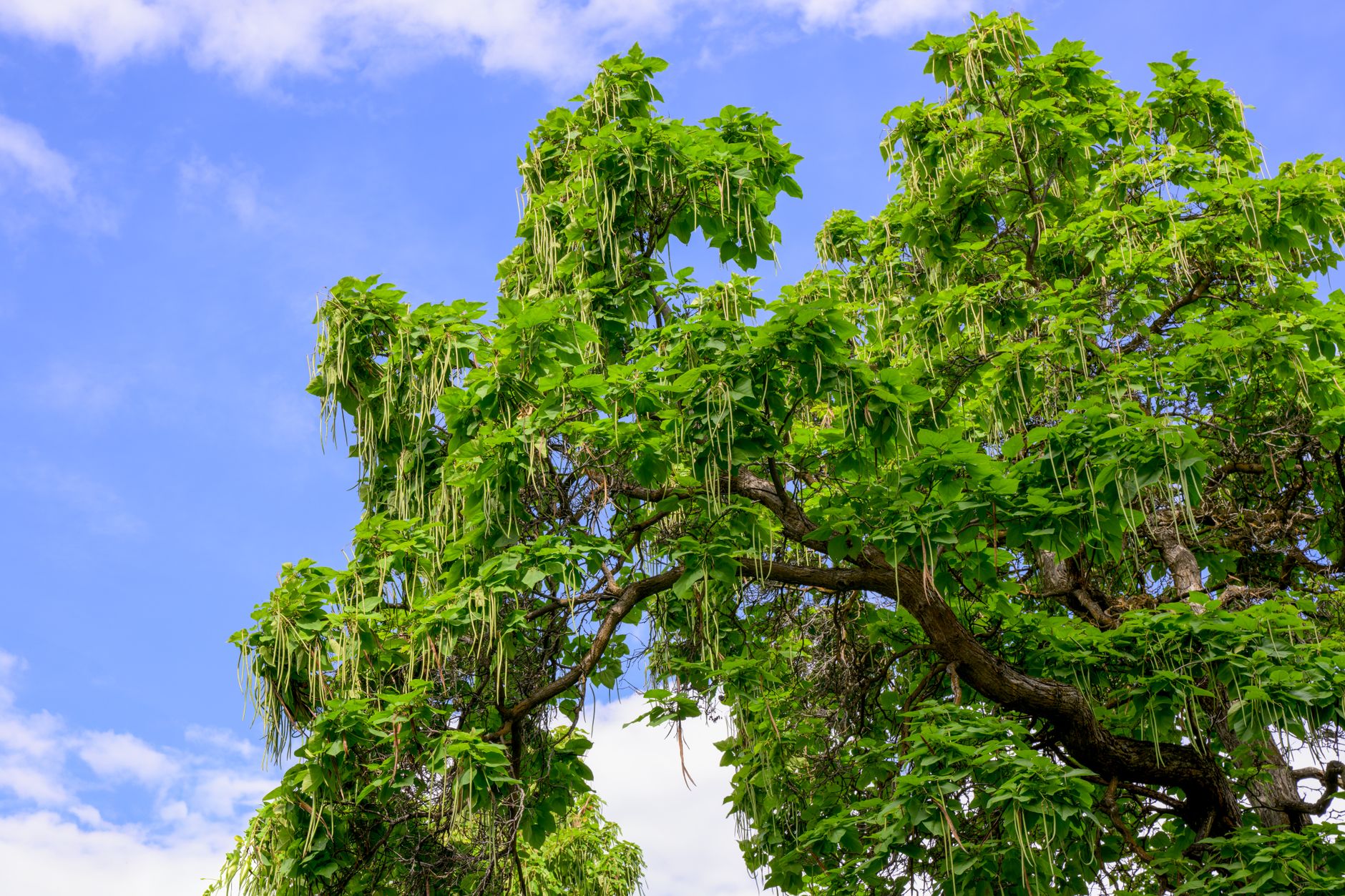

Reaching a broad, spreading crown, this fast-growing deciduous shade tree is known for oversized heart-shaped leaves, white summer flowers, and long bean-like seed pods. Its bold canopy makes it easy to recognize and useful where broad shade matters more than low cleanup.
This article covers the catalpa tree’s standout features, from its broad foliage and seasonal blooms to the way its pods change through the year, helping gardeners and curious homeowners identify it with confidence.
The Traits That Make Catalpa Easy To Spot
One leaf can be nearly dinner-plate wide, and that size does most of the identification work. The leaves sit opposite each other on the branch, so the crown looks layered and heavy from a distance.
Late spring adds a second clue. White flower clusters open with yellow and purple markings in the throat, which makes the blooms look hand-painted even from across a lawn.
By late summer, long narrow pods take over the display. They hang like beans or cigars, which is why some people call the tree cigar tree or worm tree.
Leaves That Carry The ID
Leaf width is the quickest way to narrow down catalpa tree identification. Among common landscape trees, few have such broad blades, and the pointed tip with a clear heart shape helps separate it from maples and lindens.
Catalpa bignonioides and Catalpa speciosa are the two names most likely to appear on plant labels. Catalpa bignonioides is the southern species, while Catalpa speciosa is the northern form, usually more upright and larger.
Flowers That Signal Summer
The bloom window is brief, but it carries fragrance and color before the tree shifts into pod production. Pollination begins the move from flower to fruit, and the rest of the season goes into seed-bearing capsules.
North Carolina State Extension describes catalpa flowers as showy enough to be seen from a distance, which helps explain their long popularity in old yards and parks. That floral display naturally leads into the pod stage that follows.
Those wide leaves do more than catch the eye; they also set the stage for the tree’s flowering cycle.
Why Those Oversized Leaves Matter
Broad leaves create deep shade quickly, and that is the main reason many property owners choose this tree. A mature crown can cool a sitting area, cut glare off pavement, and give a yard a strong focal point without using evergreen foliage.
In good soil and full sun, growth can move fast. A young tree may look modest at first, then spread with surprising speed, which is helpful in open ground but demanding in tight spaces.
Shade, Cooling, And Visual Weight
Large leaves block sunlight like overlapping shingles. That produces a dense shade pattern that feels cooler underfoot and gives smaller shrubs, benches, or patio furniture a bold backdrop.
The same mass gives the tree its ornamental shade-tree presence. Planted near a driveway or lawn edge, catalpa reads as a statement tree rather than a filler plant.
Seasonal Display Only
This is a deciduous tree, so the leaf show does not last all year. In fall, the canopy opens up and the branch structure shows through, which changes the tree’s character completely.
That seasonal shift matters when you plan a site. A tree that seems airy in January may cast heavy shade in July, so the planting spot should account for both views, especially near windows or gardens.
That seasonal contrast affects more than appearance, because bloom time is when the tree begins preparing its seed pods.
Give the tree room from day one. A cramped site turns a striking shade tree into a pruning chore, and hard heading cuts can change the natural shape quickly.
Flowers, Pollination, And The First Hint Of Pods

The flower stage bridges spring growth and autumn seed drop. Once pollination happens, pods begin forming and stretch through the warm months, long before the leaves fall.
Timing depends on age, growing conditions, and whether the tree started from seed or nursery stock. A grafted or container-grown specimen may bloom sooner, while a seed-grown tree often takes several years.
From Bloom To Pod
After the petals fade, the ovaries swell into slim capsules that stay green through much of the season. As they lengthen, they become the clearest sign that flowering is over and seed development has begun.
Pod length can still surprise people. A branch that looked clean in June may carry several hanging capsules by August, and those pods can keep expanding even as new growth slows.
Bloom Timing In Real Yards
Young trees usually put energy into roots and stems before they invest in flowers. Sun, water, and soil quality can shorten or stretch the wait, so two trees of the same age may bloom in different years.
Royal Horticultural Society descriptions of catalpa treat flowering as a major ornamental event for the species, which is why gardeners watch for it as a sign of maturity. Once blooms appear, pod formation follows soon after.
Because those blooms are brief, the developing pods become the most reliable sign that pollination has taken hold.
Reading Catalpa Seed Pods Through The Seasons
The pods are long, slender, and bean-like, not fleshy and not woody like acorns or hickory nuts. That shape, along with their hanging habit, gives the tree a striking winter silhouette after the leaves are gone.
Green pods show up during the growing season, then dry and fade as fall arrives. Many stay attached well into winter, which makes the tree easy to recognize after leaf drop.
Green Pods In Summer
In early summer, fresh pods hang straight or slightly curved, and their smooth surface makes them look like narrow green sticks from a distance. Inside, the seeds develop in rows within a split capsule.
That structure points to dispersal by wind and gravity rather than by fleshy fruit. As the pod dries, the seams open and the flat seeds fall away in a light scatter.
Winter Pods On Bare Branches
Dry pods often cling after the leaves fall, leaving a stitched outline against the sky. In cold weather, that row of hanging capsules becomes one of the easiest ways to identify the tree from across a yard.
A bare catalpa with persistent pods can resemble dangling pencils. That cue is so strong that many people learn the tree by pod shape before they ever notice the flowers.
Once the pods lengthen, their changing form offers an easy timeline for tracking the tree through the year.
| Season | What You See | What It Means |
|---|---|---|
| Late spring | White flower clusters | Pollination begins and bloom time is visible |
| Summer | Long green capsules | Pods lengthen as seeds form inside |
| Fall | Drier, tan pods | Seed release is underway |
| Winter | Pods still hanging | Identification stays easy after leaf drop |
Uses For The Pods And Seeds In The Landscape
Most people do two things with the pods: rake them up or leave a few behind for curiosity. They are not the main ornamental draw the way the flowers are, but they do keep the tree interesting after bloom season ends.
Catalpa seeds are flat, papery, and arranged on both sides of a central line inside the pod. Once the capsule opens, the seeds move by wind and simple drop from the branch, which is why seedlings often appear under mature trees.
Cleanup, Craft Use, And Curiosity
Seed-pod drop can build a light layer under the canopy, along with autumn leaves. On lawns or walks, regular cleanup keeps things neat, while in a naturalized corner the pods can be left to dry until they shed seed.
Some people save a few pods for seasonal decoration, especially in rustic arrangements where the long shape adds texture. For most yards, though, the pods are a side feature rather than the reason to plant the tree.
Use a mulching mower under open lawn if the site is clear and dry. Shredded leaf litter breaks down faster than hand-picking every pod from a wide canopy.
What The Seeds Look Like Inside
The seeds are thin and winged, with a pale flat look that helps them ride air currents. That design is common in wind-dispersed trees, and it lets the plant spread offspring a short distance beyond the parent canopy.
Catalpa seed pods are usually more interesting than useful in the average yard. Once you know what the seeds look like, the pod becomes a simple sign of the tree’s yearly cycle instead of a mystery object.
That familiar pod shape also hints at how the tree fits into a landscape, especially when space and cleanup matter.
Growing Catalpa With An Eye On Space And Maintenance
An open site is the right home for this tree, not a tight foundation bed. Parks, large lawns, and broad planting strips suit it well because the crown wants room, the roots need space, and the pod litter has to land somewhere.
Growth can be quick in favorable conditions, which is one reason the species has a long history as a hardy deciduous tree in American planting. That speed helps, but it also means size planning should start early.
Placement That Fits The Tree
Full sun helps the canopy stay fuller and the flowering stronger. Give the trunk room away from structures, and place it where pod drop will not clutter a small patio or a busy sidewalk.
USDA Plant Hardiness Zone ranges help narrow where the tree fits, but local weather, soil drainage, and winter wind exposure matter too. A site that drains well and gets air movement usually supports steadier growth than a damp corner.
Maintenance That Keeps It Manageable
- Water young trees: Deep watering during dry stretches helps roots settle in their first few seasons.
- Leave room wide: Spacing should account for the spread, not just the trunk caliper at planting.
- Plan for litter: Leaves, flowers, and pods all drop, so cleanup is part of the planting choice.
- Prune lightly: Small corrective cuts keep structure sound without forcing awkward regrowth.
- Check sunlight: Full sun supports denser foliage and stronger bloom set than heavy shade.
That maintenance profile explains why the tree suits some spaces and not others. In a generous yard, pod drop is a small trade for fast shade and bold foliage, while in a cramped lot it can feel like constant cleanup.
In a generous yard, that trade-off usually feels worthwhile; in a tight one, it can quickly become a burden.
Wrap Up
Taken together, those huge leaves, pale summer flowers, and hanging pods give the tree a striking presence long after bloom time ends. Give it room, sun, and a site that can handle litter, and you get a striking shade tree with a clear seasonal rhythm.
FAQ
What can I do with catalpa seed pods?
You can rake them into compost, leave them in a naturalized area, or dry a few for rustic display. For most yards, they are mainly a cleanup item after seed release.
What tree has big leaves and long seed pods?
For huge leaves and long bean-like pods, catalpa is the tree most people have in mind. The combination of heart-shaped leaves, white flowers, and hanging capsules makes identification fairly direct.
How many years does it take for a catalpa tree to bloom?
Bloom time varies with age and growing conditions, and nursery-grown trees can flower sooner than seed-grown ones. A young tree may need several years before it shows its first blooms.
What do catalpa seeds look like?
The seeds are flat, thin, and winged, with a pale papery look that helps them move with air. They sit in rows inside the pod and spill out as the capsule dries and opens.
Are catalpa seed pods poisonous?
Catalpa pods are not a food plant, and they should not be eaten. Keep pets and small children from chewing plant parts, and use normal yard caution around any unfamiliar seed material.