
A hawthorn tree is a thorny small tree or shrub in Crataegus, with spring flowers, sharp branches, and red fruit that often hangs on after leaf drop. It fits hedges, field edges, and old orchards, where it works as both a living barrier and a strong wildlife plant.
This article covers identification, seasonal changes, garden care, wildlife value, herbal history, and how to choose the right form for your site.
Recognizing Hawthorn In The Landscape
A fence-like outline often gives the plant away before bloom starts. Hawthorn tree identification usually begins with thorns, a compact shape, and white or pink flowers in spring.
Crataegus belongs to the rose family, Rosaceae, so the flowers have the same five-petal structure you see in apples and pears. Crataegus monogyna and Crataegus laevigata are the two names you hear most in gardens and hedgerows, and the leaf shape, flower count, and fruit set help narrow the ID.
Thorns, Form, And Bark
Stout thorns can reach an inch or more, and those spines make the plant a natural barrier. A young specimen often grows as a dense shrub, while an older one can read as a small deciduous tree with a broad crown.
The bark turns gray-brown and fissured with age, which gives older plants a rugged look along lanes and fence lines. That texture, plus the thorn pattern, helps separate it from crabapple, which lacks the same defensive branch structure.
Blossom, Leaf, And Fruit Clues
Spring blossoms arrive in flat-topped clusters, and the flowers are usually white, though some forms carry a pink blush. Pollinators work the flower heads hard because each cluster offers nectar and pollen in a compact, easy-to-reach package.
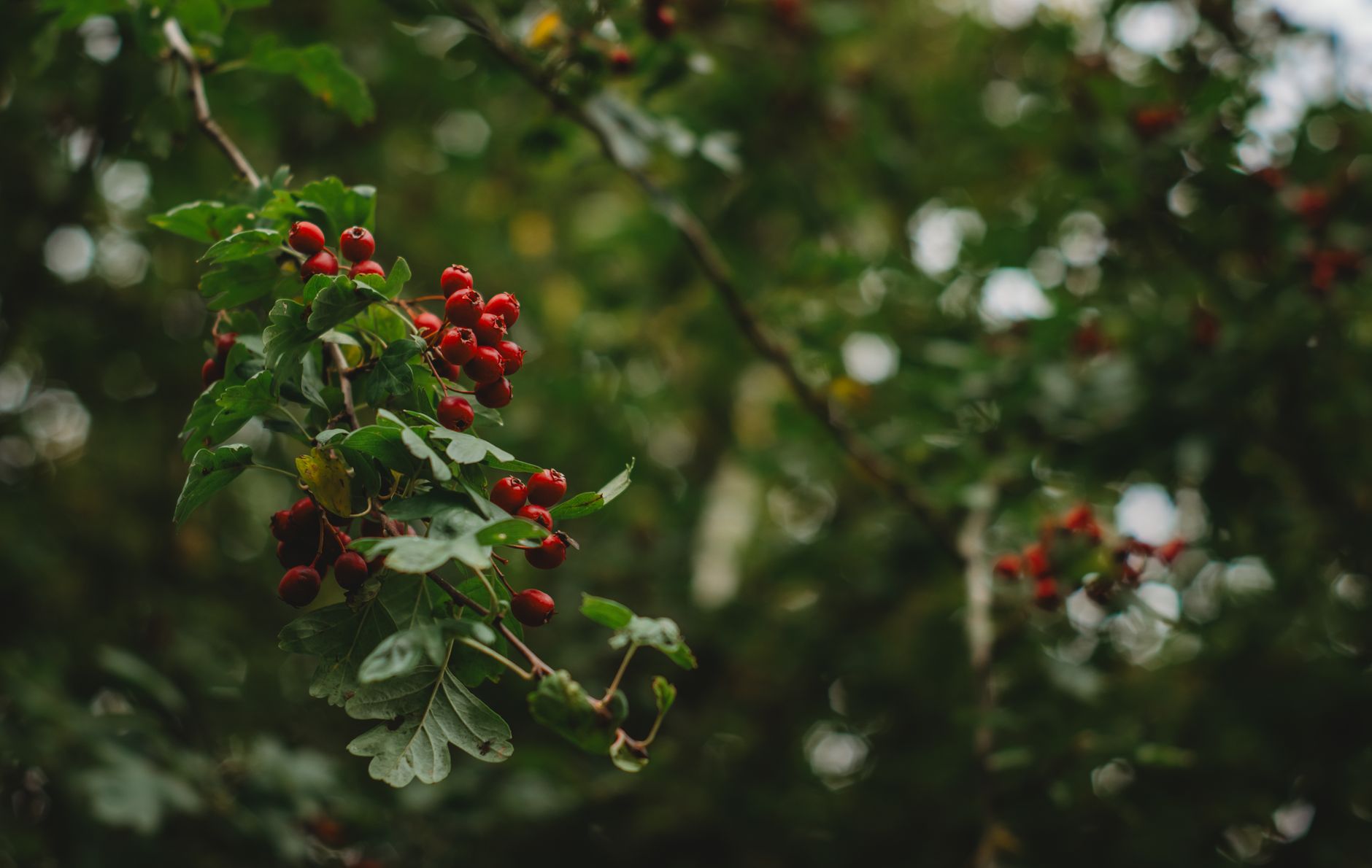
By late summer, the fruit forms as small red hawthorn berries, though botanically they are pomes. That detail matters because the fruit has a core and flesh structure closer to an apple than a true berry, which explains the firm texture you may notice on a ripe hedge.
Where It Grows Best In The Wild
Field margins, windbreaks, and hedgerows give hawthorn the light and room it likes. It tolerates exposed ground better than many native tree species, which is why it shows up along farm boundaries and old routes where the soil has been cut and trampled.
That toughness also explains why the plant survives in mixed shelterbelts and abandoned corners. Once you know those cues, the seasonal cycle becomes easier to follow, and the flowers lead straight into the fruiting stage.
Those seasonal cues make the fruiting stage easier to spot, and the flowers are only the first hint of what follows.
The Flowers, Fruit, And Seasonal Changes
That spring-to-fall pattern makes the plant easy to read across the year. Flowers open first, fruit follows, and the canopy shifts with each season in a way that feels almost clocklike.
The red fruits are pomes, not true berries, and that botanical detail helps explain their structure and taste. You may hear them called haw berries, but the shell around the seed is the sign of the apple family rather than a soft berry body.
From Blossom To Fruit Set
After bloom, fertilized flowers shed their petals and swell into tiny green fruits. Each cluster changes color as it ripens, and the shift from pale spring bloom to dense red clusters gives you a clean visual marker for the year’s progress.
The ripening period varies with climate and species, but the pattern stays steady: blossom, small green fruit, then red fruit in late summer or fall. In a dry season, fruit size can stay small, yet the color can still be strong enough to stand out from a distance.
Autumn Color And Winter Holdover
Some ornamental forms add yellow, bronze, or orange leaf color before drop, which makes them useful as small landscape trees near paths or patios. The foliage can look almost burnt at the edges after cold nights, while the fruit remains bright and hard against bare branches.
Birds and other wildlife feed on the fruit through autumn and winter, especially after softer food has faded. That persistence matters because a hawthorn tree can carry food into a season when many shrubs are already stripped clean.
Fruit that stays on the branches after frost gives your yard more than color. It also extends bird food into the cold months, which is one reason mixed hedges matter so much.
Why The Fruit Matters Botanically
Hawthorn fruit holds one to several seeds inside a pome, and the flesh is built to attract dispersers rather than people. The sugars and acids shift as the fruit matures, which is why the texture changes from firm and tart to softer and less sharp.
That same seed-carrying design explains the plant’s spread in hedgerows and woodland edges. Once birds carry the fruit away, the next section of the story becomes a question of site choice and care in your own yard.
Once birds scatter the berries, attention shifts from the wild edge to the practical question of where it will thrive.
Growing Hawthorn In Gardens And Hedges

Dry banks, open sun, and wind-exposed ground suit this plant better than heavy shade. Care stays straightforward once you match the site to its preference for drainage and room at the root zone.
You can plant it as a specimen, a screen, or a boundary line, and each use changes the pruning shape. The same hardiness that helps it survive in farm country also makes it useful in suburbs where wind and wildlife pressure can be high.
Site, Soil, And Exposure
Full sun gives the densest flowering and the strongest fruit set, while partial shade still works in many yards. Heavy, waterlogged clay slows root growth, so raised ground or a sloped bed suits it better than a low pocket that stays wet after rain.
Plant hardiness ranges vary by species and cultivar, but many hawthorns handle a wide spread of cold and heat once established. That broad tolerance is why common hawthorn remains a practical choice for windbreaks in rural planting strips.
Planting And Early Watering
- Set the root flare high. Keep the trunk base visible so the plant settles without buried bark.
- Water deeply at planting. Soak the root zone so moisture reaches the full spread of roots.
- Mulch a wide ring. Leave a gap around the trunk to reduce rot at the bark line.
- Water young plants on schedule. Give steady moisture through the first growing season, then taper as roots extend.
Young plants need a stable start more than frequent sprinkles, and deep watering teaches roots to search downward. After the establishment year, the plant handles dry spells better, which is one reason it suits low-input hedges.
Pruning For Shape And Boundary Use
Light pruning in late winter or just after bloom keeps a specimen tree balanced without stripping off the next flower crop. For a hedge, you can clip side growth and let the base stay wider than the top, which keeps light reaching the lower stems.
That shape matters in livestock control because a tight lower frame blocks gaps that animals exploit. The branch structure also matters for screening, since a dense line of stems creates privacy without the weight of a solid fence.
A dense thicket does more than screen a boundary; it also creates shelter that many creatures depend on.
Use sharp gloves and long sleeves before you prune. The thorns stay unforgiving, and a small scratch can turn into a bigger problem than the cut you meant to make.
Wildlife Value And Protective Thorns
The thorn system works like armor for the canopy, and birds use that armor well. Wildlife value matters because the spines discourage grazing while the branches give nesting birds a safer shell of cover.
That protection has a physical logic. Browsing animals avoid the sharp stems, which leaves the interior twigs intact long enough for nests, leaf cover, and fruit to develop through the season.
Nesting Shelter In Dense Branches
Small birds often choose thorny shrubs and small trees because predators have a harder path through the twig maze. The dense branch pattern also breaks wind, so nests sit in a calmer pocket than they would in an open crown.
In mixed hedges, that structure helps wrens, finches, and thrushes move through cover without crossing open ground. A single plant can do little alone, but a hedgerow of hawthorn, blackthorn, and hazel becomes a corridor that many species can use.
Autumn And Winter Bird Food
Red fruit draws thrushes, waxwings, and other birds once insects fade and softer berries disappear. The fruit keeps its shape well into winter, which gives the plant real value after the first freeze settles in.
That late-season holdover is a practical trait, not just a pretty one. Birds feeding on hawthorn berries help move seeds through the yard, while the remaining crop keeps hanging on for the next cold snap.
Mixed Hedgerows And Habitat Links
A mixed hedge does more than mark a boundary. It layers blossom time, fruit time, and shelter in one strip, so pollinators, nesting birds, and seed eaters all find something useful in different months.
That mix is why native tree planting plans often pair hawthorn with other Crataegus species or with elder, dogwood, and serviceberry. The structure widens the habitat window, and that leads straight into the plant’s long herbal history.
That protective structure has long shaped how people valued the plant, especially in remedies passed from one generation to the next.
Traditional Uses And Herbal Reputation

Herbal history has tied hawthorn to heart tonics for centuries, especially in European practice. The leaves, flowers, and fruit all carried reputation in teas and extracts, and that reputation still shapes how many people speak about the plant today.
The old use story matters, but it needs a careful frame. Traditional practice and modern evidence are not the same thing, and the safest way to think about hawthorn is as a plant with a long record in folk and herbal medicine, not as a cure.
Leaves, Flowers, And Fruit In Herbal Use
Herbalists have long used the flowering tops because they contain flavonoids and related compounds linked with circulation support. That chemical family matters because flavonoids can influence blood vessel tone and antioxidant activity in laboratory and clinical settings.
The fruit has also been valued, especially in preparations where the tart flesh adds both flavor and plant material. Crataegus monogyna appears often in European herbal tradition, while North American native plants in the genus carry their own local uses and names.
Folklore, Caution, And Modern Evidence
Folklore gave hawthorn a place in hedges, weddings, and protective customs, but herb history also picked up claims that outrun proof. Modern research has looked at standardized extracts for cardiovascular support, yet results vary with species, plant part, and preparation.
That variation matters because a plant rich in flowers may not match the chemistry of one picked for fruit or leaf. You should read the genus as a group with different strengths, not as one uniform remedy, and that same variety shows up again in ornamental planting choices.
Different species can suit different roles, and that same diversity helps determine which planting will perform best.
Herbal use belongs in the same conversation as plant ID, not in place of it. A label on a jar means little unless you know the species, the part used, and the reason it was gathered.
Choosing The Right Hawthorn For A Site
Small yards, long hedges, and wildlife strips call for different forms of the same plant. The hawthorn tree you choose should match the space, since an upright specimen and a dense boundary planting ask for different pruning and spacing.
Common hawthorn fits broad rural plantings, while ornamental selections may be chosen for spring blossoms, fruit display, or fall color. The Royal Horticultural Society lists many garden forms with distinct habits, which helps you sort a specimen tree from a hedge plant before the roots go in the ground.
| Planting goal | Best form | Why it fits |
|---|---|---|
| Specimen accent | Single-stem ornamental tree | Shows flower clusters, fruit, and canopy shape clearly |
| Privacy line | Dense hedge planting | Branches knit together fast and block views |
| Windbreak | Mixed shelterbelt row | Stems slow wind and hold structure in rough weather |
| Wildlife border | Native mixed hedge | Provides blossom, cover, and fruit across seasons |
Ornamental Forms And Native Uses
Some selections lean hard into spring bloom, while others carry larger fruit or richer autumn color. That split matters because a yard near a patio may need a tidy ornamental tree, while a fence line may need a tougher native tree that can take rough clipping.
Common hawthorn and related garden forms both hold value, but their jobs differ. A specimen can serve as a focal point, while a hedge can guard stock, screen views, and feed wildlife without needing much pampering.
Safety Around Thorns, Fruit, And Herbal Use
The thorns can puncture skin, snag clothing, and catch in pet fur, so gloves and eye protection are sensible during pruning. Fruit handling is simple, yet the seeds and plant parts should not be treated as kitchen staples without proper identification and sound guidance.
Herbal use deserves the same caution. The plant has a long history in circulation remedies, but that history does not replace medical advice, and mixed species or wrong preparation can change the effect enough to matter.
That uncertainty is why careful selection matters, especially when tradition and safety need to be weighed together.
What To Remember
A hawthorn tree gives you more than a thorny outline with red fruit. It brings spring blossoms, autumn food for birds, and a structure that works in hedges, windbreaks, and small garden spaces. Choose the form that fits your site, then let its seasonal rhythm do the rest.
FAQ
What is a hawthorn tree?
It is a thorny shrub or small tree in the genus Crataegus and the rose family, Rosaceae. You can spot it by spring clusters of white or pink flowers, sharp branches, and small red pomes that hang into autumn.
Are hawthorn berries edible?
The fruit is used in some culinary and herbal traditions, but proper identification matters because species vary. Handle the seeds and plant parts with care, and use only well-identified material from a trusted source.
How do you identify a hawthorn tree?
Start with the thorns, then check the blossom clusters, leaf shape, and red fruit. Crataegus monogyna and Crataegus laevigata are common reference species, and the branch pattern plus spring bloom usually make the plant stand out in a hedge.
Are hawthorn trees good for wildlife?
Yes, the plant supports birds, nesting cover, and autumn food in one package. The thorns help shield nests from grazing animals, and the fruit stays available after many softer fruits are gone.
When do hawthorn trees flower and fruit?
Flowers open in spring, often in dense white or pink clusters. Fruit follows through summer and ripens to red in late summer or autumn, then can remain on the branches into winter.
Are hawthorn trees good for hedges and windbreaks?
They are a strong fit for both uses because the stems knit into a dense line and the thorns discourage browsing. You can prune them lightly for shape or let them thicken into a living boundary.