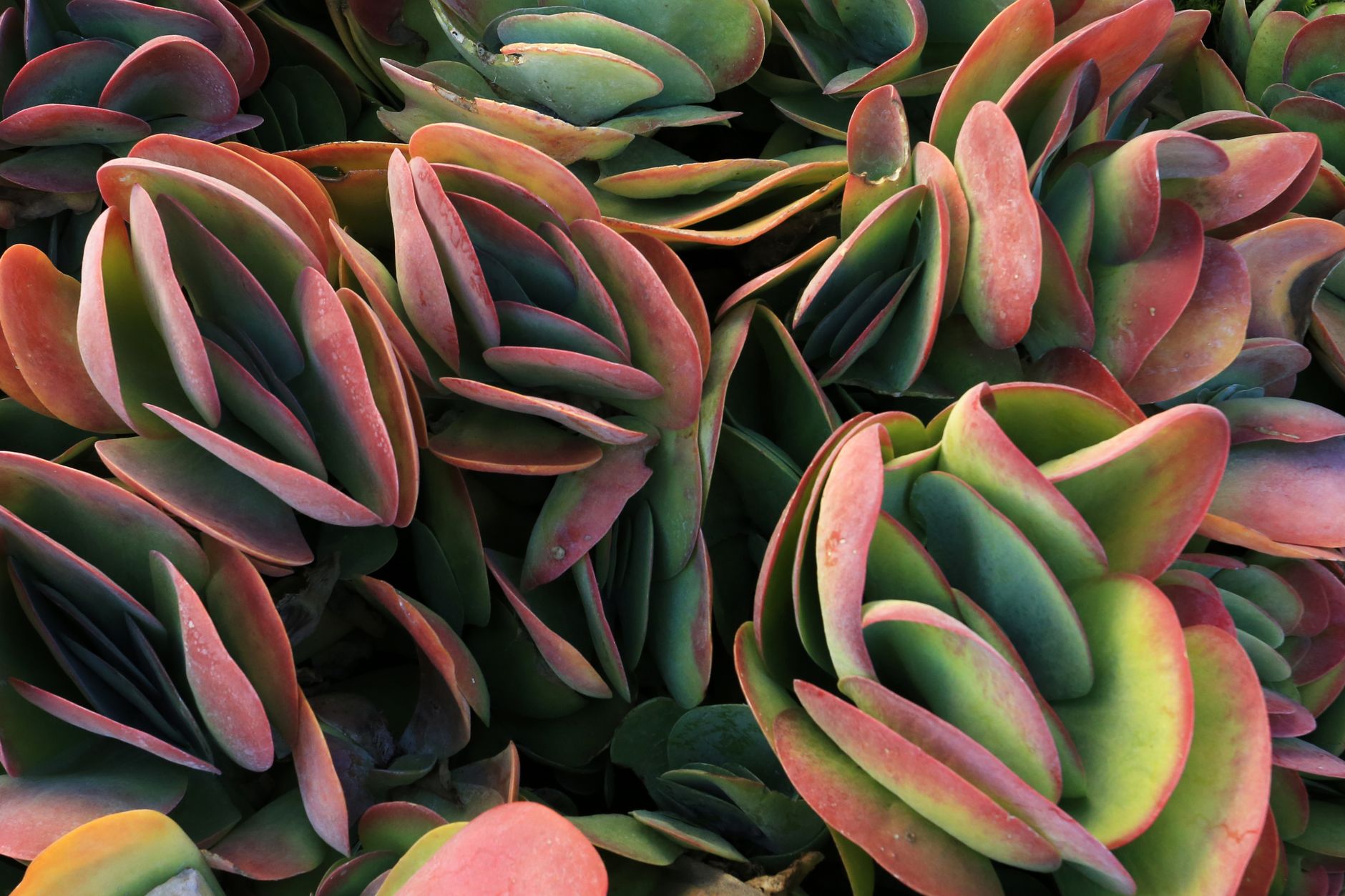

Broad, flat leaves stack like pancakes in a low rosette, giving this paddle plant its distinctive succulent form. Bright sun keeps the edges crisp and colored, while too much water makes that tidy form soften and collapse.
This article covers paddle plant care, color changes, propagation, and the mistakes that matter for Kalanchoe luciae in pots or rock gardens.
The Plant Behind The Common Names
Thick, fleshy leaves show right away that the plant stores water in its own tissue. That trait places it in Crassulaceae, the family behind many familiar succulents, and it explains why the plant handles dry spells better than soggy soil.
Kalanchoe luciae is the botanical name that matters most here. Nursery tags may say paddle plant, flapjack plant, or flapjack succulent, and each name points to the same stacked rosette look that makes the plant easy to spot on a shelf or in a desert-style border.
Why The Rosette Looks Stacked
The leaves grow in a compressed circle close to the base, then layer above one another like shallow plates. That arrangement reduces exposed stem tissue and gives the plant a squat profile that stays tidy in containers.
The shape follows a clear logic: broad leaves catch light, hold moisture, and spread outward without becoming leggy. Native to southern Africa, the plant fits dry, bright sites where water arrives in short bursts and drains fast.
Why The Names Matter In Practice
Labels matter because plant tags can blur Kalanchoe luciae with similar Kalanchoe succulents. The Royal Horticultural Society treats careful naming as more than a formality, since growth habits and winter response vary across related species.
University of California Agriculture and Natural Resources also stresses drainage and restrained watering for succulents with water-storing leaves. That advice fits the paddle plant succulent well, and it sets up the next question: how light changes color and shape.
Those water-storing leaves also mean sunlight can reshape the plant’s color and rosette form.
Rosette Form And Color In Bright Sun
Strong light keeps the rosette tight and the leaves held low. In a shaded spot, the plant stretches upward and loses the compact shape that gives flapjack succulent its clean lines.
Bright sun can bring red or pink margins to the leaf edges, especially on mature plants. That color shift is sun stress in the normal horticultural sense, a pigment response that helps protect the leaf surface from intense light.
Healthy Color Versus Sun Damage
Sun stress usually shows as even coloring along the rim, while scorch leaves dry out in bleached patches or papery tan spots. A healthy plant still feels firm, and the leaf surface stays smooth instead of collapsing.
Fading to pale green in a bright site points to low light or a plant that has not adjusted yet. Deep red on the outer leaves can look dramatic, but a crisp brown patch on one side means the exposure rose too fast.
What The Pigments Are Doing
Anthocyanins create much of that red flush. These plant pigments act like a built-in shade cloth, absorbing some light energy before it reaches sensitive tissue inside the leaf.
That mechanism matters because color is not just decoration. It gives you a visual cue about exposure, and it helps you judge whether the plant is receiving enough light without pushing into damage.
That color shift is most useful when light stays steady enough to keep growth tight and balanced.
Light That Keeps It Compact Indoors Or Out

Bright, direct light brings the most compact growth and the clearest leaf color. Indoors, a south- or west-facing window gives the strongest results, while bright indirect light can work for a younger plant that has not yet adapted.
Paddle plant sunlight needs are higher than many houseplants. A dim room produces long petioles, wider spacing between leaves, and a shape that no longer looks like a true rosette.
Indoor Placement That Works
A spot within a few feet of glass often performs better than a corner across the room. Light drops fast with distance, so a plant near the window keeps shorter internodes and a sturdier outline.
Rotate the pot a quarter turn every week or two so one side does not lean toward the source. That small habit keeps the rosette balanced and helps the plant avoid a lopsided profile.
Gradual Exposure Prevents Leaf Burn
Move a plant into direct sun over 7 to 14 days, not in one sharp jump. Sudden exposure can damage the waxy surface before the tissue adapts to stronger light.
On a patio, morning sun followed by afternoon shade is a safer starting point than all-day heat. By the time the leaves have thickened their protective pigments, the plant can handle a brighter position with less risk of scorch.
When brightness increases, watering mistakes become the bigger threat, especially if the mix holds moisture too long.
Watch the outermost leaves after a placement change. Even color with firm texture means the spot suits the plant, while pale patches or dry brown spots tell you to ease back.
Watering And Soil That Prevent Root Rot
Well-draining soil is the foundation here, because roots sitting in wet mix lose oxygen fast. A gritty blend with coarse sand, pumice, or perlite gives water a path out of the pot and keeps the root zone from staying saturated.
Overwatering causes root rot, and root rot shows up above ground as limp leaves, a dull base, and slow collapse after a watering cycle. The root tissue starts to fail before the foliage does, so the plant can look thirsty even while the problem is excess moisture.
Soil Mix And Container Drainage
A cactus mix amended with extra pumice or perlite fits flapjack succulent care well. Terracotta helps too, because the porous wall loses moisture faster than glazed ceramic.
Drainage holes are nonnegotiable. Without them, water pools near the bottom of the pot and keeps fine roots wet long after the upper layer seems dry.
Water Only After Drying
Let the mix dry through before the next soak. In warm indoor conditions, that may take 10 to 14 days, while cooler rooms can stretch the dry period even longer.
Deep watering works better than small sips because it wets the root ball evenly and then clears out. Shallow splashes leave the lower roots too dry and the upper mix too wet, which is a bad trade for a succulent.
- Check the pot weight. A light pot usually means the root zone has dried enough for another watering.
- Use a drainage hole. Standing water at the base pushes roots toward decay.
- Choose gritty mix. Faster drainage gives the plant the dry air around roots it likes.
- Skip fixed schedules. Room heat, pot size, and light level change the timing.
- Soak, then wait. Full watering followed by a dry period suits this plant better than frequent sprinkles.
That rhythm also explains why so many garden problems start with routine, not neglect. A plant kept in dense peat and watered weekly never gets the dry interval its roots need, and once that pattern starts, recovery becomes slow.
Dry roots are only part of the equation, because new plants also depend on simple, patient multiplication.
Propagating New Plants From Offsets And Leaves

Offsets are the cleanest way to make new plants because they already carry a small root system or a growth point near the mother plant. For flapjack plant propagation, that gives you the highest success rate and the fastest route to a sturdy young specimen.
Leaf cuttings work too, but they ask for patience. A single healthy leaf can produce tiny plantlets at the base after it calluses and settles into a dry, airy mix.
Offsets Give The Fastest Start
Detach an offset only after it has reached a usable size and shows its own roots or firm attachment point. A clean cut at the base, followed by a short drying period, reduces rot at the wound.
Place the offset in free-draining soil and keep the mix barely moist at most. New root growth follows the search for moisture, so a dry interval between light waterings helps the plant anchor itself.
Leaf Cuttings Reward Patience
Choose an intact leaf with no tears at the base, then twist it off cleanly. The attachment point matters because a torn leaf often fails before it can form new tissue.
Let the cutting callus for several days before placing it on the soil surface. The cut end seals over during that pause, which lowers the odds of rot once the leaf meets the mix.
Set cuttings in bright shade, not full sun. Strong light dries the tissue too fast before roots or plantlets have a chance to form.
What Rooting Hones In On
Root initiation depends on stored carbohydrates and moisture balance inside the leaf or offset. A succulent leaf has enough reserves to support new growth, but only while the base stays dry enough to avoid decay.
That biological trade-off explains why propagation looks slow at the start and then suddenly moves. Tiny roots form out of sight before any visible change appears above the soil.
That hidden start explains why growth seems stalled until the plant suddenly shifts into a faster seasonal rhythm.
Flower Stalks, Seasonal Growth, And Common Care Errors
Tall flower stalks can rise well above the rosette and carry tubular blooms on branched stems. The shift from squat leaves to upright bloom stalks is striking, and it usually signals mature growth under good light and sane watering.
Growth slows in cooler months, and water should follow that slowdown. A plant resting in short winter days uses less moisture, so the same watering rhythm that worked in summer can become too frequent.
Seasonal Slowdown Changes The Routine
Cooler temperatures reduce evaporation from the pot and lower the plant’s water use. That means the mix stays wet longer, and the roots face more risk from stale moisture.
During that period, a longer gap between waterings is the safer choice. A plant in dormancy or near-dormancy needs patience more than attention.
Common Mistakes That Show Up Fast
The biggest errors are easy to spot once you know the plant’s habits. Low light, heavy soil, and frequent watering each push the rosette away from its natural form.
- Low light. Leaves spread out, and the plant loses its compact profile.
- Heavy mix. Water lingers too long around the roots.
- Frequent watering. Soft leaves and root loss follow fast.
- Cold wet soil. Winter moisture lingers and slows recovery.
- Sudden sun. Leaf burn appears before the plant adapts.
Fresh flower stalks, slower winter growth, and those care errors all point back to the same principle: this succulent wants light, air, and a dry cycle between soakings. Get those three right, and the plant stays compact, colored, and firm.
Those seasonal changes reinforce a simple formula for keeping the plant healthy year after year.
What To Remember
The paddle plant thrives when you match its rosette shape to the right light and keep water on a short leash. Broad leaves, red margins, and tall blooms all make more sense once you treat the plant like a dry-country succulent rather than a casual houseplant.
FAQ
How do you care for a flapjack succulent?
Give it bright light, gritty soil, and infrequent watering after the mix dries. Keep the pot draining well, and adjust watering downward in cooler months when the plant uses less moisture.
Why are the leaves on my paddle plant turning red?
Red or pink leaf margins usually come from strong light, which triggers sun stress pigments. That color can be healthy, but brown scorch patches mean the plant got too much sun too quickly.
How much sun does a paddle plant need?
It needs several hours of bright light, and direct sun gives the tightest rosette indoors or out. A south- or west-facing window works well, and outdoor plants handle brighter exposure after gradual acclimation.
How often should you water a flapjack succulent?
Water only after the mix dries through, which can mean every 10 to 14 days indoors or even longer in cool rooms. Pot size, light, and temperature change the pace, so the soil tells you more than the calendar.
Can flapjack succulents grow indoors?
Yes, as long as you give them very bright placement near a south- or west-facing window. Indoor plants stretch and fade in dim spots, so light is the main factor that keeps the rosette compact.
How do you propagate a paddle plant succulent?
Offsets are the easiest method because they already have a head start. Leaf cuttings also work, but you need to let them callus before setting them on free-draining soil.