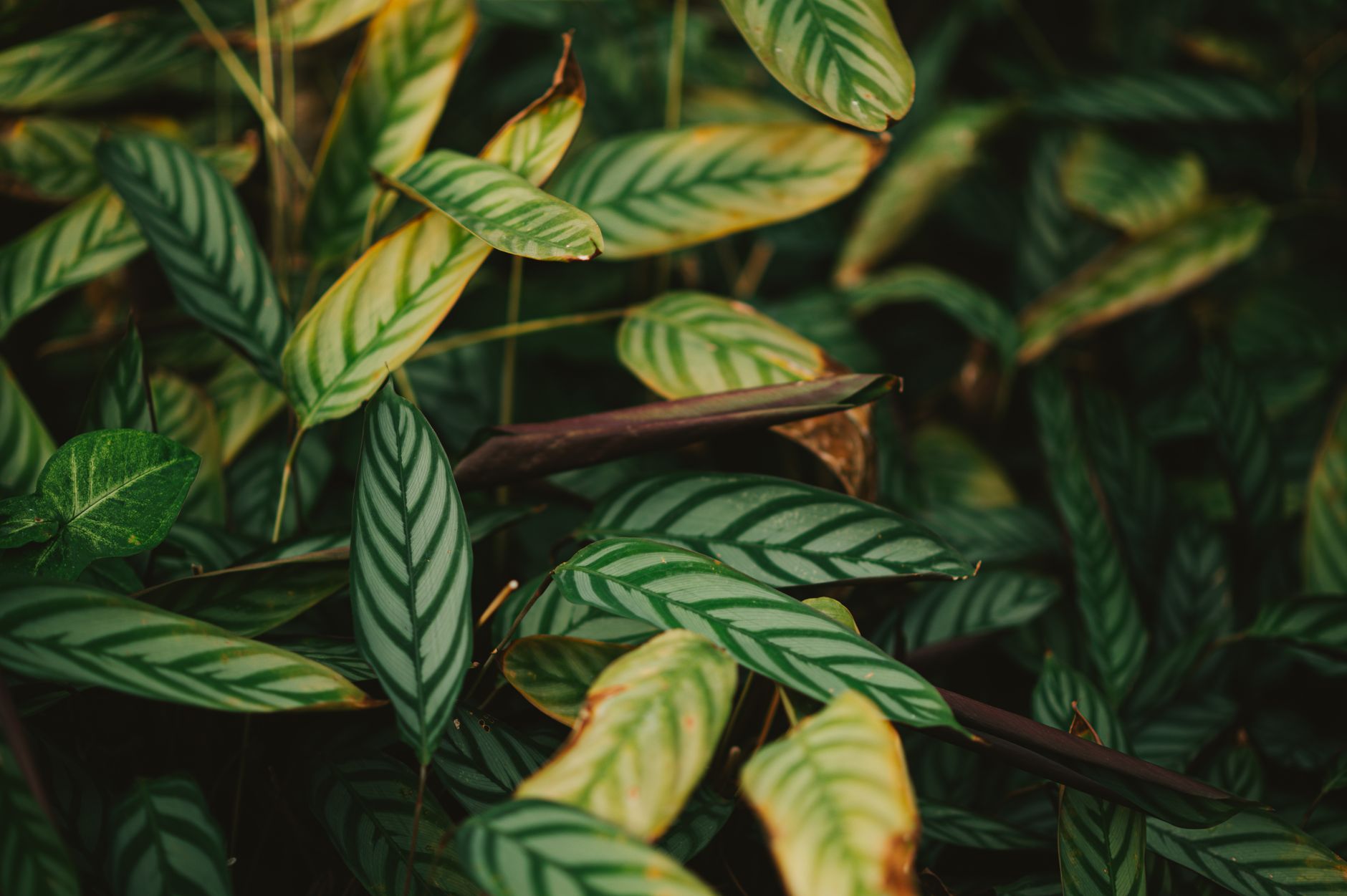

Long, narrow leaves with dark green markings, purple undersides, and wavy edges give Calathea lancifolia its tropical houseplant appeal. It stands out for its striped foliage, but it also needs steady light, moisture, and humidity to stay looking sharp indoors.
This overview covers its appearance, care needs, common problems, and what to expect over time for anyone growing it as an indoor prayer plant.
The Rattlesnake Look That Sets It Apart
Dark bands sweep across each leaf like painted lines, and the purple underside shows whenever the plant shifts in a draft or turns toward a window. That contrast gives the rattlesnake plant its name and makes it easy to pick out among plain green foliage.
Long, narrow leaves do most of the visual work. Their wavy edges add movement, so the plant never feels rigid, and that rhythm is part of why Calathea lancifolia fits so naturally beside other prayer plants.
Marantaceae is the family behind that shared look. The Royal Horticultural Society places Calathea with other foliage plants valued for leaf shape and movement rather than flowers, and the Missouri Botanical Garden notes that Calathea lancifolia grows for its leaves first.
That leaf-first habit explains why the plant stays interesting even when it is not blooming. Pattern, color, and motion all come from one compact plant, which is why it works so well in a mixed indoor display.
That compact mix of pattern and movement also hints at why it slips so easily into indoor spaces.
Why This Calathea Earns A Spot Indoors
A bright east window suits this plant far better than a hot patio. Indoors, the foliage looks almost like fabric, so you get texture, color, and movement in a compact form that fits tables, plant stands, and corners with filtered light.
Flowers are not the main attraction here. The plant earns its place as a patterned leaf houseplant because the leaves carry the entire design, and that matters in rooms where you want visual interest without a bulky shape.
Warm homes with steady moisture suit its tropical foliage better than dry rooms with sharp temperature swings. A living room, bathroom with light, or kitchen shelf can all work well, as long as the air stays soft enough for the leaves to remain fresh.
That indoor fit is why growers keep coming back to this plant, even though it can be picky. Place it where the light is gentle and the air stays even, then let the foliage do the rest.
Rooms that already support a few other tropical plants often make the best match. The same conditions that help a fern or another calathea usually keep this one steadier too.
Those shared preferences point straight toward the warmth, moisture, and light levels it needs to settle in.
Light, Temperature, And Humidity It Prefers

Bright, indirect light keeps the leaf color clear without bleaching the markings. Direct sun can scorch the thin tissue, leaving pale patches or crisp edges, while weak light can flatten the contrast and slow growth.
Bright Indirect Light Works Best
A sheer curtain or a spot a few feet from an east or north window gives the plant the light it wants. South- or west-facing glass can still work, but only with distance from the pane or filtered exposure.
The light needs of this indoor prayer plant are a lot like camera lighting: soft enough to show detail without washing out the subject. That balance keeps the pattern sharp and helps the plant hold its color through the season.
If the leaves start fading, move the pot before assuming the plant is declining for good. A small shift in distance from the window often restores better color without changing anything else in the room.
Warm Air And Steady Moisture Matter
Daytime temperatures in the normal indoor range suit Calathea lancifolia well, and the leaves react badly to cold blasts from vents or open windows. High humidity keeps the leaf margins supple, which is why bathrooms and grouped plant shelves often work better than dry windowsills.
Low humidity is the common trap. In winter, forced-air heat pulls moisture from the room, and the first sign is often brown leaf tips followed by a tired, dull look.
Place a pebble tray or a small humidifier nearby rather than misting once and hoping for the best. Steady air moisture matters more than a brief surface dampening.
Stable moisture in the air helps the plant keep its edges clean and its pattern crisp. That steadiness also makes watering easier to judge, which is the next part that matters.
Dry Rooms Create The First Stress Signals
Leaf curl, browning, and a faint crispy texture usually show up before the plant looks seriously troubled. That early signal gives you time to move it closer to other plants, away from vents, or into a room with better humidity.
Because the leaves are thin, they react faster than thicker houseplant foliage. The plant is telling you about its environment before the roots fail, and that makes the next habit, watering, easier to read.
You can use those early signals as a diagnostic tool. Once the foliage starts curling or crisping, humidity and airflow deserve a closer look before you reach for fertilizer or another fix.
Because foliage reacts quickly, watering becomes the clearest place to keep this plant steady.
Watering Habits That Keep It Healthy
Even soil moisture is the target, not constant saturation. The root system needs oxygen as much as water, and soggy mix leaves air pockets full of water instead of air, which raises the chance of root rot.
A well-draining potting mix helps, but the watering schedule still matters more than the pot alone. Let the top layer dry slightly, then water deeply so moisture reaches the root ball without leaving the container waterlogged.
That balance protects both roots and leaves. You want enough water to support steady growth, but not so much that the soil stays sealed off from oxygen.
Use Moist Soil, Not Wet Soil
A pot that stays glossy on the surface for days has too much water in reserve. The roots do better with a cycle that stays damp through the middle, then eases toward slightly drier at the top before the next drink.
Overwatering causes more damage than a short dry spell, so restraint matters. The plant can recover from mild underwatering, but root rot can set off a fast decline that starts below the soil line and shows up later in the leaves.
That is why a routine check beats guesswork. Feel the mix with your finger or a wooden stake, then water only when the upper layer starts to lose its cool, damp feel.
Water Quality Can Change Leaf Health
Minerals and treatment chemicals in tap water can bother Calathea lancifolia, which is why filtered or rested water is often safer. Brown tips can appear even when the watering amount seems correct, and water quality is one of the quieter causes.
That sensitivity gives you one practical advantage: a watering can filled with cleaner water can improve leaf finish without changing anything else in the room. It is a small adjustment with a clear payoff for the foliage.
That response makes water quality worth testing early. If the plant has clean moisture, stable humidity, and gentle light, the leaves usually look better within a few growth cycles.
When moisture is already right, the remaining clues usually point to deeper stressors.
- Check the top layer. Feel the soil before watering, and wait until the surface has begun to dry.
- Water all the way through. Saturate the pot evenly so the root zone gets a full drink.
- Empty the saucer. Standing water keeps roots wet long after the mix should have drained.
- Use gentler water. Filtered or rested water reduces mineral stress on sensitive leaves.
- Adjust for the room. Dry heat, low humidity, and bright light all speed water loss.
Common Problems And Why They Appear
Brown leaf tips, leaf curl, and fading color are the usual warning lights. They point to a room that is too dry, watering that swings between extremes, or light that is too harsh for thin foliage.
Many calatheas seem difficult because they react quickly to change. A shift in humidity one week and a missed watering the next can show up as stress almost immediately, which makes the plant feel fussy even though the pattern is straightforward.
That quick response is useful once you know what to watch. The foliage tells you what changed first, so you can fix the setting instead of chasing symptoms.
Brown Tips Signal Dry Air Or Water Stress
Brown leaf tips usually mean the margins dried faster than the rest of the leaf. Dry air is a frequent cause, but water with high mineral content and uneven soil moisture can create the same result.
One practical example: a plant on a shelf above a heat vent can look healthy in the morning and rough by evening. The room is not the problem alone; the moving air is drying the leaf edges faster than the roots can replace water.
That pattern is common in winter when indoor heat runs often. If the tips keep browning, look at the air first, then the water, then the light.
Leaf Curl Points To A Fast Stress Response
Curling leaves often show that the plant is trying to reduce surface loss. Low humidity, underwatering, or abrupt light change can trigger that response, and the plant uses curling like a warning flag.
Because the leaves react fast, you can diagnose by recent changes instead of guessing. A moved curtain, a heat register, or a missed watering pattern often explains the shift better than disease does.
A small correction usually works faster than a major overhaul. Move the plant back from the vent, water evenly, and give it a few days before making another change.
Root Rot Starts Below The Surface
Soft stems, sour soil, and a plant that droops even after watering are classic root rot clues. The decay begins when roots sit in saturated mix and lose access to air.
That process is mechanical as much as biological. Roots need oxygen for cellular respiration, and waterlogged soil blocks gas exchange, so the plant can suffocate underground long before the leaves collapse.
At that point, drainage matters more than any top-dressing or foliar spray. A pot with clear outflow and a lighter watering hand reduces the chance of repeating the same damage.
Once those issues are understood, long-term care becomes less about rescue and more about keeping the plant safe around pets.
Check drainage holes before you blame the plant. A pot without clear outflow turns careful watering into slow saturation, and that sets the stage for decline.
Pet Safety, Lifespan, And Long-Term Expectations
Calathea lancifolia is generally regarded as non-toxic to cats and dogs, which makes it easier to place in living rooms, bedrooms, or low windows where pets roam. That does not mean nibbling is a good idea, but it does reduce the worry that comes with many tropical houseplants.
With steady care, the plant can live for years indoors. The long haul depends more on routine than dramatic intervention, and that is where your habits matter more than any single rescue move.
That longer lifespan is what makes the plant worth learning. Once the routine is set, you can keep the foliage attractive without constant troubleshooting.
Routine Wins Over Rescue Moves
A consistent watering rhythm, stable humidity, and gentle light do more for this plant than occasional heavy-handed fixes. You do not need perfect conditions, just a repeatable one that stays close to what the foliage likes.
Think of it as a quiet clock rather than a dramatic project. A plant that gets the same light, moisture, and air quality week after week keeps its pattern better and ages more gracefully.
That steadiness is especially helpful in mixed rooms where conditions change through the day. Small consistency beats occasional rescue every time.
Long-Term Care Favors Small Corrections
Calathea care guide advice tends to work best in small adjustments. Move the pot a foot from a hot window, swap to filtered water, or raise humidity in the driest room, then watch the leaves for the next two weeks.
That slow response matters because the plant does not reset overnight. New growth reflects the conditions you set now, and that makes patience part of the health plan for this rattlesnake plant.
When the adjustments are modest, the results are easier to read. You can tell whether the change helped without overwhelming the plant with too many variables at once.
With the stakes and expectations clear, the main lessons can be kept simple and practical.
What To Remember
Calathea lancifolia stays at its best when you treat it as a humidity-loving foliage plant, not a set-and-forget accent. Bright indirect light, steady moisture, and clean water keep the leaves patterned, flexible, and worth the space they take indoors.
That simple formula gives you the best chance of keeping the plant healthy for years. Once the room matches the plant, the leaves usually reward that effort with stronger color and cleaner edges.
FAQ
Is rattlesnake calathea hard to care for?
It asks for consistency more than skill, so the care feels hard only when the room is dry or the watering swings too far. Once you match light, moisture, and humidity to the plant, the routine becomes predictable.
What are the common problems with Calathea lancifolia?
Brown tips, leaf curl, dull color, and root rot are the main trouble spots. Each one points to a readable cause, such as dry air, irregular watering, harsh light, or water that leaves mineral residue in the soil.
Why are calatheas so hard to keep alive?
They react quickly to indoor stress, especially low humidity, cold drafts, and inconsistent moisture. That fast response makes small care lapses show up on the leaves before the root system has time to recover.
What is the lifespan of a Calathea lancifolia plant?
With steady indoor care, it can live for years as a long-term houseplant. The plant’s lifespan depends less on rescue treatment and more on how consistently you keep light, humidity, and watering in a stable range.
How much light does a rattlesnake plant need?
Bright, indirect light is the best fit. A spot near an east window or a few feet back from stronger sun gives the foliage enough energy without burning the leaf surface.
How often should you water a rattlesnake plant?
Water on the basis of soil moisture, not the calendar. When the top layer begins to dry but the mix still feels lightly damp below, it is time to water again.