Potatoes don’t need a big plot to earn their keep. The right container helps you keep soil loose, manage watering, and make harvest time less of a digging project, which matters a lot on patios, balconies, and compact yards.
This roundup focuses on fabric grow bags, visible harvest-window bags, and a few sizes that suit everything from seed starts to fuller potato plants. You’ll see which options fit small-space growing, which ones make handling easier, and where the trade-offs show up in day-to-day use.
The Shortlist At A Glance

CJGQ Fabric Raised Garden Beds Outdoor 2X2 Ft 4 Grids Plant Grow Bags

4-Pack 10 Gallon Potato Grow Bags with Flap Window

10 Gallon 3-Pack Potato Grow Bags with Flap and Handles

5 Gallon Grow Bags 4 Pack, 300G Non-Woven Fabric Plant Pots

4-Pack 15-Gallon Grow Bags with 2 Flaps and Reinforced Handles

6 Pack 1 Gallon Grow Bags, Heavy Duty 300g Nonwoven Fabric Plant Pots
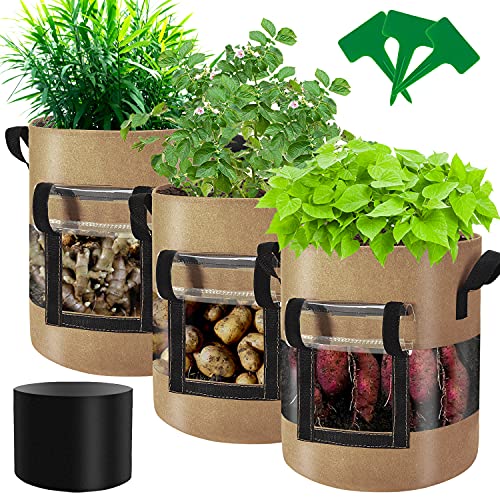
Visible Potato Grow Bags 10 Gallon with Flap 3-Pack

360 Degree Visible 3-Pack 10 Gallon Potato Grow Bags with Flap
More Details On Our Top Picks
That 2 by 2 foot footprint gives you a tidy potato patch without taking over the patio. The four-grid layout also helps separate plants, which matters when you want to keep spacing sensible in a narrow yard or a sunny balcony corner.
Compared with the bag-only picks below, this one feels more like a small raised bed than a loose planter sack. You may find it especially useful for mixed plantings, since the square shape makes layout easier to plan and keep orderly.
Strong Points
- Square form uses corner space well.
- Four sections help organize planting spots.
- Fabric construction suits indoor or outdoor use.
- Simple shape works well beside planters or railings.
Small Caveats
- The open, bed-like shape asks for more careful soil filling than a standard bag.
- It takes more floor space than the 1-gallon and 5-gallon options.
Feature Snapshot
Who It Suits Best
Space-conscious gardeners who want a more structured planting area will get the most from this one.
A Better Fit Elsewhere
Florelf Visible Potato Grow Bags 10 Gallon with Flap 3-Pack suits you better when harvest access matters more than a fixed bed shape.
The flap window is the real story here, because it lets you check root growth without turning the whole bag inside out. That kind of access helps in a busy kitchen garden, where you may want a quick look without a messy harvest.
Unlike the CJGQ bed, these bags stay easy to move and store between seasons. The thick nonwoven fabric also gives you the breathable feel most potato growers want, though handles and windows add a little extra structure to manage.
What We Like
- Flap opening makes harvest checks simpler.
- Handles help with moving and repositioning.
- Thick nonwoven fabric supports air exchange and drainage.
- Four-pack format suits a small multi-bed setup.
Points To Note
- The flap area adds one more seam to keep clean and dry.
- Ten gallons can feel modest for gardeners who want very large tubers.
Core Details
Built With In Mind
Home gardeners who want easy access to the crop without giving up portability will like this setup.
Another Choice May Suit
BOJOKETTEN 10 Gallon 3-Pack Potato Grow Bags with Flap and Handles suits you better when you want a green finish and a three-bag bundle.
This three-pack sits in a nice middle lane between tiny starter bags and the heavier 15-gallon route. The 17.7 by 13.8 inch size gives you a more generous growing space without demanding the room of a bigger bed.
The PE fabric is the main difference from the nonwoven picks above, and that matters because material choice affects feel and handling. In a backyard that gets moved around often, the handles and flap make it easier to manage than a bulkier container.
Upsides
- Three bags give you a flexible planting set.
- Ten-gallon capacity works well for potato crops.
- Flap access helps with growth checks and harvest timing.
- Handles make lifting and shifting less awkward.
- Green color blends in neatly in a garden bed.
Areas To Watch
- PE fabric has a different feel from the thicker nonwoven builds in this list.
- The larger footprint needs more porch or yard room than the 5-gallon option.
- The flap adds convenience, but it also gives you one more area to keep tidy.
Feature Rundown
Right Fit For
You’ll appreciate this set most in a home garden where medium-size containers feel more useful than tiny seedling bags.
Swap It Out When
SORANGEUN 4-Pack 15-Gallon Grow Bags with 2 Flaps and Reinforced Handles suits gardeners who want a bigger root zone than this 10-gallon set.
The 5-gallon size keeps this set friendly for tight spaces, and that’s useful on apartment balconies or smaller backyard setups. The 300G fabric weight signals a denser cloth feel, which usually matters when you want something a bit more substantial than the lightest bag style.
Compared with the 10- and 15-gallon picks, this one asks less from your floor space and from your soil budget. The trade-off is simple, smaller bags suit compact plantings better than full-size potato hills, so the fit depends on how much crop volume you want.
Best Bits
- Four bags help you split plants across zones.
- Reinforced handles make moving them less awkward.
- Breathable construction supports drainage in wet weather.
- Smaller size suits patios, decks, and shelves.
Worth Noting
- Five gallons is a modest size for bigger potato harvest goals.
- Denser fabric can feel stiffer than lighter bags at setup.
Spec Overview
Made For
This set suits you best when patio space is tight and you want a manageable bag that still feels sturdy.
Where A Sibling Pick Shines
OPPOLIFE 4-Pack 10 Gallon Potato Grow Bags with Flap Window works better for gardeners who want more root room and harvest access.
Fifteen gallons gives this set a lot more breathing room than the 5- and 10-gallon options, and that extra volume can matter for fuller potato plants. Two flaps also make this feel more practical for gradual checking, which is handy in a garden where you want to monitor growth without digging around.
The reinforced handles add confidence during repositioning, especially once the bags are loaded with soil and water. The honest read is that these are better for gardeners who want a larger, more settled container, not the lightest setup on the shelf.
Reasons To Buy
- 15-gallon capacity gives roots more room.
- Two flaps make access more flexible.
- Reinforced handles help with heavier lifts.
- Four-pack setup works for a larger crop plan.
Softer Spots
- The larger size takes more storage room between growing seasons.
- Filled bags can be bulky to move across a deck or shed.
- They make the most sense in spaces that can handle the footprint.
Details At A Glance
Whose Shelf It Belongs On
This suits you best when you want bigger grow bags and don’t mind giving them enough floor area to spread out.
Look Elsewhere When
FEED GARDEN 5 Gallon Grow Bags 4 Pack is the smarter pick for compact patios and lighter lifting.
These one-gallon bags are much smaller than the rest of the list, so they make sense as starter pots rather than full potato homes. That’s useful for seedlings, herbs, and cuttings, and it gives you a low-commitment way to keep young plants organized.
The 300g nonwoven fabric and reinforced handles make the set feel more durable than its tiny size might suggest. Still, potatoes will outgrow this format quickly, so the right use here is early-stage growing, not a finished crop container.
Highlights
- Six-pack format gives you plenty of small starters.
- One-gallon size is easy to place on shelves.
- Reinforced handles help when you shuffle trays or trayside pots.
- Useful for seedlings, herbs, and cuttings beyond potatoes.
Room For Improvement
- The small capacity is not suited to mature potato plants.
- You’ll likely need to transplant sooner than with larger bags.
Technical Sheet
The Right Fit
Seed-start gardeners and anyone organizing young plants on a shelf will get the most from this set.
Where Shoppers Go Wrong
SORANGEUN 4-Pack 15-Gallon Grow Bags with 2 Flaps and Reinforced Handles is the better pick for full potato growing.
The visible section changes the experience here, because you can check root progress without lifting the whole bag apart. For gardeners who like to keep an eye on tuber development, that can save a lot of guesswork during the season.
Compared with the OPPOLIFE 10-gallon bags, this one leans harder into visibility and access. The trade-off is that the clearer design may feel more specialized, so it suits you best when observation is part of the routine.
Positives
- Visible section makes growth checks easier.
- Flap access helps with harvest timing.
- Handles support easier lifting and moving.
- Three-bag set keeps the planting plan manageable.
Honest Caveats
- The visible material gives it a more specialized feel than plain fabric bags.
- It may be more than you need for very simple potato planting.
At A Glance
Who Will Love This
You’ll like this set most if you want a clear look at plant progress while still keeping a normal 10-gallon planting size.
Another Choice May Suit
BIJOKETTEN 10 Gallon 3-Pack Potato Grow Bags with Flap and Handles is the cleaner fit for gardeners who want a green PE fabric option.
This one leans into visibility from all angles, which is handy for gardeners who like checking crop progress without handling the pot too much. The breathable nonwoven fabric also suits the kind of regular watering and drainage management that container potatoes usually need.
Compared with the earlier Florelf bag, this version feels a touch more all-purpose because it works outdoors or indoors. That makes it a sensible fit for porches, utility areas, and sheltered garden corners where you want a bag that stays easy to monitor.
Best Bits
- 360-degree visible design makes inspection easier.
- Flap helps with access at harvest time.
- Breathable nonwoven fabric supports drainage.
- Three-pack format keeps the setup manageable.
- Works in both indoor and outdoor spaces.
Minor Gripes
- The visibility feature is useful, but it also narrows the appeal a bit.
- Three bags may feel limited for larger garden plans.
Quick Facts
Perfect Match For
Home gardeners who want flexible placement and easy crop checks will get the most from this set.
Skip It When
FEED GARDEN 5 Gallon Grow Bags 4 Pack is the better fit for very tight spaces and lighter-duty planting.
How To Choose The Right Containers For Growing Potatoes
Size Shapes The Harvest
Container size is the first choice that changes your results in a noticeable way. Smaller pots, like the 1-gallon and 5-gallon options here, suit starts, herbs, or compact balconies, while 10-gallon and 15-gallon bags give potatoes more room to form a fuller root mass. Bigger containers usually need more soil and more watering attention, so the “best” size is really the one that matches your space and how much crop volume you want.
Think in terms of placement too, not just capacity. A 15-gallon bag can feel generous in a backyard corner, while a 2 x 2 foot fabric bed may fit better against a wall or fence. The right shape makes daily care easier, and that matters as much as the size on paper.
Fabric Type Changes Day-To-Day Use
Nonwoven fabric is common in this category because it supports airflow and drainage, which helps container soil stay less soggy after rain or heavy watering. Denser fabrics like 300G material usually feel sturdier, while lighter constructions can be easier to handle and store between seasons. The trade-off is simple, heavier cloth often brings a more substantial feel, but it can also make the bag less flexible when you fold it away.
PE fabric, which shows up on one of the 10-gallon picks, gives a different handling profile than a standard soft nonwoven bag. That difference matters most to gardeners who move containers often or want a specific feel under the hands.
Access Features Save Time
Flap windows and visible panels are useful when you want to check root development or harvest timing without digging through the whole container. That helps in a busy garden, because you can keep an eye on progress with less disturbance. The trade-off is that extra access points can add seams, and seams need a little more care during cleaning and storage.
Standard bags without windows stay simpler, and many gardeners prefer that. They’re usually easier to rinse out, stack, and store, which is worth a lot for seasonal use.
Handles, Layout, And Storage Matter Too
Handles sound minor until you need to move a filled bag across a deck or into a better patch of sun. Reinforced handles are especially helpful once the bag is heavy, and they matter most for gardeners who rearrange containers often. Flat, structured beds work better for organized layouts, while bag sets are easier to tuck into narrow spaces.
Storage deserves attention as well. Foldable fabric containers usually save space, but larger sizes still take up shelf room, and taller bags need a bit more care to keep clean and dry between seasons.
A Quick Reality Check Before You Decide
Hidden Buying Traps
One common mistake is choosing a bag that looks roomy enough but turns out too small for the crop you want. Another is overlooking access features, then regretting the lack of a flap once harvest time arrives. You’ll also want to match the container to your available floor space, because a great 15-gallon bag can become awkward on a narrow balcony.
Cleaning and storage get missed a lot too. Fabric containers are convenient, but they still benefit from being emptied, brushed out, and dried before you tuck them away.
What The Higher Tier Buys
More expensive options in this category usually bring thicker fabric, reinforced handles, larger capacities, or more access points. Those extras matter most when you plan to grow potatoes regularly, move bags often, or want easier checks during the season.
For a simple starter setup, a smaller bag can be enough. Spending up makes more sense when you care about long-term convenience, sturdier handling, or a container that fits a more demanding growing routine.
Frequently Asked Questions
What size container works best for potatoes?
Ten gallons is a very practical middle ground for container potatoes. Smaller bags suit starts and limited spaces, while 15-gallon options give more room for a fuller plant.
Do fabric grow bags dry out faster?
Fabric containers usually need more attention to watering than rigid pots because they breathe and drain well. That trade-off helps in wet weather, but it also means soil can dry faster in hot sun.
Are flap windows actually useful?
Yes, they make it easier to check roots and harvest timing without digging blindly. They also help you avoid disturbing the whole plant as much.
Can you use these containers indoors?
Some of the bags in this list are suitable for indoor use according to the product details. You still need a setup that handles drainage and keeps the floor protected.
What should you look for in handles?
Reinforced handles are worth paying attention to because filled bags get heavy fast. Strong handles make it easier to move containers when you’re shifting sun exposure or reorganizing a patio.