Big yards ask a lot from lawn tools. You need enough width to cover ground without wasting Saturday, plus a design that matches your setup, whether that means a tow-behind attachment, a corded electric unit, or a manual rake for tighter spaces.
This roundup focuses on dethatchers for large lawns that make sense in real homes, not just on paper. You’ll see where each one fits, what trade-offs come with the design, and which option feels easiest to live with once the job is done.
Quick Look At The Shortlist

Walensee Adjustable Steel Thatch Rake
Brinly 48″ Tow Behind Grass Dethatcher
TCBWFY 15″ Manual Dethatcher Rake

TIECTOWN 16-Inch 2-in-1 Electric Dethatcher

BlumeTrec 15″ Manual Thatch Rake

Westinghouse 16″ 2-in-1 Electric Dethatcher

TIECTOWN 14-Inch 2-in-1 Electric Dethatcher

Brinly 48″ Tow Behind Grass Dethatcher
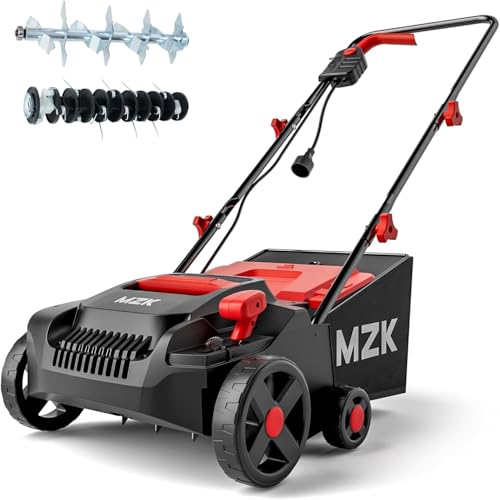
MZK 15-Inch Electric Lawn Dethatcher

Danero Cordless 15″ Brushless Dethatcher
More Details On Our Top Picks
A manual rake still makes sense for spot work, and this Walensee version fits that role well. The adjustable handle helps you keep a steadier posture, which matters during long passes along edges, beds, and awkward corners.
Compared with the electric picks later in this list, it gives you slower but more controlled cleanup. That makes it a sensible match for smaller large lawns, patchy thatch buildup, or anyone who prefers gear with no motor to store.
Strong Points
- Steel construction should hold up better than lighter garden rakes during repeated scraping.
- Adjustable handle length helps you match your reach to your height and working stance.
- Manual control makes it easier to work around borders, trees, and tight lanes.
- Good for targeted cleanup after you handle the main lawn with a larger machine.
Points To Note
- Covering a very large yard takes more time than it does with a tow-behind or electric unit.
- You’ll feel the work in your arms and back during extended use, especially on dense buildup.
- Steel tools need basic cleaning and dry storage to keep rust at bay over time.
Feature Snapshot
Who It Suits Best
Homeowners who want a straightforward hand tool for touch-ups, border work, and smaller sections of a bigger yard will get the most from this pick.
A Better Fit Elsewhere
Brinly’s 48-inch tow-behind dethatcher suits tractor owners who want to cover much more ground with less arm work.
For a big yard, the 48-inch working width is the detail that matters most here. Behind a lawn tractor, that extra span reduces the number of passes, which is exactly where time savings start to show up.
It’s also the kind of setup that suits a property with long open runs more than a busy landscape full of tight turns. Compared with the manual Walensee rake, this Brinly model is built for scale, not finesse, and that trade-off is pretty clear.
What We Like
- 48-inch width helps cover broad lawn sections with fewer passes.
- Tow-behind format keeps the work behind your tractor instead of in your hands.
- Good fit for acreage-style mowing routines and wide open lawns.
- Flat black finish gives it a straightforward, no-frills look that should hide routine grime fairly well.
Small Caveats
- Needs a compatible lawn tractor, so it’s not a standalone solution.
- Tight landscaping, narrow gates, and irregular beds can limit its usefulness.
- Storage takes more room than a hand tool or compact electric unit.
Core Details
Made For
Owners of large, open lawns who already mow with a lawn tractor will get the cleanest fit from this attachment.
Where A Sibling Pick Shines
TIECTOWN’s 16-inch 15.5-amp electric dethatcher suits homeowners without a tractor who still want machine-powered cleanup.
This one leans toward reach and tine count, which helps during manual cleanup of stubborn patches near the edge of a larger lawn. The 15-inch head is wide enough to move steadily, while the 68-inch handle helps keep your posture more upright.
It’s a sensible middle ground between the lighter Walensee rake and the powered options below. The honest read is that it still asks for elbow grease, but it gives you a broader working face than many basic hand tools.
Positives
- 15-inch head helps you cover more ground per stroke than a narrow rake.
- 19 tines give you plenty of contact points for pulling up surface thatch.
- 68-inch handle reduces the need to bend as much while you work.
- Steel build suits repeated yard use better than lighter plastic alternatives.
Room For Improvement
- Manual use still takes stamina, especially on thicker, older thatch layers.
- Long sessions can feel repetitive on a full-size lawn.
- Like most metal tools, it needs drying and storage care after use.
- The wide head can feel a bit less nimble in cramped garden corners.
Technical Sheet
The Right Fit
Hands-on homeowners who want a broad manual rake for seasonal cleanup and border work will appreciate this setup.
Skip It When
Brinly’s 48-inch tow-behind dethatcher is the better match for tractor owners tackling very large open spaces.
This TIECTOWN model has the sort of specs that make sense for recurring lawn care, not just the occasional rescue pass. A 16-inch deck and 15.5-amp motor put it squarely in the machine-powered lane, while the 14.5-gallon bag helps keep cleanup from turning into a second job.
Two functions matter here, because dethatching and scarifying are related but not identical. Dethatching lifts surface debris, scarifying cuts a bit deeper into the top layer, so you get a more aggressive grooming tool than the manual picks earlier in the list.
Highlights
- 2-in-1 design gives you dethatching and scarifying in one machine.
- 15.5-amp motor supports more assertive lawn grooming than hand tools can manage.
- 14.5-gallon collection bag reduces the number of stops to empty debris.
- Five depth settings help you match the tool to seasonal conditions and lawn thickness.
- Wide 16-inch path helps you move through larger sections faster.
Worth Noting
- Electric cord management matters, especially around broad yards with long runs.
- Collection bags fill faster in thick debris, so you’ll still stop for emptying.
- Machine width can feel less nimble around tight landscaping and stepping stones.
Details At A Glance
Built With In Mind
Homeowners with large lawns who want powered cleanup and a bit more control over aggressiveness will be well served here.
Look Elsewhere When
Brinly’s 48-inch tow-behind dethatcher suits tractor-equipped properties that need the widest possible coverage.
The longer 74-inch handle gives this one a friendlier stance than many basic rakes. That matters more than it sounds, because manual dethatching gets tiring fast when you have to keep crouching over the lawn.
Compared with the TCBWFY rake, this BlumeTrec pick is similar in job type but aims for a slightly simpler setup. It’s a solid fit for owners who want a long-handled steel tool for routine cleanup without stepping into powered gear.
Bright Spots
- 74-inch handle helps reduce bending during manual work.
- 15-inch head offers a decent sweep for surface cleanup.
- Steel build should stand up well to repeated yard use.
- Good match for edge work, spot repairs, and smaller lawn sections.
Areas To Watch
- Manual effort is still the main story, so larger jobs take time.
- Long metal tools are easier to handle than short ones, but they still need dry storage.
- The simpler design leaves you with less mechanical help than an electric dethatcher.
Feature Card
Whose Shelf It Belongs On
Gardeners who want a long-handled manual tool for edging, patch repair, and seasonal lawn cleanup will find this a practical fit.
A Better Fit Elsewhere
TIECTOWN’s 16-inch 2-in-1 electric dethatcher suits bigger lawns that need motor help and a collection bag.
This Westinghouse machine sits in the useful middle ground between the larger TIECTOWN 16-inch model and the more compact 14-inch option that follows. A 15-amp motor and 16-inch width give it a familiar footprint for medium to large lawns that need regular clearing.
That balance works well for homeowners who want powered dethatching without jumping to a tractor attachment. The collection bag keeps the workflow cleaner, though thick debris will still mean periodic stops, which is just part of the category.
Upsides
- 16-inch deck gives you a broad cutting path for repeated lawn passes.
- 15-amp motor brings enough muscle for routine lawn grooming.
- Collection bag makes it easier to gather loosened thatch as you go.
- Good fit for a standard suburban yard with manageable storage space.
Softer Spots
- Corded power can limit reach on wide properties.
- Bag capacity may feel modest during heavy seasonal cleanup.
- Like most walk-behind machines, it asks for more storage room than a rake.
Core Details
Perfect Match For
Homeowners with medium to large lawns who want a corded walk-behind dethatcher with a familiar size and a debris bag will fit this well.
Another Choice May Suit
Danero’s cordless 15-inch dethatcher is easier to manage in yards where cord handling feels like too much hassle.
This TIECTOWN unit trims the footprint a bit, which can help in tighter storage areas and narrower yard layouts. The 14-inch width and 11.5-gallon bag make it feel less bulky than the 16-inch sibling, even though it keeps the same 2-in-1 idea.
Tool-free blade replacement is a practical touch, especially for people who’d rather avoid fiddly maintenance steps. That convenience makes this version feel friendlier for regular upkeep, though the narrower path is the trade-off you accept for the smaller body.
Best Bits
- 14-inch width is easier to store and maneuver than wider walk-behind models.
- 13.5-amp motor still gives you powered help for routine lawn care.
- 11.5-gallon bag keeps debris collection organized during smaller cleanup sessions.
- Tool-free blade replacement simplifies maintenance compared with more fiddly designs.
Minor Gripes
- Narrower coverage means more passes on a large open lawn.
- The smaller bag may need emptying more often in thick buildup.
- Not as suited to huge stretches as the 16-inch TIECTOWN model above.
Feature Rundown
Who Should Grab It
Homeowners who want a smaller electric dethatcher for regular upkeep and simpler storage will find this model appealing.
Where Another Pick Fits Better
The Westinghouse 16-inch 2-in-1 electric dethatcher suits you better when you want a slightly wider path without moving to tractor gear.
This Brinly version gives you the same wide 48-inch format as the flat black model, just in a matte black finish. For large properties, that’s still the main attraction, because the format itself is what keeps big mowing sessions moving.
It fits the same kind of tractor owner, and the practical differences are small enough that finish preference may matter more than anything else. Like the earlier Brinly entry, it works best on broad, open ground rather than lawns chopped up by fences and narrow crossings.
Reasons To Buy
- 48-inch span keeps the focus on covering lots of ground fast.
- Tow-behind setup keeps operation tied to your existing tractor routine.
- Matte black finish gives it a cleaner visual profile than glossy equipment often does.
- Well suited to seasonal maintenance on broad suburban or acreage lawns.
Things To Consider
- Needs a compatible tractor, so it won’t suit every yard setup.
- Wide attachments can be awkward in tight storage spaces.
- The same broad design that helps on open land can feel excessive on smaller lots.
Feature Snapshot
Who Will Love This
Tractor owners with broad lawns and long mowing lanes will get the most from this wide attachment.
Swap It Out When
TIECTOWN’s 16-inch electric dethatcher is a better match for you when you need a powered walk-behind without a tractor.
MZK aims for a practical middle lane, and that’s useful for homeowners who want a 15-inch machine without oversizing the whole setup. The adjustable height and 8-gallon bag give you two touches that matter in ordinary lawn care, because control and cleanup are what keep the task from dragging on.
Compared with the smaller TIECTOWN 14-inch model, this one gives you a bit more width while still staying manageable. It also sits closer to the Westinghouse option in role, though the bag size and adjustable height help give it its own identity.
Standout Traits
- 15-inch width offers a practical balance between coverage and maneuverability.
- Adjustable height helps you adapt to different lawn conditions.
- 8-gallon bag is useful for collecting debris during normal upkeep.
- Electric format suits homeowners who want powered help without tractor gear.
Honest Caveats
- Large lawns still mean cord handling and multiple passes.
- The bag size may feel modest during thick seasonal cleanup.
- Storage space needs are higher than those of manual rakes.
Core Details
Best Suited To
Homeowners who want a balanced electric dethatcher for seasonal maintenance and moderate lawn sizes will find this practical.
Reach For A Different Pick When
Westinghouse’s 16-inch 2-in-1 dethatcher suits you better when you want a wider machine with a bigger walk-behind feel.
Cordless lawn care changes the feel of the job, especially in yards where a power cord keeps snagging on trees, corners, or long runs. Danero’s brushless motor, 15-inch width, and five depth settings make it the most flexible pick in this group for battery-based cleanup.
The tool-only setup is important, because it’s meant for people already invested in a compatible battery system. That makes it less universally accessible than the corded machines, but far more convenient for the right setup.
Positives
- Cordless design removes cord management from the job.
- Brushless motor usually means less routine wear than brushed designs.
- 15-inch working width offers useful coverage without feeling bulky.
- Five depth settings help you tune the machine for different lawn conditions.
- 12-gallon bag gives you a decent amount of collection capacity.
Minor Gripes
- Tool-only packaging means you need a compatible battery setup already in hand.
- Battery runtime becomes a real planning point on big lawns.
- It’s still a walk-behind machine, so storage space matters.
Feature Rundown
Who Should Grab It
People already using compatible battery tools and wanting cordless lawn cleanup will get the most out of this model.
A Better Fit Elsewhere
Westinghouse’s 16-inch corded dethatcher suits you better if you want steady runtime without battery planning.
How To Choose The Right Dethatchers For Large Lawns
Match The Tool To The Yard Size
Large lawns are not all the same. A flat acre with long lanes rewards wide tow-behind attachments like the Brinly 48-inch models, while a property split by beds, trees, or fences tends to work better with a walk-behind electric unit.
Manual rakes still belong in the mix, but they shine most in spot jobs, edging, and lighter seasonal cleanup. For broader surfaces, working width matters almost as much as power, because each extra pass adds time and fatigue.
Choose Power Based On Your Setup
Corded electric dethatchers suit homeowners who have outdoor outlets and predictable lawn layouts. They usually give you a steadier workflow than cordless tools, though the cord can become the limiting factor on sprawling ground.
Battery-powered models remove that cord hassle, which is a real comfort on lawns with obstacles or long corners. The trade-off is runtime planning, so a cordless pick makes the most sense when your yard size and battery system already line up.
Look Closely At Depth And Collection
Depth adjustment changes how aggressively the tool reaches into thatch. That matters because shallow settings help with maintenance passes, while deeper settings can be better for heavier buildup, depending on lawn condition and season.
Collection bags also change the experience more than many shoppers expect. A larger bag means fewer stops to empty, which helps on wide lawns, but a bigger bag can add bulk and weight to the machine.
Think About Storage And Maintenance
Big-yard tools often bring bigger storage demands. Tow-behind attachments need garage or shed space, while walk-behind electric dethatchers need enough room for the body, cord, and bag.
Metal manual rakes are easier to hang and tuck away, but they still need drying after use. That small habit helps keep the tool in better shape, especially in humid climates or during wet spring cleanup.
Things Worth Knowing First
Mistakes Worth Dodging
It’s easy to chase width alone and ignore your yard layout. A 48-inch attachment sounds great until narrow gates, curves, or tight landscaping make it awkward to use.
Another common slip-up is underestimating the work involved in manual dethatching. A rake like the Walensee or BlumeTrec can be useful, but it’s still a labor tool, not a shortcut.
The Upgrade Payoff
Higher-tier machines usually cost more because they bring wider coverage, stronger motors, larger collection bags, and more control over depth. Those features matter most on larger properties where time and consistency add up.
The upgrade makes sense when you mow often, deal with recurring thatch, or want to reduce the number of passes across the lawn. For occasional touch-ups, a simpler hand tool can still be the smarter fit.
Frequently Asked Questions
What size dethatcher works best for a large lawn?
A wider attachment or walk-behind machine usually makes the job easier because it covers more turf per pass. For very open yards, a tow-behind model like Brinly’s 48-inch dethatcher is the most efficient shape in this roundup.
Is a manual rake enough for a big yard?
A manual rake can handle spot work and smaller sections of a large lawn. For full-yard maintenance, it takes more time and effort than electric or tow-behind options.
Do you need scarifying and dethatching in one machine?
A 2-in-1 machine gives you more flexibility because the scarifier works a bit deeper than a simple dethatcher. That helps when your lawn needs more than surface cleanup and you want one machine for different seasons.
Are cordless dethatchers practical on large lawns?
They can be, especially when cord management would slow you down or create awkward routing. Battery runtime becomes the key planning point, so they fit best when your lawn size and battery system are already aligned.
What matters more, motor power or working width?
Both matter, but they solve different problems. Width affects coverage speed, while motor power affects how confidently the machine handles thicker buildup.