Outdoor timers look simple until you’re managing porch lights, a pool pump, holiday décor, or a stubborn landscape transformer. The right choice saves you from repeated manual resets, awkward outlet access, and schedules that don’t match your routine. Some options lean on dusk sensing, while others give you full-day programming or interval control. This roundup focuses on the fit that matters in daily use, not just the spec sheet.
Quick Look At The Shortlist

Tiffcofio Outdoor Timer Waterproof Dusk to Dawn Sensor
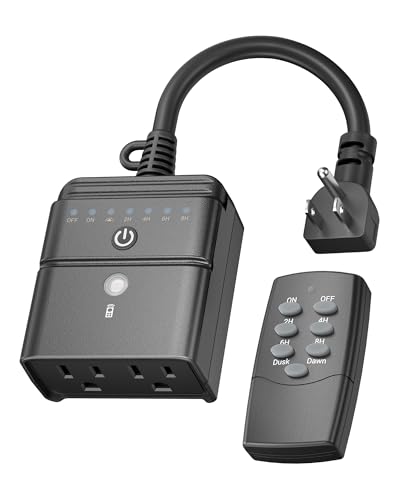
BN-LINK Outdoor Timer for Lights Dusk to Dawn Sensor

SURAIELEC Digital Pool Timer 40Amp 2HP

Woods 50013WD Outdoor 24-Hour Digital Photocell Timer

Techbee Repeat Cycle Timer Plug Outlet 15A 1HP
SURAIELEC Outdoor Power Stake Waterproof 7-Day Timer

Coleman Cable 50014 7-Day Outdoor Digital Timer

G-ELEK Outdoor Timer Waterproof 24 Hour Light Timer

Intermatic DT200LT Digital Astronomic Landscape Timer

Digital Outdoor Timer Outlet Dial Programmable Method
More Details On Our Top Picks
That dusk-to-dawn mode makes this Tiffcofio timer an easy fit for porch lamps and yard accents that you want to leave alone most nights. The two grounded outlets help keep the setup tidy, and the 15A, 1875W rating gives you a clear ceiling for common outdoor lighting tasks.
The remote control adds convenience for mounted fixtures or hard-to-reach outlets, which is handy in a busy side yard or on a covered patio. The trade-off is that the feature set stays focused on lighting control, so you’ll want a different style of timer for deeper weekly scheduling.
Strong Points
- Dusk mode handles routine evening lighting without constant manual adjustments.
- Remote operation is useful for outlets tucked behind planters or furniture.
- Two grounded outlets make it easier to manage a pair of light strings or lamps.
- The 15A, 1875W limit gives you a practical baseline for common household lighting loads.
- Its straightforward function set suits homeowners who want simple outdoor automation.
Things To Consider
- It leans toward lighting control rather than broader schedule complexity.
- Remote-based operation means you’ll still want to keep track of the controller.
- For larger appliance routines, a hardwired timer may fit better.
Feature Snapshot
Who It Suits Best
Homeowners who want a simple plug-in timer for lights, patio décor, or seasonal accents will get the most from it.
Where A Sibling Pick Shines
BN-LINK Outdoor Timer for Lights suits anyone who wants a longer remote range and a three-outlet layout for a slightly busier setup.
BN-LINK gives you a little more reach than the first pick, thanks to the 100-foot RF range, which is the radio-frequency distance used by the remote. That matters around driveways, long patios, or front walks where the outlet sits farther from the door.
The three-outlet layout helps when you’re juggling a couple of light strings and a separate accent lamp, and the 6-inch grounded cord keeps the plug-in side compact. For most homes, the mix of dusk sensing and countdown modes feels flexible without getting fussy.
What We Like
- 100-foot RF range gives the remote more breathing room across a larger yard.
- Three outlets support a more layered lighting setup than the first Tiffcofio pick.
- Dusk sensing reduces the need to manage evening lights by hand.
- 2, 4, 6, and 8 hour countdowns handle common overnight or event lighting needs.
- The grounded cord helps keep the unit physically compact near the outlet.
Small Caveats
- The added remote flexibility also means one more thing to keep track of.
- A three-outlet body can feel a bit busier in tight box covers or crowded patio corners.
- It still leans toward lighting and small outdoor loads, not whole-system control.
Details At A Glance
Built With In Mind
You’ll appreciate this most for porch, path, or holiday lighting where remote control makes access easier.
Another Choice May Suit
Tiffcofio Outdoor Timer Waterproof Dusk to Dawn Sensor is the simpler route for anyone who wants fewer outlets and a more direct control layout.
This SURAIELEC timer moves out of plug-in convenience and into hard-working equipment control, which is why it stands apart from the first two. A 40A capacity, 2HP rating, and support for 120, 240, and 277VAC point to a setup built for heavier loads like pool pumps or water heaters.
The 7-day programming and 24-hour display suit households that follow a repeating weekly rhythm, not just a dusk cycle. In a utility area or equipment wall, that kind of control feels like a solid fit, though the install will be more involved than the easy plug-in options above.
Upsides
- High amperage support makes it suitable for demanding appliance schedules.
- 7-day programming matches weekly routines without daily resets.
- The 24-hour display is clearer for anyone who prefers military-style timekeeping.
- Voltage support across 120, 240, and 277VAC broadens placement options.
- It suits equipment spaces where a plug-in timer would feel underbuilt.
Worth Noting
- This is a more technical install than the outdoor plug-in timers earlier in the list.
- It makes more sense for equipment control than for a couple of porch lights.
- The wall-switch format may not suit casual seasonal setups.
Core Details
Who Will Love This
Property owners and pool users who need scheduled control for larger equipment will find the format especially practical.
Skip It When
Woods 50013WD Outdoor 24-Hour Digital Photocell Timer fits better for someone who wants a plug-in light timer with less installation work.
The Woods 50013WD keeps the formula lean: plug it in, let the light sensor handle the day-night change, and leave the schedule alone more often than not. That photocell sensor is the key term here, meaning the unit reads ambient light so connected fixtures react automatically as conditions change.
Compared with the remote-heavy BN-LINK pick, this one feels simpler and more set-and-forget. It’s a sensible match for porch lamps or accent lighting where a clean, low-profile timer matters more than elaborate programming.
Bright Spots
- Photocell control reduces the need for manual evening switching.
- Plug-in design keeps setup easy in most standard outdoor outlets.
- The compact body suits tighter spaces and less crowded receptacles.
- Good fit for lights that should respond to changing daylight.
Areas To Watch
- It focuses on light-sensor behavior more than layered timing patterns.
- The simpler control style may feel limited for event-heavy schedules.
- Outdoor cords and plugs still need the usual weather-aware placement.
Feature Card
Best Suited To
Homeowners who want an uncomplicated timer for lamps, porch lights, or small outdoor accents will get the most from it.
Look Elsewhere When
Techbee Repeat Cycle Timer Plug Outlet fits better for repeat intervals and unusual timing tasks that go beyond daylight sensing.
Techbee is the odd one out in the best possible way, because it’s built for repeating intervals rather than a standard calendar schedule. The range from 1 second to 999 hours is broad, so you can use it for short bursts, long rests, or an odd on-off pattern that a basic dusk timer can’t cover.
The trade-off shows up in the planning: this timer does not run from actual clock time, so it suits tasks that repeat by interval instead of by day and hour. For greenhouse gear, pumps, or other cycling tasks around the property, that flexibility is hard to ignore.
Reasons To Buy
- The interval range is unusually wide, which opens up many repeat-cycle uses.
- Countdown control adds another useful layer for routine outdoor tasks.
- Light-sensor support gives it more flexibility than a plain cycle timer.
- Waterproof construction makes it a stronger fit for exposed outdoor settings.
- Short and long on-off modes help with equipment that needs a repeated pattern.
Points To Note
- It does not program around real clock time, so weekly planning is off the table.
- The unusual feature set takes a little more thought up front.
- Most casual lighting setups won’t need this much interval control.
Quick Facts
The Right Fit
You’ll get the most out of it in a yard or utility space where repeated cycling matters more than time-of-day scheduling.
Swap It Out When
Intermatic DT200LT Digital Astronomic Landscape Timer suits you better for sunrise and sunset-based lighting control tied to daily seasons.
This SURAIELEC stake-style unit is built for a different kind of outdoor setup, one where you need multiple plugs spread across a yard or event display. The six outlets and six-foot extension cord make that easier, especially for holiday decorations or patio scenes that sit farther from the wall.
Compared with the plug-in timers earlier in the list, this one feels more like a small outdoor power hub. The 7-day programming helps keep it organized, though the larger footprint means you’ll want a bit more space around the stake than a compact outlet timer needs.
Best Bits
- Six multi-plug outlets handle more connected items than the smaller timers above.
- The weatherproof design suits setups that sit out in the open.
- A 6-foot extension cord gives you more placement flexibility.
- 7-day scheduling works well for repeating weekly displays or routines.
- The stake format keeps multiple plugs gathered in one outdoor zone.
Minor Gripes
- The bigger body takes more planning than a basic wall outlet timer.
- It makes the most sense where several outdoor plugs are actually needed.
- Storage can be a little less neat than with a smaller plug-in unit.
Feature Rundown
Whose Shelf It Belongs On
Seasonal decorators and homeowners with several outdoor items to manage will benefit most from the multi-outlet layout.
Reach For A Different Pick When
Woods 50013WD Outdoor 24-Hour Digital Photocell Timer suits you better for a smaller, simpler light-control setup.
The Coleman Cable 50014 stays close to the classic 7-day timer formula, which makes it easy to understand beside the more specialized picks above. That simplicity helps in gardens, entry lights, or other setups where you want repeating weekly control without a lot of extra behavior.
Because the source data is sparse, the honest read is that this pick stands more on its category role than on a long list of extras. It’s the kind of timer that suits someone who values familiar weekly control and doesn’t need the remote tricks or interval flexibility of the neighboring options.
Positives
- 7-day scheduling makes it easy to repeat the same routine each week.
- The outdoor format suits everyday exterior timing needs.
- Its straightforward role makes it approachable for first-time timer setups.
Softer Spots
- There are fewer listed details than several of the other picks.
- It may feel plain beside units with remote or sensor features.
- You’ll want to compare the listed support points against your own load needs.
Spec Overview
Made For
It fits homes that need a simple weekly outdoor timer without a steep learning curve.
Where Shoppers Go Wrong
G-ELEK Outdoor Timer Waterproof 24 Hour Light Timer makes more sense for someone who wants two grounded outlets and a more explicit 24-hour light timer layout.
G-ELEK sits in the useful middle ground, with two grounded outlets and a 24-hour light timer design that fits many everyday outdoor routines. It’s a practical shape for pool accessories, holiday lights, or other equipment that needs a simple repeated schedule.
Compared with the Coleman Cable pick, this one gives you clearer outlet detail and a more defined use profile. For homeowners who want a tidy timer box without moving up to a heavy-duty wall unit, that middle path makes good sense.
Positives
- Two grounded outlets help you manage a pair of outdoor items from one timer.
- The waterproof design suits exposed placement better than indoor-only gear.
- 24-hour timing keeps daily routines easy to repeat.
- It lines up well with pool pumps and seasonal light strings.
Things To Consider
- The feature set stays focused on routine timing rather than advanced programming.
- Two outlets are enough for many homes, but not for bigger multi-light arrays.
- For heavy equipment control, the SURAIELEC wall timer has the stronger load profile.
At A Glance
The Right Fit
It works well for homeowners who want a clean 24-hour outdoor timer for routine lighting or pump control.
Another Choice May Suit
Intermatic DT200LT Digital Astronomic Landscape Timer suits you better for sunrise and sunset tracking in a more automated landscape setup.
Intermatic takes the schedule work a step further by using astronomic control, which adjusts around sunrise and sunset instead of fixed clock hours. That makes it a natural fit for landscape lights that need to follow the seasons without constant editing.
The factory-set daylight saving time option and one-push programming override add convenience that busy homeowners will notice right away. It’s also rated for low-voltage transformers up to 1200W, so the pick feels especially well matched to landscape systems and similar exterior lighting runs.
Highlights
- Astronomic control follows sunrise and sunset shifts through the year.
- Auto daylight saving time handling cuts down on seasonal rework.
- One-push programming override makes small schedule changes less tedious.
- Indoor and outdoor use broadens where the timer can be installed.
- Low-voltage transformer support up to 1200W suits many landscape systems.
Room For Improvement
- The control style is more specialized than a basic outdoor plug timer.
- It makes the most sense for lighting systems that follow day-night shifts.
- Casual holiday setups may not need astronomic timing.
Technical Sheet
Perfect Match For
You’ll appreciate this most if your lighting follows the rhythm of sunrise, sunset, and seasonal changes.
Look Elsewhere When
Woods 50013WD Outdoor 24-Hour Digital Photocell Timer is the easier pick for a straightforward plug-in light sensor setup.
This Tiffcofio timer leans on a dial-based programming method, which is a comfortable middle ground for people who want control without a steep learning curve. The two grounded outlets and 15A, 1875W rating make it practical for pool pumps and similar outdoor equipment within the stated load range.
The six available programs help it cover more than a basic on-off cycle, while the waterproof body keeps the focus on exterior use. Compared with the Intermatic pick, it feels less specialized and more approachable for everyday timing jobs around the yard or pool area.
Positives
- Dial programming makes setup feel more intuitive than some button-heavy timers.
- Two grounded outlets support a couple of outdoor devices at once.
- Six program sets add useful flexibility for common timing patterns.
- The waterproof build suits outdoor placement more confidently.
- Its pool-pump fit makes it useful beyond simple string lights.
Points To Note
- The control style is practical, but not as specialized as astronomic timing.
- Two outlets are enough for many setups, though not for larger displays.
- You’ll want to confirm the layout suits your mounting space before installation.
Core Details
Who Should Grab It
You’ll get the best fit here if you want an approachable outdoor timer for pool equipment or routine backyard power control.
Where A Sibling Pick Shines
BN-LINK Outdoor Timer for Lights is the better match for a shopper who wants remote control and a stronger emphasis on lighting convenience.
How To Choose The Right Digital Outdoor Timers
Start With The Load And The Job
The first decision is boring but necessary: match the timer to the thing it will actually control. A porch light, a string of holiday bulbs, and a pool pump all ask for different levels of capacity, and the label should spell that out in amps, watts, horsepower, or voltage. Plug-in timers suit lights and smaller outdoor gear, while wall or equipment timers make more sense for heavier loads.
That split matters because a timer that looks handy can still be a poor fit for the electrical job. The Tiffcofio and BN-LINK picks are easier for basic exterior lighting, while the SURAIELEC pool timer is built for larger equipment and fixed installation. Think job first, then features.
Choose The Control Style That Matches Your Routine
Dusk sensing is great for people who want the lights to handle themselves around sunset, and it works especially well on porches and walkways. A 24-hour or 7-day schedule fits a more structured routine, like repeat landscaping, pool care, or holiday displays that follow the same pattern every week. Interval timers go a different direction, since they repeat on a cycle rather than by calendar time.
The trade-off is ease versus precision. Simpler timers are quicker to live with, while programmable units ask for a little more setup but repay that effort with better scheduling control. Intermatic suits seasonal lighting, Woods keeps things simple, and Techbee handles unusual cycling patterns that basic outdoor timers can’t mimic.
Think About Installation And Placement
Plug-in timers are the easiest path for standard outlets near a wall, but they can feel awkward in crowded patio areas or behind large décor. Stake-style units and outdoor power strips give you more room for multiple connections, though they also need more space and a bit more planning. Hardwired units belong in equipment areas where a permanent setup makes sense.
Placement also affects day-to-day use. A remote is handy for a timer mounted out of reach, while a compact plug-in design is better for a tucked-away outlet that rarely needs attention. BN-LINK helps with distance, the SURAIELEC power stake helps with spread-out plugs, and Tiffcofio keeps the layout simple.
Decide How Much Flexibility You Really Need
Some households only need a light to come on at dusk and go off a few hours later. Others need multiple programs, countdowns, or sunrise and sunset tracking that shifts with the season. The more complex the routine, the more you benefit from a timer with extra modes and a clearer display.
That extra flexibility usually costs more, and it can also mean more setup time. For everyday use, a straightforward timer is often enough and easier to maintain. For larger properties or equipment-heavy spaces, the extra control is worth paying attention to.
Things Worth Knowing First
Common Shopping Slip Ups
One common mistake is focusing on the word “outdoor” and ignoring the actual load rating. Another is choosing a timer with great features for lights, then trying to use it for a pump or heater that needs a tougher setup. You also want to check whether the control style matches your routine, because a countdown model and a weekly schedule are not the same thing.
Installation space matters too. A three-outlet body or a stake-style power unit can feel awkward in a cramped corner, so measure the spot before you decide. That simple step saves frustration later.
What The Higher Tier Buys
More expensive timers usually add smarter scheduling, stronger load support, or more flexible hardware. Astronomic control, multi-outlet layouts, remote range, and weather-aware housings all add cost because they solve different outdoor problems, not just one.
The upgrade makes sense when you’re managing multiple lights, pool equipment, or a yard that needs different schedules across the week. For a single porch lamp, a simpler unit is often enough. For a larger property, the added control can make daily upkeep much easier.
Frequently Asked Questions
What does a digital outdoor timer do?
A digital outdoor timer switches connected lights or equipment on and off according to a schedule. It can also react to dusk, daylight, or countdown settings depending on the model.
Are plug-in timers good enough for outdoor lights?
Yes, plug-in timers work well for many porch lights, patio strings, and seasonal displays. They are usually the easiest option for standard exterior outlets.
What is the difference between dusk sensing and astronomic control?
Dusk sensing reacts to ambient light, so it turns on and off based on brightness around the unit. Astronomic control follows sunrise and sunset timing through the year.
Can one timer handle a pool pump?
Some can, but the timer needs the right electrical rating and load support. The SURAIELEC pool timer in this list is a better fit for that kind of equipment than a small light timer.
Do outdoor timers need weather-aware placement?
Yes, the placement still matters even with waterproof or weatherproof housing. A sheltered outlet area usually helps keep the setup cleaner and easier to maintain.