

You want a compost setup that fits your kitchen, yard, and routine without turning into another chore. The right bin keeps scraps contained, makes cleanup simpler, and matches how much food waste you actually handle each week.
This roundup leans on size, materials, airflow, access, and day-to-day usability. You’ll see compact countertop caddies, large outdoor bins, and tumblers for faster batch composting, so you can match the pick to your space instead of forcing your habits around the bin.
Quick Look at the Shortlist

F2C Compost Bin 80 Gallon

Perfnique 1.3 Gal Kitchen Compost Bin

Hourleey Compost Bin Outdoor 43 Gallon
EKO Kitchen Compost Bin 7L / 1.85 Gal

VIVOSUN 300 Gallon Outdoor Compost Bin

VEVOR Garden Compost Bin 80 Gallon

Beautiful Kitchen Compost Bin 1.1 Gallon

Beautiful Kitchen Compost Bin 1.1 Gallon

Beautiful Kitchen Compost Bin 1.1 Gallon
Compost Tumbler 45 Gallon
More Details On Our Top Picks
The roomy 80-gallon footprint makes this a strong fit for yard-heavy homes, especially where lawn clippings and food scraps pile up together. The top latch and bottom access door keep the workflow simple, and the 80 air vents give it a more active ventilation layout than a plain sealed box.
The black BPA-free plastic should suit outdoor use better than flimsy thin-wall bins, though a large footprint does ask for steady space and a bit of commitment. For most backyards, that trade-off is worth it because you get a bin that looks built for volume rather than occasional use.
Strong Points
- 80-gallon size handles substantial yard waste.
- Air vents and deep fins support airflow.
- Top lid helps keep scraps contained.
- Bottom door makes finished compost easier to remove.
- BPA-free material is a sensible outdoor material choice.
Points To Note
- The large body needs a set outdoor spot.
- Assembly and loading are less convenient in tight side yards.
- Black plastic can show dust and mud.
Feature Snapshot
Who It Suits Best
You get the most from this bin in a yard where you already generate steady organic waste and have room to keep a full-size composter in place.
A Better Fit Elsewhere
VEVOR Garden Compost Bin 80 Gallon suits you better when you want a similar full-size setup without the same emphasis on accessory extras, and you prefer a straightforward outdoor bin for general garden use.
This little countertop caddy makes sense in a small kitchen where every inch matters and you still want scraps off the prep area. The inner bucket liner and carbon filter point to a cleaner daily routine, and the farmhouse look helps it blend in rather than feel like utility gear parked in plain sight.
The trade-off is capacity, of course, because 1.3 gallons suits frequent emptying rather than long storage. For apartment cooks or households that compost a modest amount each day, that smaller size can feel more natural than a larger pail that hogs counter space.
What We Like
- Compact size sits neatly on a counter.
- Inner bucket liner should simplify emptying.
- Carbon filter design helps manage kitchen odors.
- Farmhouse styling looks more intentional than basic utility bins.
Small Caveats
- Small capacity calls for frequent emptying.
- Countertop use can expose it to splashes and crumbs.
- The compact form leaves less room for bulky scraps.
At A Glance
Who Should Grab It
You’ll like this most in a small home, apartment, or condo kitchen where compact storage matters more than big capacity.
Look Elsewhere When
F2C Compost Bin 80 Gallon is a better fit for you when your scraps come from a yard as much as a kitchen and you want a much larger outdoor container.
The dual-chamber layout gives this tumbler a clear advantage for batch composting, because one side can keep moving while the other side finishes. Sliding doors keep access more organized than a wide open drum, and the rotating format is a better match for people who don’t want to turn a pile with a fork.
Compared with the fixed-bin feel of the F2C and VEVOR bins, this model leans into movement and separation. That does mean a more mechanical ownership experience, so it suits gardeners who want a process they can repeat rather than a set-and-forget pile.
Highlights
- Two chambers support continuous composting.
- Rotating design reduces manual mixing work.
- Sliding doors make loading more orderly.
- 43-gallon size works for medium yard use.
Worth Noting
- Moving parts ask for a bit more attention.
- Batch composting works best with some planning.
- The drum style needs enough clearance to rotate comfortably.
Technical Sheet
Built With In Mind
You’ll get the most from this tumbler in a garden routine where you’re ready to sort scraps and yard waste into separate compost cycles.
Where A Sibling Pick Shines
Marcytop Compost Tumbler 45 Gallon suits you better when you want a similar rotating setup with a slightly larger stated capacity and a different chamber layout.
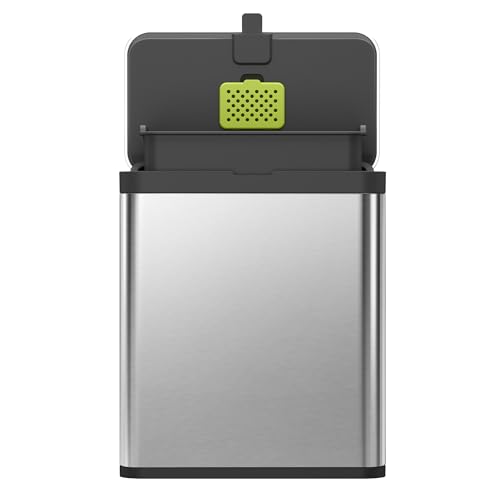
Stainless steel changes the feel here right away, because it looks cleaner on the counter and usually wipes down more easily than softer finishes. The removable inner bucket is the practical part that matters most, especially for a busy kitchen where you want a quick lift-out and a fast rinse.
The deodorizer compartment adds another layer of day-to-day comfort, though the smaller 7-liter size means this is still a countertop helper, not a long-stay bin. Compared with the Perfnique caddy, it feels a touch more polished and structured, which may suit you better in a more visible kitchen space.
Upsides
- Stainless steel finish looks tidy on the counter.
- Inner bucket helps with fast emptying.
- Deodorizer compartment adds useful odor-management support.
- 2-in-1 setup keeps the design straightforward.
Softer Spots
- 7-liter size suits smaller daily loads.
- Countertop placement can invite fingerprints.
- The polished look asks for regular wiping.
Core Details
Right Fit For
You’ll appreciate this most in a kitchen where the compost bin stays visible and you want it to look like part of the space rather than an afterthought.
Swap It Out When
Perfnique 1.3 Gal Kitchen Compost Bin is the better call for you when you want a smaller, softer-edged countertop caddy that can tuck into tighter corners.
Some composters aim for tidy containment, and this one aims for volume. The expandable 300-gallon layout makes sense for properties that generate a lot of leaves, clippings, and garden debris, and the included gloves hint at a setup that expects hands-on yard work.
That scale also comes with a practical catch, because it belongs on a property where a big open compost zone won’t feel awkward. Compared with the enclosed bins from F2C and VEVOR, this is a looser, more flexible approach that works best for gardeners who value sheer capacity over a closed cabinet-style build.
Reasons To Buy
- Huge capacity handles serious yard waste.
- Expandable layout gives you room to grow.
- Simple setup fits a straightforward garden routine.
- Open style works well for bulky material.
Areas To Watch
- Large footprint needs enough yard room.
- Open style offers less visual tidiness than enclosed bins.
- The scale is better for active yard use than small patios.
Details At A Glance
The Right Fit
You get the most out of this one on a larger property with steady green waste and enough room to keep an expansive compost area in use.
Another Choice May Suit
F2C Compost Bin 80 Gallon suits you better when you want a closed outdoor bin that looks neater and uses a smaller footprint.
The VEVOR bin sits in the useful middle ground between the more feature-driven F2C and the more open-ended VIVOSUN setup. You get an 80-gallon outdoor composter with a top lid and bottom door, which keeps everyday use fairly simple for garden and kitchen waste.
Lightweight construction and easy assembly matter here because a big bin can be annoying before it ever gets used. The honest read is that this feels like a sensible starting point for someone who wants capacity first and plenty of fuss avoided second.
Bright Spots
- 80-gallon capacity suits steady outdoor composting.
- Top lid and bottom door keep access straightforward.
- Lightweight build should ease placement.
- BPA-free material is a practical outdoor choice.
Minor Gripes
- Large bins still need enough yard space.
- Assembly is easier on level ground.
- Lightweight parts can feel less substantial than heavier builds.
Feature Rundown
Perfect Match For
You’ll like this most for a first outdoor compost bin, especially in a garden where straightforward access matters more than extra mechanical features.
Where A Sibling Pick Shines
Hourleey Compost Bin Outdoor 43 Gallon is the better fit for you when you want a rotating tumbler rather than a fixed outdoor box.
Countertop compost bins live or die by how comfortable they feel in plain sight, and this one leans hard into presentation. The rust-proof build and smell-proof lid point toward a cleaner kitchen experience, while the 1.1-gallon size keeps it small enough for everyday prep scraps.
That smaller footprint means frequent emptying, though that’s often a fair trade in a busy kitchen where you want the bin to stay close to the sink or prep zone. Compared with the EKO stainless model, this one sounds more focused on looks and simplicity than on a more layered insert-and-compartment setup.
Best Bits
- Compact 1.1-gallon size suits countertops.
- Smell-proof lid supports day-to-day kitchen use.
- Rust-proof build suits humid kitchen conditions.
- Simple shape looks tidy near prep areas.
Things To Consider
- Small capacity means more frequent emptying.
- Countertop placement leaves it visible to splashes.
- A compact bin is less suited to bulky peels.
Core Details
Made For
This suits you best when you want a countertop compost bin that can stay visible and still feel deliberate in the room.
Consider Something Else When
EKO Kitchen Compost Bin 7L / 1.85 Gal is a better fit for you when you want the extra structure of a stainless steel shell and a removable inner bucket.
This version lands in the same compact countertop lane as the previous KIBAGA pick, which tells you the appeal is familiarity and routine, not dramatic differences. The odor-controlled lid and rust-proof shell fit a kitchen that generates small amounts of scraps all day, and the size makes sense beside a sink or under a prep shelf.
For a household that empties compost often, that simple format is a strength rather than a limitation. You may find it especially handy in a kitchen where you prefer the compost bin to fade into the background until it’s time to empty it.
Positives
- Small size works well for daily kitchen scraps.
- Smell-proof lid supports indoor use.
- Rust-proof build should suit humid spaces.
- Easy placement near prep and sink zones.
Room For Improvement
- Compact capacity means more routine emptying.
- It’s a better fit for smaller scrap loads.
Feature Card
Whose Shelf It Belongs On
This is a smart match for compact kitchens that want a small, tidy compost container without a lot of visual fuss.
Where A Sibling Pick Shines
Beautiful Kitchen Compost Bin 1.1 Gallon from the previous KIBAGA listing is the better fit when you want a similarly sized caddy with a slightly different presentation for the counter.
Because the model family is the same, the main question here is fit rather than feature drama. This version still points to a 1.1-gallon countertop compost bin with a smell-proof lid and rust-proof finish, so it belongs in the same small-scale kitchen workflow where frequent emptying is part of the routine.
The practical upside is that you know exactly what lane it fills, a compact spot for peelings, coffee grounds, and other small scraps. The trade-off is also clear, since you’ll want a larger outdoor bin, such as the F2C or VEVOR, for the actual composting stage.
Reasons To Buy
- Compact format fits near the prep area.
- Smell-proof lid helps keep indoor use comfortable.
- Rust-proof finish suits kitchen conditions.
Areas To Watch
- Small size needs regular emptying.
- Best for light daily collection, not heavy loads.
Spec Overview
Best Suited To
You’ll like this most if your compost habit is light, steady, and centered around a small kitchen footprint.
Where A Sibling Pick Shines
Hourleey Compost Bin Outdoor 43 Gallon makes more sense when you want the composting stage handled outdoors in a rotating batch system.
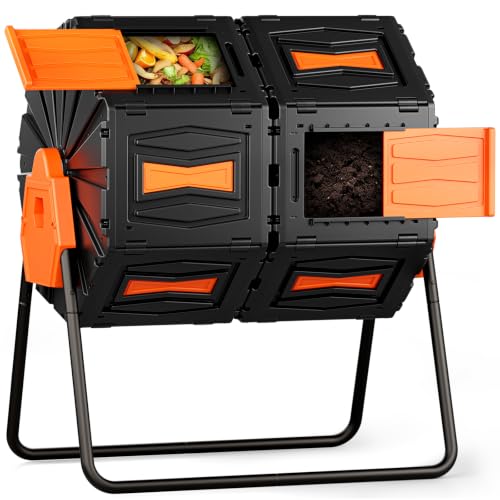
The dual-chamber format is the point here, because it lets you keep one side active while the other side matures. That setup is a real step up from a basic fixed bin, and the 45-gallon size gives you enough room to keep kitchen and yard waste moving through separate stages.
The orange door adds a visible access point, which makes the whole tumbler easier to use in a busy garden routine. For gardeners who want a more organized compost process, this feels like the most process-driven option in the group, even though it asks for a bit more planning than a static bin.
Standout Traits
- Dual chambers support continuous compost flow.
- Rotating tumbler reduces manual turning.
- 45-gallon size suits active garden use.
- Separate chambers help keep batches organized.
Honest Caveats
- Tumbler-style use works best with some routine.
- Moving parts mean a little more upkeep.
- Best results come from enough room to rotate smoothly.
Quick Facts
Who Will Love This
This suits hands-on gardeners who want a rotating system and don’t mind giving the compost process a little structure.
Skip It When
VIVOSUN 300 Gallon Outdoor Compost Bin is the better fit for you when sheer yard capacity matters more than a rotating chamber system.
How To Choose The Right Diy Compost Bins
Match The Bin To Your Waste Volume
Capacity matters more than style once scraps start piling up. A 1.1-gallon countertop caddy suits a small kitchen that empties often, while an 80-gallon outdoor bin gives you much more breathing room for leaves, trimmings, and food waste.
Think in terms of routine, not just size labels. A family that cooks daily may do better with a larger outdoor container, while a studio apartment usually needs a compact caddy that stays out of the way.
Choose The Right Style For The Space You Have
Enclosed bins fit neatly against a wall or near a garden path, and they usually look more orderly. Tumblers need more clearance, but they make turning easier and help you keep batches separated.
Countertop caddies work best near the sink or prep area, where scraps collect naturally. The trade-off is that they need more frequent emptying, so a neat lid and easy-to-clean shape matter a lot.
Pay Attention To Access And Cleanup
Top lids, bottom doors, sliding panels, removable inner buckets, and rotating chambers all change how the bin feels after the first week. Those details matter because composting is really a maintenance habit, not just a container purchase.
Easy access helps you empty scraps without making a mess, and it also makes finished compost less annoying to harvest. That small convenience often decides whether the bin gets used regularly or drifts into the corner.
Look For Materials That Fit The Setting
BPA-free plastic is a sensible fit for outdoor bins because it keeps the shell light and weather-ready. Stainless steel makes more sense on a kitchen counter, where wipe-down ease and a cleaner look matter more than raw volume.
The right material also affects maintenance. Dark plastic may show dust, polished steel may show fingerprints, and both can be perfectly fine as long as the match suits your space.
Things Worth Knowing First
Common Shopping Slip Ups
Many compost bins look similar in photos, but the use case can be very different. A countertop caddy and an outdoor tumbler solve separate problems, so the wrong match usually comes from ignoring where the bin will live.
Another easy mistake is picking a tiny bin for a busy kitchen or a huge bin for a small patio. That mismatch turns a simple routine into clutter.
The Case For Spending Up
Higher-tier compost bins usually pay for thicker materials, better airflow, more thoughtful access points, and a cleaner overall build. In this category, those upgrades matter because you use the bin often and you see it every day.
The extra cost makes sense when you want easier cleaning, better separation of stages, or a more polished look in a visible kitchen. It matters less when you only need a basic holding spot for scraps before emptying them outside.
Frequently Asked Questions
What size compost bin works for a small kitchen?
A 1.1-gallon to 1.85-gallon countertop bin usually fits small kitchens well. That size keeps daily scraps close without swallowing counter space.
Are tumblers better than fixed outdoor bins?
Tumblers help with rotation and batch separation, so they suit gardeners who want a more active process. Fixed bins are simpler and often easier to place in a corner of the yard.
Do stainless steel kitchen bins make cleanup easier?
Stainless steel usually wipes down neatly and looks tidy beside a sink or prep area. The trade-off is that it can show fingerprints more readily than matte plastic.
Why does airflow matter in an outdoor composter?
Airflow helps move fresh oxygen through the bin, which supports a more active composting environment. Vents, fins, and rotating chambers all help with that goal in different ways.
What’s the main advantage of a dual-chamber design?
Dual chambers let you keep one side active while the other side finishes its cycle. That setup is handy for households that produce scraps steadily instead of all at once.
