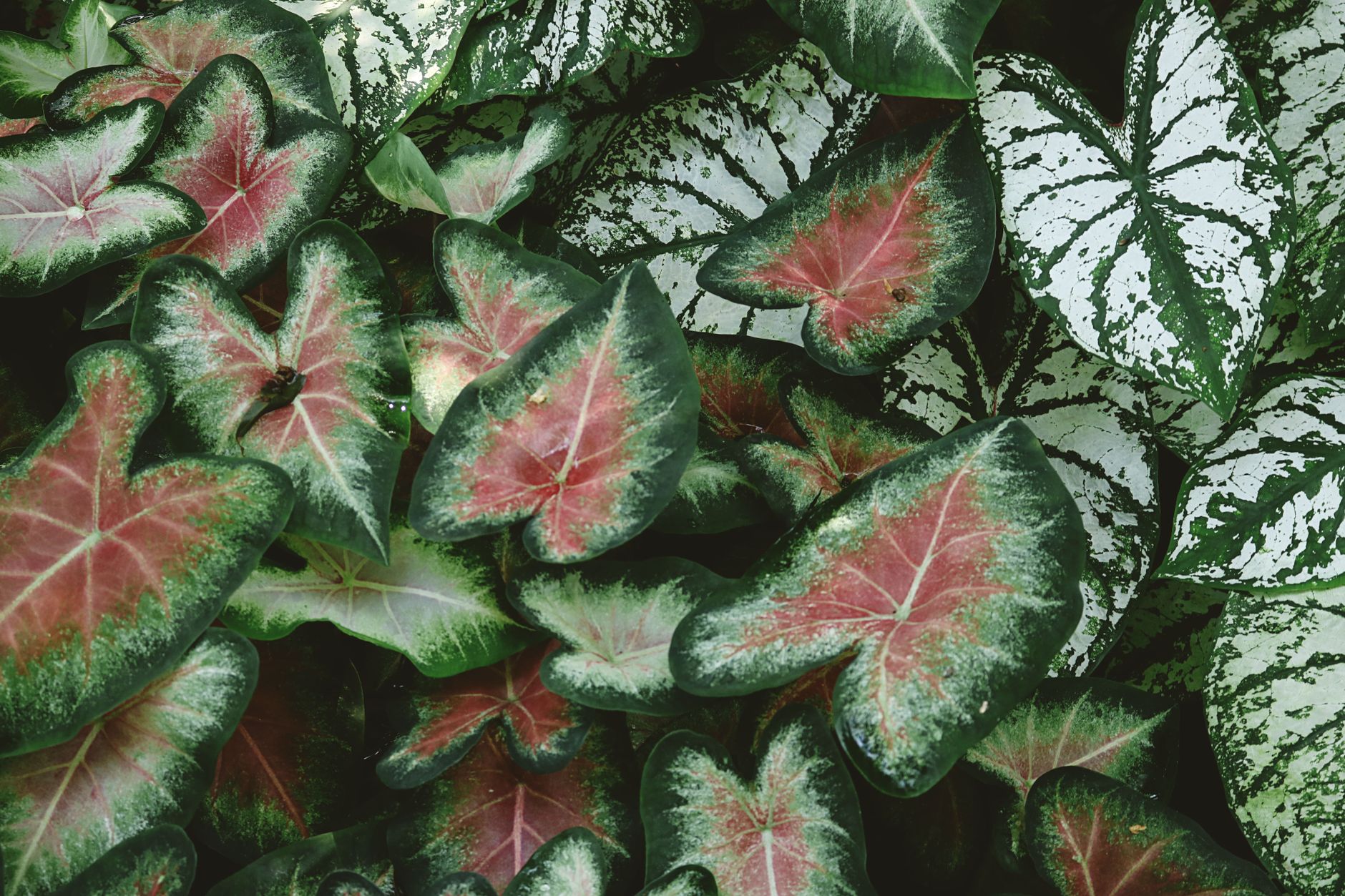

With bold, heart-shaped leaves in red, pink, white, and green, these tropical foliage plants are grown for color rather than flowers. A well-chosen cultivar can brighten a shaded bed, soften a border, or bring a vivid spot of color to a container.
This overview covers color forms, leaf shapes, planting timing, and care for shade beds, borders, containers, and indoor spots with bright indirect light.
The Leaf Colors And Shapes That Define Caladiums
Leaves carry the display here, while the flowers stay tucked out of sight. Most blades are heart-shaped or arrow-shaped, and veins, splashes, blotches, and thin margins give each plant a distinct look.
Color ranges from soft white with green edging to hot pink with red centers and dark green veins. Caladium bicolor is the species behind most garden selections, and that wide genetic range explains why modern caladium varieties can look painterly instead of plain.
Heart Shapes And Arrow Forms Set The Silhouette
The leaf outline gives you the fastest read on a plant. Fancy-leaved selections carry broader, thinner blades that read as hearts, while strap-leaved forms narrow into long spears that sharpen the edge of a bed.
That shape changes the visual weight in your planting. A broad leaf looks bold beside ferns or hosta, while a narrow blade leaves room for texture from impatiens, begonias, or coleus.
Color Patterns Create The Real Difference
Red, rose, blush, cream, lime, and deep green can all appear on the same plant, but placement matters as much as hue. Some leaves hold a solid center with a clean border, while others carry a net of veins or a spray of freckles across the blade.
Royal Horticultural Society naming standards help separate similar-looking stock in the nursery aisle. That matters when a pale pink leaf with a green edge needs to stay distinct from a white leaf with a red eye.
Veins, Margins, And Splashes Change The Effect
A single color rarely carries the show on its own. The contrast between vein color and background color gives caladium leaves their glow, especially in filtered light where edges read more clearly than in harsh sun.
University of Florida IFAS Extension notes that light intensity changes leaf color quality, not just growth speed. In plain terms, a bright pattern can fade in deep shade, while too much sun can scorch the surface and blur the clean design.
That contrast sets up the two main forms, each offering a different way to balance texture, color, and garden structure.
Fancy-Leaved And Strap-Leaved Types Compared
From leaf pattern to plant habit, width drives the whole personality of these plants. Fancy-leaved types produce large, heart-shaped leaves with a lush look, while strap-leaved selections stay slimmer and move with a lighter, grassier rhythm.
You can use that difference to steer attention in a bed or container. Broad types fill space fast in shade, while narrow types trace a clean line along a path or pot rim.
Fancy-Leaved Types Bring Bold Mass
Fancy leaf caladiums read like living fan art. Their broad blades catch light across a larger surface, so a single plant can carry strong contrast from a few feet away.
That makes them useful where you want one clear focal point. A mass of white-and-green leaves beside dark mulch can brighten a bed, and a single red cultivar in a ceramic pot can hold its own against larger shrubs.
Strap-Leaved Types Add Movement And Edge Definition
Strap-leaved caladiums stay narrower and more upright, which keeps the planting from feeling heavy. The slimmer silhouette works well where you want color without blocking sight lines or crowding stepping stones.
Border edging, mixed containers, and small courtyard beds all benefit from that restraint. Because the leaves are finer, they also pair well with coarse-textured plants that might overpower a broad-leaved selection.
| Type | Leaf Shape | Best Use |
|---|---|---|
| Fancy-leaved | Broad heart form | Shade beds and focal pots |
| Strap-leaved | Narrow lance form | Bed edging and tight containers |
| Mixed planting | Both forms together | Layered texture and longer color interest |
That contrast also helps you solve design problems. A broad cultivar can anchor the middle of a container, while a strap type can soften the rim and keep the composition from feeling static.
With form established, the standout selections become easier to spot, especially where bold foliage has to carry the composition.
Popular Cultivars That Stand Out In The Garden

Some cultivars win attention because the contrast is sharp from a distance. Others stand out because the leaf shape feels cleaner or the color stays steady as the plant matures.
Your choice depends on the effect you want more than on a single crown winner. The most beautiful caladium is the one that fits your light, your soil, and the scale of the space you’re planting.
Bright White Cultivars Lift Dark Corners
White-and-green selections can make a shaded entry feel brighter without adding flowers. ‘White Queen’ is known for white centers with green veins, while ‘Candidum’ leans into a crisp white field with a green network that reads like stained glass.
Those cultivars matter in shade landscaping because white reflects more light than deep red or dark green. In a dim spot, that reflection gives your eye a clearer target and keeps the bed from looking flat.
Red And Pink Cultivars Bring Heat
Red-heavy forms pull the most attention in warm, filtered light. ‘Red Flash’ is valued for dark green margins and red centers, while ‘Pink Symphony’ blends pink, rose, and green in a softer, painterly way.
If you want the bed to look louder from across a patio, red and hot pink forms do that work fast. A single planting of caladium bulbs in a container can read like a color block instead of a loose collection of leaves.
Green-And-Cream Cultivars Balance The Palette
Green-dominant selections calm the composition and let nearby flowers or bark textures come forward. ‘Carolyn Whorton’ and similar types bring a mottled or veined look that feels detailed without overwhelming the space.
That balance matters in mixed plantings. You can place a patterned green cultivar beside ferns, hosta, or hydrangea and keep the whole bed from tipping into visual noise.
Those combinations work best when the tubers go in at the right time, after the soil has warmed reliably.
Pick one dominant color family before you plant. A bed with white, pink, and red cultivars together can look busy unless the shapes repeat or the spacing is generous.
Planting Caladium Tubers At The Right Moment
Caladium bulbs, which are really tubers, need warm ground before they wake up strongly. Spring planting after frost danger passes gives them a cleaner start than pushing them into cold soil.
Warmth drives root activity, and moisture keeps the new shoots from stalling. In USDA Hardiness Zones 9 through 11, the tubers can stay in the ground longer; in cooler regions, you’re usually planting for a single warm season and storing or replacing the stock later.
Garden Planting Works Best In Warm Soil
Soil that feels cold to the hand slows sprouting and raises rot risk. A loose, well-drained soil mix with steady moisture lets the tubers send up shoots without sitting in a wet pocket.
Spacing them with the eyes facing up and covering them lightly helps the buds break evenly. A shallow planting depth also gives you faster emergence, which matters in short growing seasons.
Containers Give You Faster Control
Pot culture lets you manage heat and water with more precision. A container warms faster than a large bed, so the plant can push foliage sooner in spring and keep color more consistent through summer.
That setup works well on a shaded porch or under high tree canopy. It also gives you a chance to move the pot out of strong afternoon sun before leaf edges show stress.
Indoor Starts Suit An Earlier Display
Starting tubers indoors can buy you several weeks of foliage before outdoor beds warm up. Bright light, warm air, and a free-draining mix help the shoots stay compact instead of stretching.
For a living room or sunroom, caladium houseplant care starts with bright, indirect light and steady moisture. The goal is a steady pace, not a quick burst, because soft stems collapse in dry air or cold drafts.
Planting correctly only starts the display; consistent warmth and moisture then keep the foliage vivid through the season.
Shade, Humidity, And Heat That Keep Color Strong

Filtered light is the sweet spot for color quality. Direct midday sun can scorch the leaf surface, while deep shade can dull the contrast and leave the plant thin.
Warm air and high humidity also keep the foliage supple. A leaf built for tropical forest edges loses water quickly in dry heat, so the margins curl or brown long before the center looks tired.
Bright Shade Beats Harsh Sun
Morning light or dappled shade under tall trees works well for most cultivars. That light gives the pigments enough energy to stay vivid without cooking the leaf tissue.
The mechanism is simple. Strong sun raises transpiration faster than the roots can replace water, so cells lose turgor and the leaves look limp or papery by afternoon.
Deep Shade Can Drain Color Intensity
Too little light weakens the contrast that makes the foliage stand out. Leaves can grow larger in low light, yet the pattern often looks washed out and the stems reach outward in search of brightness.
That trade-off matters in a dense shade garden. You may get more leaf surface, but the plant can lose the sharp pink, white, or red that made you want it in the first place.
Outdoor Beds And Indoor Corners Need Different Rhythm
Growing caladiums outdoors means tracking rain, heat, and sun angle. A bed under a deciduous tree often gives the best balance because spring light is gentler and summer canopy softens the glare.
Indoor placement calls for bright, indirect light from a window that never throws hard midday rays across the leaves. Keep the pot away from heating vents, since dry air speeds edge burn and shortens the display period.
Once conditions are dialed in, the real test becomes how long the foliage holds and what problems can interrupt it.
Moisture should stay even, not soggy. A pot that drains cleanly and a bed that dries a little between waterings will keep roots healthier than wet soil that never breathes.
Seasonal Use, Lifespan, And Common Problems
In containers, shaded beds, and along bed edges, they usually deliver their best color as seasonal accents. Their foliage can carry a space through one long warm stretch, then fade as nights cool and dormancy begins.
In warm regions, they act as tender perennials and may return from tubers left in place. In cooler climates, gardeners often lift and store the tubers or start fresh each year, since cold soil can damage the planting before it settles.
Seasonal Jobs They Handle Well
- Container color: A single tuber can fill a pot with layered foliage and vivid contrast.
- Shade-bed filler: Mass plantings brighten dark mulch and soften hard edges.
- Border edging: Strap-leaved forms trace paths without blocking views.
- Mixed texture: Broad leaves pair well with ferns, hosta, and coleus.
Common Problems Show Up In The Leaves
Scorching leaves usually point to too much direct sun or dry air. Weak color often traces back to deep shade, while soft rot at the tuber comes from soil that stays wet too long.
Storage issues appear after the season ends. Tubers that stay damp in storage can decline, and tubers that dry out too much can shrivel, so a cool, airy spot matters.
Dormancy Ends The Show On Schedule
As temperatures fall, foliage yellows and the plant shifts into dormancy. That change is normal, not a sign that the planting failed.
The University of Florida IFAS Extension and Royal Horticultural Society both note that this growth cycle is tied to warmth and day length. Once the leaves tire, you can lift the tubers, brush off excess soil, and store them where air movement stays steady.
Late-season care shapes next year’s display. A healthy tuber stored clean and dry is the difference between a thin planting and a bold one the next time warm weather returns.
That lasting performance is what makes careful storage worthwhile when the season finally closes.
Wrap Up
The strongest display starts with matching leaf shape, color pattern, and light level to the space you actually have. Once you pair the right cultivar with warm soil, partial shade, and steady moisture, the foliage carries the bed with very little fuss.
FAQ
What colors do caladiums come in?
Caladium foliage comes in red, pink, white, green, and mixed blends that can include cream, rose, and deep green veining. The color pattern may show solid centers, speckling, streaks, or contrasting margins, which is why two plants can look related and still feel completely different.
What is the most beautiful caladium?
A front-yard planting in full color often decides the answer, since the most beautiful caladium depends on your space and color taste. A white cultivar can brighten a dark nook, a red cultivar can carry a bold container, and a pink-and-green form can soften a border without losing contrast.
How many years do caladiums last?
Caladiums can return for years in warm climates where tubers stay alive in the ground. In cooler regions, they are more often grown as seasonal plants and replaced or stored after dormancy, so the life span depends on winter conditions and tuber care.
Can caladiums grow indoors?
Under bright, indirect light and steady moisture, they can thrive indoors in warm air. A pot with drainage and room humidity helps the leaves stay open and colorful, while harsh sun or cold drafts can make the foliage fade fast.
What are the common problems with caladiums?
Scorched leaves, weak color, tuber rot, and poor storage are the main problems. Too much direct sun, deep shade, and soil that stays wet too long are the usual triggers, so your light level and watering pattern matter more than heavy feeding.