
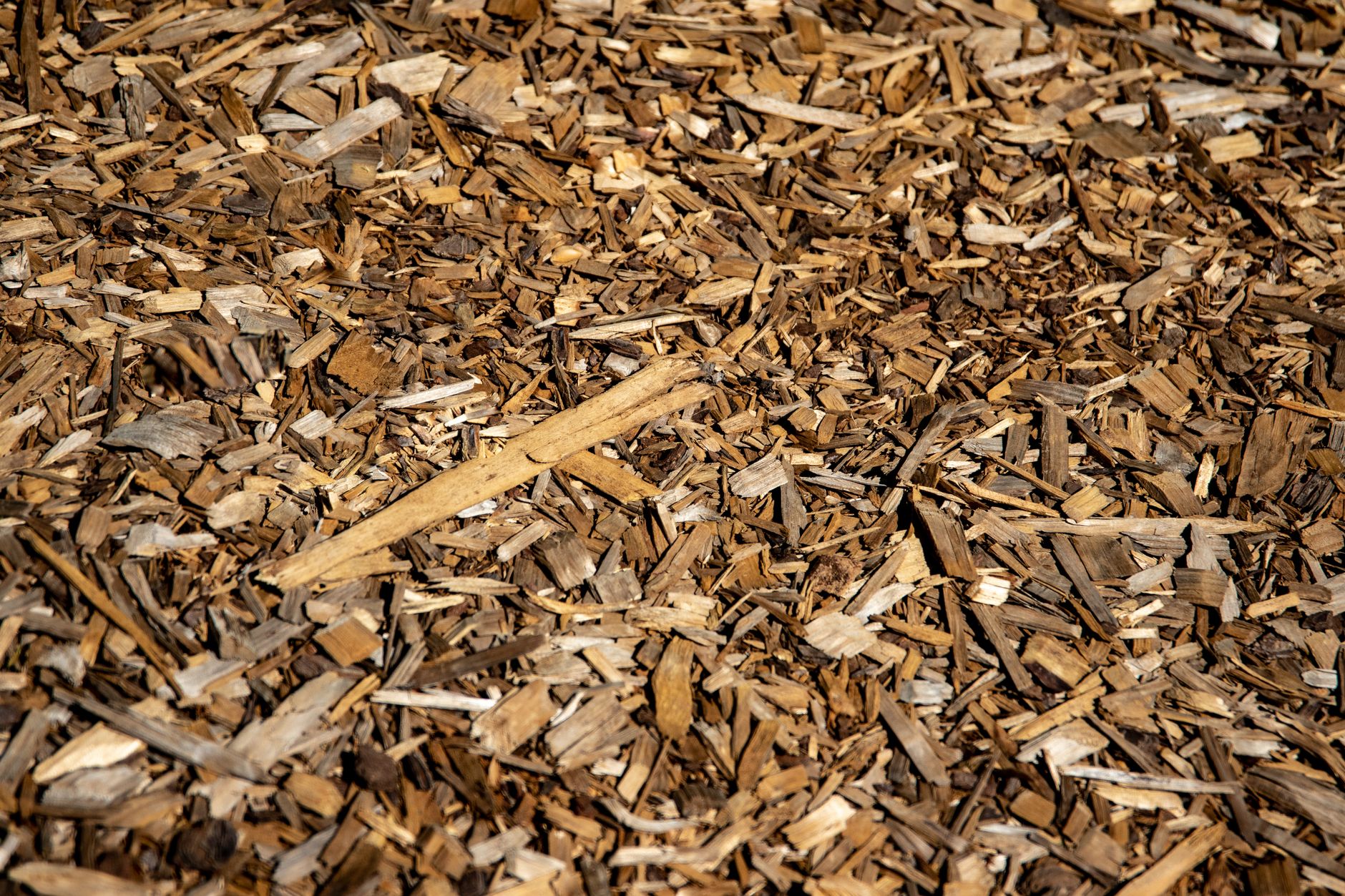

Not by itself, but wood mulch can help termites stay hidden when moisture, shade, and soil contact line up near a foundation. The problem is usually cover, not distance, and that’s why termites often work along siding, trim, and porch posts instead of out in the open.
This overview covers mulch choices, placement, and moisture control for anyone trying to lower termite risk around landscaping beds without giving up a clean yard.
Mulch’s Real Relationship With Termites
A bark bed under a window isn’t bait on its own. Termites feed on cellulose, so dead plant matter, wood fibers, and decaying wood already fit their diet, which means mulch usually supports an existing travel route instead of starting one.
That distinction matters in your yard. The real issue is moisture retention, shade, and soil contact, because those conditions let a colony stay hidden close to the structure.
University of Florida IFAS Extension points to moisture and wood contact as the main pressure points around homes. Field crews and the National Pest Management Association emphasize the same pattern: termites stay where food, water, and shelter overlap.
Cellulose Is The Real Food Source
Wood chips, pine bark, and shredded hardwood all contain cellulose, so they fit the feeding habits of subterranean termites. That doesn’t mean every pile becomes active, only that the material gives termites something familiar if they’re already nearby.
In practical terms, does mulch attract termites becomes a soil and moisture question, not a simple yes or no. A dry, thin layer away from the house behaves very differently from a thick mat pressed against damp siding.
Cover Matters More Than The Pile
Termites avoid open, dry exposure. A mulch bed creates a shaded tunnel of its own, and that shelter lets them move under the surface with less disturbance from sun and wind.
Think of it like a raincoat over a crawl space. The mulch itself isn’t the cause, but it helps preserve the conditions that let a termite colony keep working near your walls.
That shelter effect becomes more serious when the bed holds water, which is where the next layer of risk shows up.
Persistent moisture turns harmless cover into an invitation for termites to settle closer to the house.
Where Organic Mulch Raises The Stakes
Fresh wood-based mulch changes the ground fast because it holds water in its fibers. A thick spread around a foundation can stay damp after irrigation or rain, and that damp strip becomes easier for termites to cross.
Wood chips, bark mulch, and shredded cypress create more shelter than stone or gravel. Inorganic materials don’t feed termites in the same way, and they leave less decaying wood for insects to tuck into.
Mulch touching siding, deck posts, or trim hides movement. A termite tube running behind bark can stay out of sight for weeks, and that delay gives damage more time to spread inside framing or sill plates.
Fresh Material Holds More Water
Newly spread mulch has loose air pockets and a rough surface that trap rain. As it breaks down, it gets finer and can seal the soil beneath it, which slows drying around the foundation.
The same bed can shift from useful ground cover to a damp buffer zone in one season. A landscape that stays wet after watering is a stronger termite invitation than the mulch type alone.
Wood Contact Creates A Hidden Bridge
Porch supports, door trim, and siding edges should stay clear of any organic layer. Direct contact gives termites a concealed route from soil into structural wood, and that is where the trouble starts.
A short gap lets you spot mud tubes, soft spots, and insect wings before the problem reaches framing. That gap also makes routine inspections faster, which is where termite risk from mulch becomes easier to control.
Once you know what makes the risk rise, the next step is choosing materials that fit your yard instead of feeding the problem.
Dense, damp materials are one choice, but drier alternatives can reduce the odds of attracting pests.
Safer Mulch Choices For Termite-Prone Yards
Stone, pea gravel, and other inorganic ground cover fit termite-prone spaces because they don’t add food the same way wood mulch does. Rubber mulch also avoids cellulose, though its heat behavior and drainage traits can make it awkward near some plant beds.
Organic mulch still has a place in many yards. Pine bark, cypress mulch, and shredded hardwood can work well around shrubs or perennial borders when you keep moisture in check and keep the edge away from the house.
The right choice depends on appearance, drainage, and pest pressure together. A dry gravel strip beside a slab may suit a foundation bed, while pine bark can suit a farther planting area where irrigation hits roots, not siding.
| Mulch Type | Termite Pressure | Best Use |
|---|---|---|
| Stone or gravel | Low, because no cellulose feed is present | Foundation strips and dry border zones |
| Rubber mulch | Low for feeding, though drainage still matters | Decorative areas away from water pooling |
| Pine bark | Moderate, since it is wood based | Plant beds with controlled irrigation |
| Shredded hardwood | Moderate to higher near damp soil | Large beds that stay away from structures |
| Cypress mulch | Moderate, because it is still organic mulch | Ornamental beds with good airflow |
Texas A&M AgriLife Extension gives the same practical rule in plain language: keep organic material away from contact points and keep the site dry. That advice matters more than any label on the bag.
Drainage And Appearance Need A Tradeoff
Stone warms faster in sun and can look harsh beside soft plantings, yet it sheds water well and leaves termites fewer hiding places. Bark mulch looks better in many beds, but it needs tighter depth control and faster inspection cycles.
Your yard sets the balance. A shaded north side with clay soil may favor gravel, while a sunny border with good runoff can handle organic mulch without raising termite risk from mulch in the same way.
Placement matters just as much as material, because a good product can still become a problem when it sits too close to the structure.
Even the best mulch fails when it presses against siding or hides the foundation line.
Placement Rules That Keep The Foundation Protected
A clear buffer does more than keep mulch tidy. It keeps wood, soil, and moisture from meeting at the same edge, which is the exact spot termites like to use.
Leave several inches between any mulch line and siding or the foundation. That open strip makes inspection simpler and cuts off the concealed path termites use to reach porch supports, trim, and sill areas.
The common 3-3-3 rule helps here: keep about 3 inches from the structure, keep mulch about 3 inches deep, and inspect the edge about every 3 months. The rule isn’t a law, but it gives you a workable memory aid for a busy yard.
Keep the mulch edge straight and visible. A buried border or a piled mound can hide early mud tubes the same way a rug hides a stain.
Depth Control Changes Drying Time
Mulch depth affects how long water stays trapped. A 2 to 3 inch layer usually dries faster than a heavy blanket, so it gives termites less shelter and gives you a better view of the soil line.
Deep piles near the house also stay cooler longer. That cool, damp pocket can remain active long after the top looks dry.
Edges And Trim Need Open Air
Do not let bark touch porch columns, lattice, or wooden edging. Even a small bridge can hide termite tubes and let soil insects move without daylight exposure.
A clean border also helps during routine checks. You can spot frass, wing drops, or softened wood sooner when the bed stops short of the structure.
Once the border is open and visible, the warning signs become easier to catch before the damage spreads indoors.
Small changes around the edge often reveal trouble before termites reach the wood below.
Warning Signs That Mulch Areas Need Attention
Small brown tubes on concrete, discarded wings near a sill, and wood that sounds hollow under a screwdriver are the clearest alarms. Moist soil that stays dark for days after watering is another clue that the bed is holding too much water.
Active termites in mulch rarely mean the mulch started the whole problem. They more often point to a nearby colony using the bed as cover while it searches for wood in the house, fence, or nearby stump.
That’s why does mulch attract termites is the wrong question once activity shows up. The better move is to trace the perimeter, check wall contact, and look for any hidden wood debris or wet framing close by.
Surface Clues You Can See Fast
- Mud tubes indicate a protected travel path from soil to wood.
- Discarded wings often appear near windows, doors, or porch lights.
- Soft trim suggests feeding has reached structural lumber.
- Wet patches point to irrigation, poor drainage, or a leak near the bed.
- Wood scraps under mulch can feed hidden activity in a way stones cannot.
Perimeter Problems Hide In Plain Sight
A stump edge, old landscape timber, or buried scrap of lumber can support termites better than the mulch around it. Once you find activity, inspect anything wooden within reach, including fence posts and deck steps.
That wider check matters because mulch and termites are linked by the environment around them. The mulch often acts like a blanket over a larger moisture or wood-contact problem.
The same logic applies to maintenance: clean borders and dry beds make termites easier to spot and easier to discourage.
Routine raking and drying keep the area less hospitable and make fresh activity stand out sooner.
Practical Maintenance For Lower-Termite Gardens
Thin layers dry faster and leave fewer shelter pockets. Rake compacted spots, keep the bed airy, and avoid fresh piles that press into wet soil after irrigation or rain.
Regular edging and drainage checks matter just as much. Water that runs toward the foundation or sits in the mulch after a storm keeps the zone favorable for termites and for decay fungi that weaken wood.
Clear sticks, buried lumber, and old root pieces from landscaping beds. A clean bed gives you a better chance of spotting changes fast, and it removes the decaying wood termites can use as a bridge.
Action Steps That Fit A Busy Yard
- Trim the depth so the layer stays near 2 to 3 inches.
- Pull the edge back from siding, posts, and trim.
- Fix drainage where water pools after rain or irrigation.
- Remove debris such as sticks, roots, and old timber scraps.
- Check the border for mud tubes, wings, and soft wood each season.
If termites turn up in mulch, remove the infested material, inspect nearby wood, and trace the moisture source right away. A local termite colony can sit under a bed or at a sill plate long before the damage shows indoors, so a quick perimeter check matters more than the mulch bag you chose.
Termites often start working unseen at the bed edge or sill plate, which makes inspections essential.
Final Thoughts
Mulch isn’t the enemy, but damp, wood-based mulch close to the house can make termite activity harder to spot. Keep the edge open, keep the depth modest, and keep an eye on moisture, because those three habits matter more than the mulch label.
FAQ
What are the chances of getting termites from mulch?
The chance is lower than many people fear, because mulch doesn’t draw termites from far away on its own. The risk rises near a home when mulch stays wet, touches wood, or covers an existing termite path.
What kind of mulch doesn’t attract termites?
Stone, pea gravel, and other inorganic ground cover leave termites without cellulose to feed on. Rubber mulch also lacks wood fiber, though you still need good drainage and clean spacing near the foundation.
Should I remove mulch with termites?
Remove it from the infested spot and inspect nearby wood, posts, and trim. The mulch is often a clue, not the root cause, so moisture or hidden timber may need attention too.
How far should mulch be kept from a foundation?
Keep several inches of open space between mulch and the foundation or siding. That gap helps you spot mud tubes early and keeps hidden routes away from structural wood.
How deep should mulch be applied to avoid termite problems?
A layer around 2 to 3 inches is easier to dry, inspect, and manage than a thick mat. Deeper piles stay wetter longer and give termites more cover near the wall.
