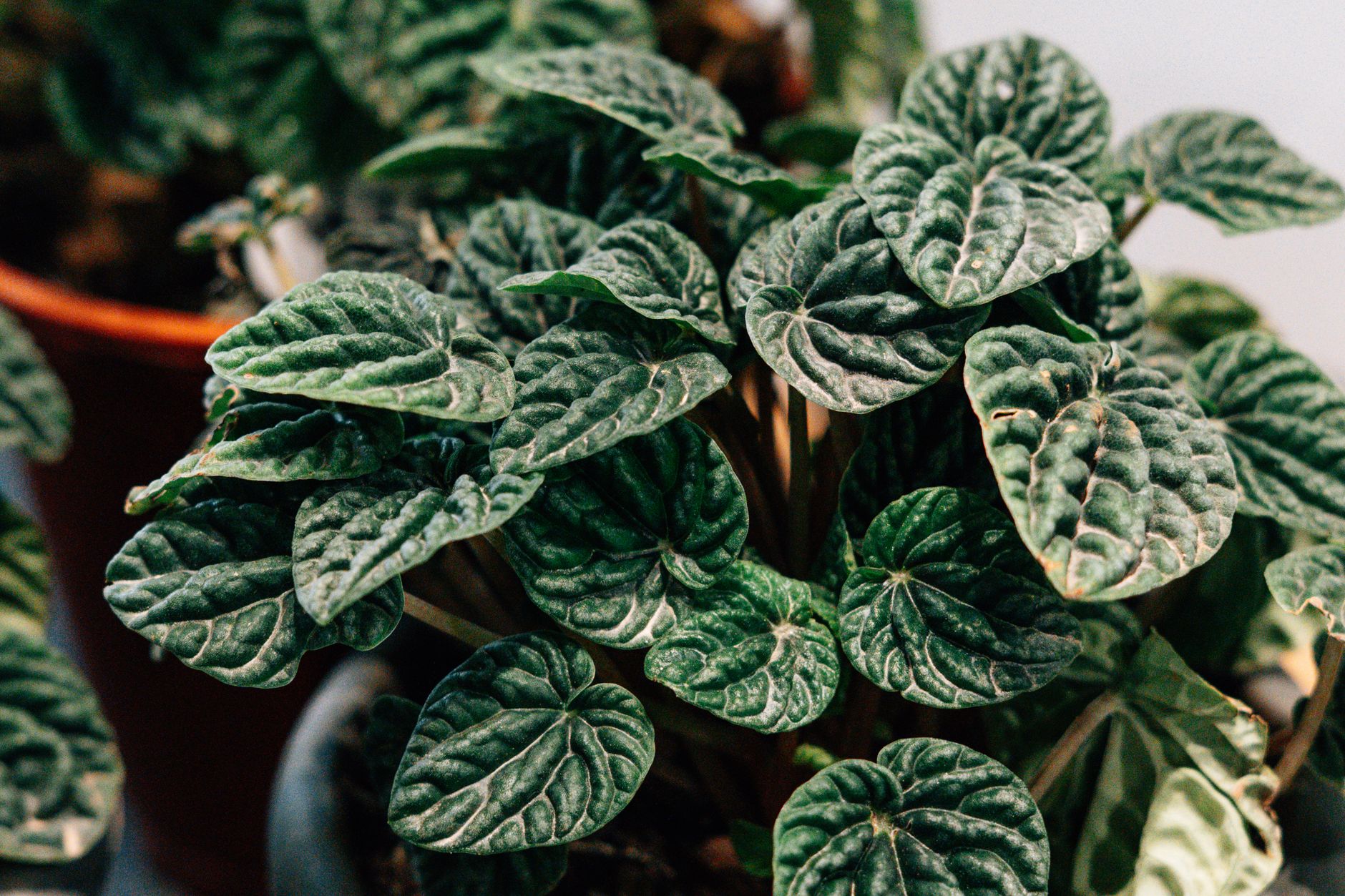

Peperomia caperata is a compact indoor plant with deeply ridged, heart-shaped leaves and a tidy shape that suits shelves, desks, and narrow corners. Its foliage brings texture and color without needing much space, which is why it stands out in small rooms and mixed plant displays.
Here’s a practical look at its growth habit, indoor care, and the spots where it fits best for anyone choosing a small houseplant for bright rooms or tight spaces.
A Small Tropical Plant With Big Textural Appeal
Deep ribs run across each leaf, giving the surface a folded, quilted look that catches the eye right away. That texture sets it apart from smoother houseplants such as pothos and philodendron.
It comes from tropical South America and keeps its evergreen foliage indoors through the year. In a small pot, it still looks complete, which helps it work well where people naturally look first.
Leaf Shape And Color Range
Heart-shaped leaves are part of the draw, and the ridges catch light so the surface looks deeper than it is. Dark green forms feel rich and dense, while red and burgundy selections add warmth.
Peperomia ‘Rosso’ is a well-known cultivar, and its red undersides create a sharp contrast against the upper leaf surface. That contrast shows best in low bowls, hanging planters, and terrariums where you view the plant up close.
That close-up texture depends on a few consistent habits, especially around light and moisture.
The plant earns attention through texture, not size. A single healthy rosette can read like a miniature sculpture on a table or ledge.
The Traits That Define Ripple Peperomia
Compact growth is what makes this plant fit apartments, dorm rooms, and crowded plant corners. Stems stay short, leaves cluster close together, and the outline remains tidy without constant trimming.
What You Can Spot At A Glance
At a glance, you see corrugated leaves, a low mound of foliage, and a base that stays modest instead of sprawling. Those features separate it from larger trailing peperomias and from soft-leaved tropicals that need more room.
Because the plant stays small, it works as an accent instead of a centerpiece. That makes it useful on a desk, beside a lamp, or in a mixed arrangement where you want texture without crowding the container.
Why The Size Feels So Tidy
The growth pattern is slow enough that the plant does not rush beyond its pot the way many tropical houseplants do. That slower rhythm means your care routine can stay simple, with fewer repots and less pruning.
Peperomia caperata characteristics also include thicker leaves than many foliage plants, which helps the plant hold a neat shape. Once you know that structure, you can spot healthy growth before the whole plant changes much, and that leads straight into light.
Those visual cues matter because the same structure responds quickly when light levels drift off balance.
Light Conditions That Keep The Leaves Healthy

Bright, indirect light gives the leaves the cleanest color and the most even growth. An east window or a spot a few feet back from a south or west window often works well indoors.
Direct sun can bleach the surface and leave the leaves looking washed out or scorched. The damage shows up fastest on thin or exposed leaves, where heat and light hit the same spot for hours.
Filtered Window Light Works Best
A sheer curtain, frosted glass, or a neighboring plant can soften glare without pushing the plant into shade. That balance keeps the ripple leaf plant compact instead of stretched and pale.
Low-light tolerance exists, but growth slows and the ridges lose some crispness. A corner far from a window can keep it alive, yet it will not show the same leaf color or full texture that stronger indirect light brings.
Signs The Spot Needs Adjustment
- Pale leaves point to too much sun or too much distance from the window.
- Long gaps between leaves show the plant is reaching for light.
- Brown patches often mark sun scorch on exposed tissue.
- Dull color can mean the plant is sitting in dim light too long.
Those clues matter because light sets the pace for every other part of Peperomia caperata care. Once the spot is right, watering becomes easier to judge.
Once brightness is settled, the roots become the main variable, and that makes drainage the next concern.
Watering And Soil Choices That Prevent Decline
Well-draining potting mix matters more here than a rich, heavy blend. Roots need air as much as moisture, and dense soil holds water around the base long after the top layer looks dry.
Light, infrequent watering fits the plant better than a fixed schedule. Check the mix with a finger or a wooden stick, then water only after the top layer has dried partway down.
Why Wet Soil Causes Trouble
Overwatering is the most common reason the plant declines. Roots sitting in saturated mix lose oxygen, and that low-oxygen state slows root function before visible damage shows above the soil line.
Once roots weaken, leaf curl, yellowing, and soft stems can follow. That chain is part biology and part physics: water fills the pore spaces in soil, air moves out, and root tips stop working well.
What A Better Mix Looks Like
An airy blend with fine bark, perlite, or pumice gives water a path downward and lets excess escape faster. Many growers also use an African violet-style mix with extra drainage material added in.
Use a pot with a drainage hole and keep the saucer empty after watering. Standing water at the base is a fast route to root rot.
Peperomia caperata indoor plant care gets much easier once the roots have room to breathe. From there, the question shifts from water and soil to the room itself, especially humidity and temperature.
When roots stay comfortable, the surrounding air starts to matter just as much as the potting mix.
Humidity, Temperature, And Everyday Indoor Comfort
Average indoor temperatures suit this plant well, especially the range most homes keep through the day and night. A stable room is better than dramatic swings from a heater, draft, or blasting air conditioner.
Moderate humidity helps keep the leaf edges smooth, but a greenhouse is not needed. A kitchen, bathroom with a window, or a room with a modest humidifier can give enough moisture in the air without making the space feel damp.
Room Stability Matters More Than Special Equipment
Rapid temperature changes can stress the foliage and slow growth. A plant placed beside a cold window in winter or near a heat vent in summer is more likely to show tired leaves and uneven growth.
The Royal Horticultural Society lists Peperomia as a houseplant group suited to sheltered indoor conditions, which lines up with its preference for calm, steady rooms. That trait makes it friendly for homes that do not run tropical conditions all day.
Humidity Clues You Can Use
Edges that feel crisp, curling leaf margins, and a slightly rough surface can point to air that is too dry for the plant’s comfort. Misting gives only short relief, so a steadier source of room moisture works better.
The American Society for the Prevention of Cruelty to Animals notes that Peperomia species are pet-safe, which matters in homes where cats or dogs move through plant shelves. That pet-friendly status makes the plant easier to place in shared rooms, and placement matters just as much as comfort.
A plant that tolerates shared spaces still has to fit the room, which is where scale becomes important.
Why It Fits Easily Into Small Interior Spaces
Small scale is the reason this plant slots into spaces that would feel crowded with larger foliage. A narrow shelf, a windowsill, or a nightstand can hold it without giving up usable room.
Its compact form also makes it a strong fit for mixed displays. You can pair it with a taller plant for contrast, or let it stand alone where the leaf texture does the visual work.
Places Where The Plant Feels Natural
Desks suit it because the mound stays low and never blocks a screen or lamp. Window ledges work too, as long as the light is bright but filtered.
Terrariums can suit ripple peperomia when airflow is managed and the setup is not kept wet. Small pots also match the root system, which is modest and does not need an oversized container to look healthy.
A Simple Care Rhythm That Holds It Together
- Check light before anything else, because color and texture depend on it.
- Water lightly only after the upper mix has dried partway down.
- Keep temperatures steady rather than chasing exact numbers.
- Use a draining pot so roots do not sit wet after watering.
- Watch leaf shape for early signs of stress, especially curl or dull color.
That rhythm suits Peperomia caperata because the plant rewards steadiness more than fuss. Give it the right light, loose soil, and a calm indoor spot, and the ripple leaf plant stays compact, textured, and easy to place almost anywhere.
Those small-space advantages hold best when a few core care points stay consistent.
What To Remember
Peperomia caperata earns its place through structure: ridged leaves, a small footprint, and a tidy shape that fits real homes. Once you give it bright indirect light and a light hand with water, the plant stays attractive without taking over the room.
FAQ
How do you care for Peperomia caperata indoors?
Set it in bright, indirect light, use a well-draining potting mix, and water only after the upper part of the soil dries. Stable room temperatures and moderate humidity keep the plant steady, while overwatering remains the main cause of trouble.
How much light does Peperomia caperata need?
Bright, indirect light gives the best leaf color and the most even growth. Direct sun can scorch the leaves, while dim corners slow growth and soften the textured look that makes the plant stand out.
What are the common problems with Peperomia plants?
Leaf curl, yellowing, root rot, and dull growth are the main problems tied to water and light stress. Too much moisture in the soil is the most common issue, and poor light can make the plant look stretched or pale.
Is Peperomia caperata safe for pets?
Yes, the ASPCA lists Peperomia species as pet-safe. That makes the plant a practical choice for homes with cats or dogs, as long as the pot stays out of reach from chewing or digging.
Why are the leaves on my Peperomia curling?
Leaf curl often points to watering problems, dry air, or excess light. Check the soil, then check the placement, because either a soggy root zone or a hot, bright window can trigger that response.