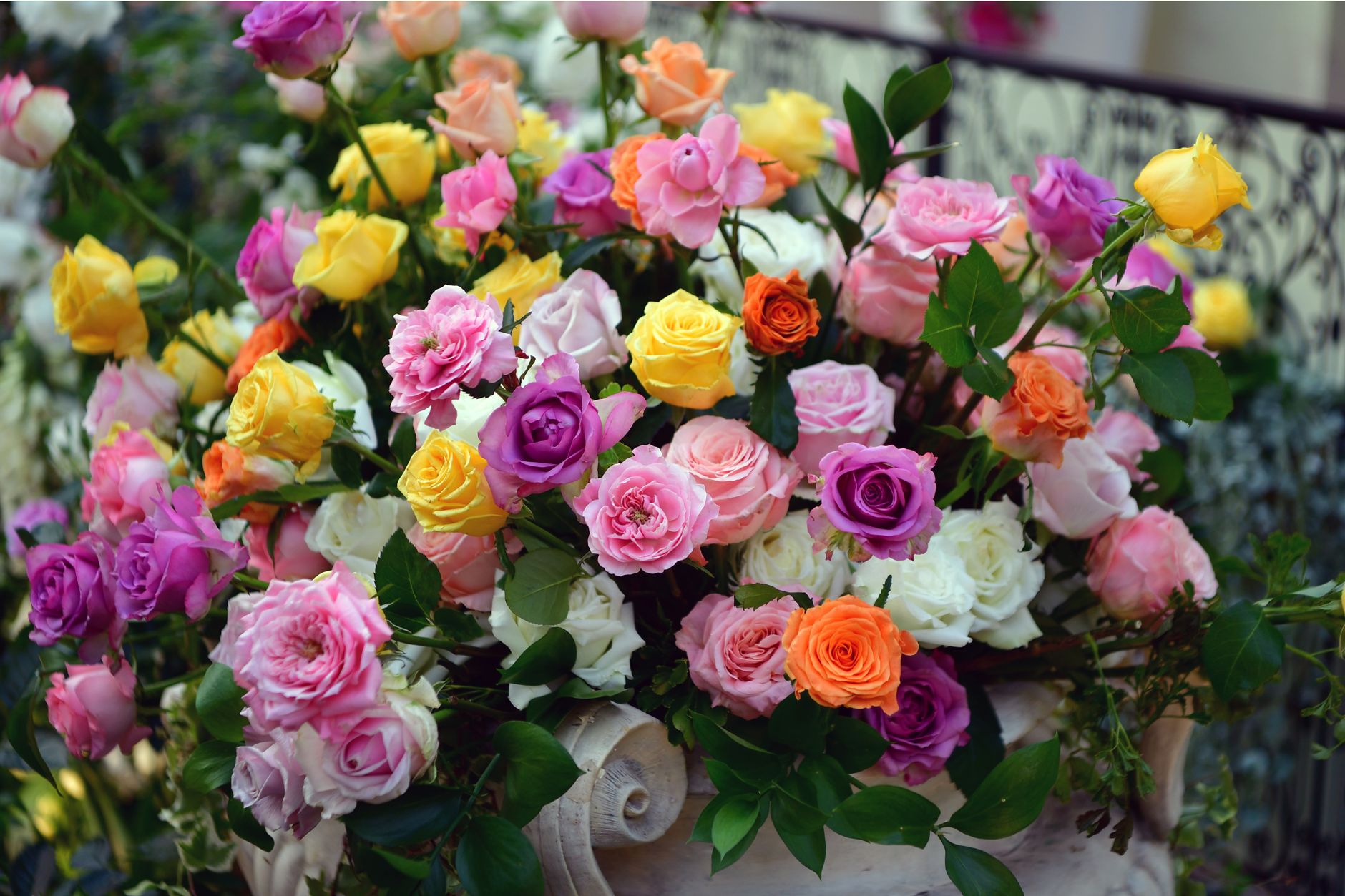

Drought tolerant roses are roses that keep blooming after their roots are established, even in hot, dry weather and with less frequent watering. They still need a good site, deep watering, and decent soil, but they cope far better with missed irrigation than temperamental roses.
This guide covers drought tolerant roses for gardeners shaping hot, lean borders, with practical picks and care advice on soil, sun, drainage, watering, pruning, and deadheading.
The Rose Types That Handle Dry Weather Best
Once roots settle, a shrub often rides out a dry spell far better than a newly planted rose. That’s why one bed can keep its color after a week without rain while another fades fast.
Shrub roses and species roses usually manage stress better than hybrid teas because they have tougher foliage, looser canes, and deeper root habits. Rosa rugosa is a classic example, with thick leaves and strong salt and wind tolerance, while Rosa chinensis helped shape repeat-blooming garden types that keep flowering through heat. The common thread is resilience, and that’s why disease resistant roses earn a spot in hot, lean gardens.
Hybrid teas can still look impressive, but they want steadier moisture, cleaner foliage, and more feeding. In a dry border, that extra demand shows up quickly as smaller blooms, shorter stems, and more black spot after stress. For a tough site, start with a rose bred for stamina before flower size.
Two traits matter most. Deep roots reach moisture below the crust, and smaller, thicker leaves lose less water to heat. Those features help explain why old-fashioned shrub forms and wild species often keep their shape after a long dry week.
That difference points straight to specific cultivars that have earned trust in hot, lean borders.
Certain roses have already proven they can thrive where heat and lean soil would weaken fussier types.
Varieties Worth Trusting In Hot, Lean Borders
That resilience shows up most clearly in named roses that keep repeat bloom without constant irrigation. Knock Out is a familiar example because it was bred for easy care roses with strong disease resistance, so it gives dependable flower flushes with less fuss than a hybrid tea border.
David Austin Roses offers English shrub roses that can perform well in many gardens, but the best picks for dry sites are the ones with looser growth, healthy foliage, and repeat blooming rather than oversized, high-petal flowers. ‘Ballerina’ is a useful example of a light, airy shrub that flowers in waves and handles leaner conditions better than many high-maintenance types.
Hardy shrubs that keep flowering
Rosa rugosa brings thick leaves, fragrant blooms, and hips that carry on after petals drop. That mix suits coastal winds, sandy ground, and the kind of heat that dries the top layer by noon.
‘Carefree Beauty’ and ‘Sally Holmes’ also show why hardy rose varieties matter in dry borders. Both can keep color moving through summer without the rigid, thirsty habit that slows many hybrid teas after the spring flush.
Heat tolerant roses with repeat bloom
In full sun, flower production often surges, helping these roses outperform softer varieties in hot states. The trade-off is water stress, so a plant that blooms well at 90 degrees still needs a root zone that stays damp below the mulch.
Roses from the shrub and species groups often keep producing while other types pause. That steady rhythm is what makes drought tolerant roses so useful beside gravel paths, raised beds, and front borders that bake in late afternoon.
Choose for the worst week of summer, not the best day in April. A rose that handles heat, black spot pressure, and dry soil will stay useful after the spring show fades.
Those plant traits only pay off when the site supports them, and the next section shows how soil and sun can make the same rose thrive or struggle.
Even strong performers depend on the ground beneath them, where exposure and drainage can quickly tip the balance.
Soil, Sun, And Drainage Shape Performance
Site choice still sets the limits. Full sun drives bloom, but direct heat also raises water loss from leaves and topsoil, so a bright spot gives you more flowers and more stress at the same time.
Poor drainage can hurt a rose faster than a short dry spell, especially in heavy clay. Roots need air as well as moisture, and waterlogged pockets cut off oxygen, slow root growth, and open the door to decline. The Royal Horticultural Society has long stressed drainage for roses for exactly that reason.
Sandy ground needs smarter watering
Sandy or fast-draining soil lets water move past the root zone before the plant can use it. That means a rose may look thirsty again only hours after a light soak, even though the real issue is poor water-holding capacity, not heat alone.
Drip irrigation works well in that setting because it sends water slowly into the root area instead of wetting the whole bed. UC Cooperative Extension commonly advises deeper watering intervals for landscape plants in dry climates, and that same logic fits roses planted in open, fast-draining beds.
Sun changes the moisture equation
Morning sun with afternoon shade gives you a softer water bill than all-day western exposure. A plant near a wall or driveway can lose moisture far faster than the same cultivar in an open, breezy border.
That’s why site choice matters as much as variety choice. You can grow drought tolerant roses in full sun, but the hottest exposures ask for better mulch, deeper roots, and tighter watering habits.
| Site condition | Rose response | Your best move |
|---|---|---|
| Open full sun | More blooms, higher water loss | Use mulch and deep watering |
| Clay soil | Water can sit near roots | Improve drainage before planting |
| Sandy soil | Moisture drains fast | Water slowly and less often |
| Reflected heat | Leaves dry out quickly | Pick a tougher shrub form |
Once the site is set, your watering pattern decides whether those roots stay shallow or grow deep enough to carry the plant through heat.
Deep roots make all the difference, and watering habits determine whether they ever get that far.
Watering For Real Drought Hardiness
A slow soak every few days encourages roots to reach deeper, which is the real engine behind drought hardiness. Shallow sprinkling wets only the top few inches, then disappears fast, so the plant stays dependent on frequent attention instead of building deep roots.
Regular moisture still matters during bud formation and flowering. A rose can survive a dry spell, yet the bloom flush will be smaller, shorter, and less even without enough water in the weeks before buds open. Good timing matters more than volume.
Water deeply rather than lightly
Give water long enough to sink 8 to 12 inches into the soil, not just dampen the surface. A slow hose trickle or drip line reaches the root zone without wasting much to evaporation.
Check the soil with your finger or a narrow trowel a few inches from the crown. Dry crust at the top does not always mean the root zone is dry, and that small check keeps you from watering on guesswork.
Mulch slows evaporation
A two-inch mulch layer shades the soil, lowers surface heat, and cuts evaporation around the roots. A 2 to 3 inch layer of shredded bark, composted wood chips, or coarse leaf mold works well for most roses.
Keep mulch a few inches back from the canes so the crown stays airy. That small gap lowers rot risk and helps the base dry after watering or rain.
- Water at the base so foliage stays dry and the root zone gets the moisture.
- Soak less often to push roots downward instead of keeping them shallow.
- Mulch after watering so the soil holds that moisture longer.
- Watch new buds because flower set shows stress before leaves do.
- Skip overhead spray in hot weather since much of it evaporates before roots use it.
That routine matters even more during the establishment period, when roots are still spreading into the surrounding soil. Once the plant settles, drought tolerant roses can handle longer gaps, but only after the root system has had time to anchor itself.
Once roots are established, careful trimming helps convert resilience into a longer season of blooms.
Pruning And Deadheading Keep Tough Roses Flowering
A well-timed cut can send a shrub into fresh growth and another bloom flush. Roses flower best on active new shoots, so pruning affects both shape and future bloom, not just the plant’s looks.
Deadheading also extends display in many hardy blooming roses. Removing spent flowers before hips form redirects energy into new buds, which is why repeat-blooming shrubs stay showy longer than once-flowering types.
Prune for fresh canes
Light spring pruning removes weak wood and opens the center to air and sun. That airflow helps the foliage dry faster after morning dew, which reduces powdery mildew pressure in damp pockets.
Heavy cutting is not always the answer in a dry garden. Leave enough leaf surface to feed the plant through heat, since bare stems can struggle to photosynthesize well during a hot spell.
Deadhead with restraint
Snip spent blooms back to a strong leaf node, not deep into old wood. That keeps the plant moving without forcing a weak response from tired canes.
Some species roses and old garden types set hips that add late-season interest, so you may leave a few flowers alone. That trade-off gives birds food and keeps the shrub from being stripped of all character.
Clean-up cuts should leave a healthy canopy. Too much removal in July can expose stems to sun scorch and push the plant toward stress instead of bloom.
Once the plant is growing and blooming well, the final step is choosing a rose that fits your heat, water limits, and maintenance style from the start.
A healthy, flowering plant is only part of the equation; the real win is matching the rose to your conditions.
Choosing Easy-Care Roses For A Dry Garden
The smartest choice matches climate, soil, and water limits before bloom size enters the picture. A garden that gets 10 inches of summer rain needs a different rose from a bed beside a lawn sprinkler.
Look for disease resistant roses with repeat blooming, moderate height, and a shrub habit that fits the space. That usually beats chasing the largest bloom or the longest petals, because drought tolerant roses earn their keep by staying healthy enough to flower again.
Concrete examples help narrow the field. Knock Out works well for many hot suburban beds, Rosa rugosa suits rough, sandy, or coastal sites, and a David Austin shrub such as ‘Boscobel’ may fit a protected spot where you can give deeper watering during summer stress.
- Match plant size to the bed so roots do not fight crowding.
- Favor repeat bloom because a steady flower flush gives more value through summer.
- Check disease history since black spot pressure rises fast in stressed plants.
- Choose shrub form for dry sites because it often asks for less water than hybrid teas.
- Respect local limits so your rose fits the water rules and heat of your area.
That last point matters more than catalog color. A rose that suits your rainfall, drainage, and heat will outlast a flashier plant that needs constant rescue, and the border will look better for it through late summer.
That practical match is what turns a summer border from a constant chore into a reliable, long-lived display.
What to Remember
Stable bloom in a dry garden comes from the right plant and the right root zone. Pick shrubs or species forms with disease resistance, give them deep water in wide intervals, and protect the soil with mulch. The result is a rose that keeps flowering without turning your bed into a daily chore.
FAQ
Which roses are most drought tolerant?
Shrub roses and species roses such as Rosa rugosa tend to handle dry soil better than hybrid teas. Disease resistant roses with repeat bloom, such as Knock Out, also fit many dry gardens because they stay active with less attention.
Do roses need frequent watering once established?
No. Established roses do better with deep, infrequent watering than with shallow sprinkles, because that pattern sends roots downward. They still need more moisture during bud set and bloom, but constant surface wetting does not help root strength.
How often should drought tolerant roses be watered?
The interval depends on heat, soil, and mulch, but the goal is a slow soak only after the root zone starts to dry. Sandy beds need water sooner than clay beds, and potted roses dry out far faster than plants in the ground.
What is the best mulch for roses in hot dry climates?
Shredded bark, composted wood chips, and coarse leaf mold work well because they slow evaporation without packing tightly around the crown. Keep the layer 2 to 3 inches deep and pull it back a little from the stems.
Can roses survive in full sun with little water?
Yes, some can, especially shrub and species forms with deep roots and thicker foliage. Full sun improves flowering, but extreme heat raises water stress, so the most reliable plants still need a damp root zone and good drainage.
Which rose varieties are disease resistant and low maintenance?
Knock Out, Rosa rugosa, and several repeat-blooming shrub roses from major breeding lines fit that description well. The best pick for your site is the one that stays clean in black spot weather and keeps blooming after a hot spell.