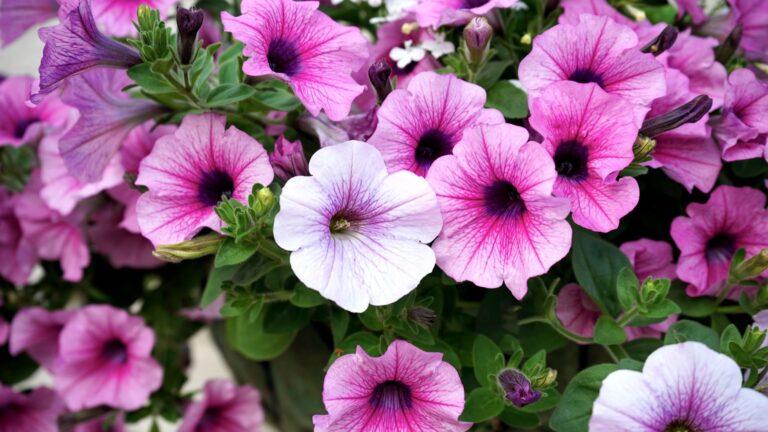
Pink flowering vines bring color and texture to fences, trellises, and arbors with minimal space. Bougainvillea and mandevilla thrive in full sun and deliver bold, lasting blooms. Clematis, coral honeysuckle, and sweet peas perform well in cooler spots and attract pollinators with fragrance. Provide sturdy supports and regular pruning to maintain shape and vigor. These nine climbing plants offer varied bloom times, growth habits, and care needs to suit different garden conditions.
Best Pink Flowering Vines for Full Sun
As soon as you want pink flowers to glow in full sun, you need vines that can take the heat and still keep blooming. You can feel confident choosing heat tolerant varieties like bougainvillea, mandevilla, and coral honeysuckle, because they stay lively whenever the sun feels unyielding.
In case your space gets dry between waterings, look for drought resistant cultivars that keep their color without demanding constant care. You’ll also like how these vines climb fast, soften fences, and make your patio feel more welcoming.
To begin, give them rich soil and steady water while they settle in. Then, once roots spread, you can back off a little and let them shine. With the right pick, your garden can feel bright, friendly, and easy to love.
Climbing Roses With Pink Blooms
Climbing roses with pink blooms can turn your fence, trellis, or arbor into a soft, romantic focal point, and you’ve got lovely pink rose varieties to choose from, like blush pastels or richer rose shades.
As you train the canes, tie them gently and spread them out so the plant grows in a fuller, more graceful shape.
With steady blooming care tips like sunlight, pruning, and regular watering, you’ll help your roses keep showing off without acting too dramatic.
Pink Rose Varieties
Pink climbing roses can turn a plain wall, fence, or arbor into something soft, graceful, and full of life. If you choose pink rose varieties, you give your space a warm welcome that feels personal and kind.
Heritage cultivars often bring old-fashioned charm, while newer types offer strong disease resistance, so you can enjoy beauty with less worry. You could love blush pink for a gentle look, or choose deeper rose tones for a bolder touch.
Some blooms open in clusters, which adds fullness and makes your garden feel more connected. Because these roses climb with ease, they help you build a space that feels lived in, loved, and shared.
With the right variety, you’ll find a bloom that fits your style and your heart.
Training Climbing Roses
Training your climbing roses starts with a gentle hand and a clear plan, and that care pays off in stronger growth and fuller pink blooms.
You can guide each cane along a trellis or fence, then use spiral tying with soft ties so the stems stay secure without bruising.
Keep the main canes mostly horizontal or gently arched, because that shape encourages more side shoots and a richer flower display.
Whenever a stem grows wild, use vertical pruning to remove weak tips and shape the plant before it tangles. You’ll feel more in control, and your rose will too.
Check ties often, loosen them as stems swell, and replace any that pinch.
As soon as a stem grows wild, use vertical pruning to remove weak tips and shape the plant before it tangles.
With patience, you build a rose wall that feels welcoming, alive, and truly yours.
Blooming Care Tips
Even the best-trained climbing roses need steady care to keep their pink blooms coming strong. You can help them feel at home by checking soil moisture often and watering deeply when the top inch dries.
Feed them in spring so they’ve energy for fresh canes and flower buds. Then watch pruning timing closely, because cutting too late can steal next season’s show.
- Picture soft pink clusters glowing against a fence.
- Image leaves that stay full and bright after a gentle soak.
- See clean stems reaching upward, ready for the next wave of blooms.
If black spots or mildew appear, act fast and remove the worst leaves. With steady attention, you and your roses can build a calm, blooming rhythm together.
Pink Clematis for Trellises
A well-placed clematis can turn a plain trellis into a soft, lively screen that feels full of charm, and pink varieties make that effect even sweeter.
You can choose compact clematis for a smaller trellis, and they’ll still give you generous blooms without taking over your space. Should your garden gets gentler light, shade tolerant varieties can help you keep that pretty pink glow where other climbers could struggle. Train the stems promptly, and they’ll settle in with less fuss than you’d expect.
As they climb, they add height, color, and a welcoming feel that makes your corner seem cared for. With a sturdy frame and regular watering, you’ll have a trellis that feels inviting, cozy, and beautifully lived in.
Coral Honeysuckle for Hummingbirds
Coral honeysuckle can quickly bring your garden to life, especially whenever you want to welcome hummingbirds with a plant that feels both pretty and useful. You’ll see slender tubes of coral pink bloom along twining stems, and those flowers offer seasonal nectar that keeps visitors returning.
When you plant it near a fence or arbor, you create a small gathering spot that feels warm and familiar.
- Hummingbirds hover like tiny jewels at the blossoms.
- Native pollinators join in, adding gentle movement.
- Green leaves frame the flowers and soften bright corners.
Because coral honeysuckle grows well in many spaces, you can enjoy a vibrant feature that belongs with your garden crew. It asks for support, and in return, it gives color, motion, and a welcome that feels truly shared.
Pink Bougainvillea for Warm Climates
Pink bougainvillea can turn a hot garden wall, fence, or trellis into a bright, lively show. You’ll love how this sun-lover fits warm, dry spaces and still feels welcoming. As a drought tolerant bougainvillea, it asks for deep watering, sharp drainage, and plenty of light, then it rewards you with vivid pink bracts.
| Care need | Simple guide |
|---|---|
| Sun | Full sun |
| Soil | Well-drained |
| Water | Let soil dry |
| Space | Give room to climb |
If you don’t have a yard, try container bougainvillea on a sunny patio and enjoy the same cheerful color close by. You’ll feel right at home watching it spill over a support with easy grace, even whenever summer feels a little too keen.
Mandevilla Vines With Pink Flowers
Provided that bougainvillea brings bold color to hot, dry spots, mandevilla offers a softer, twining kind of beauty with pink flowers that feel almost romantic. You can let it climb a trellis, or you can guide it along a porch rail, where it greets you like a warm friend. As a tropical ambassador, it adds easy charm without feeling fussy.
- glossy leaves
- trumpet blooms
- a happy wall of pink
In container cultivation, you’ll feel right at home with it, because pots keep the roots neat and the display close to you. Give it steady water, bright light, and a little support, and it’ll reward you with long, graceful vines. Whenever you step outside, you won’t just see color. You’ll feel invited into it.
Soft Pink Morning Glories
Soft pink morning glories can turn an ordinary fence or arch into something that feels light, sweet, and a little dreamy.
You’ll like how they climb fast, opening soft blooms that greet the day with gentle color.
Give them sun, loose soil, and support, and they’ll reward you with a friendly curtain of petals that feels welcoming, not fussy.
Should you want more of them next year, try delicate seed saving after the flowers fade and the pods dry.
That small habit helps you keep the prettiest plants close.
You might also notice pale vine hybrids with extra-soft color, which can blend nicely with brighter pinks.
As you train them along a walkway, they make your space feel cared for and shared.
Fragrant Pink Sweet Peas
Should you loved the gentle charm of morning glories, you might find sweet peas even more inviting because they add both color and fragrance to the show. Whenever you tuck Fragrant Pink Sweet Peas near a path, you welcome a soft perfume that feels warm and friendly.
Their ruffled blooms can lift your mood on quiet mornings and make your garden feel like it already knows you.
- Blush petals wave like tiny silk flags.
- A scent pairing with lavender feels cozy and sweet.
- Heirloom varieties bring that old-fashioned, cared-for feeling.
You can mix them with other pink climbers for a shared, welcoming look. Even a small cluster gives you a space that feels personal, calm, and a little magical.
How to Train Pink Flowering Vines on Trellises
Training pink flowering vines on a trellis starts with a little patience and a clear plan, and that mix makes the whole job feel easier than it looks. You can guide each stem gently toward the support, then tie it loosely with soft twine so it won’t rub or snap. Check growth often, because young shoots like a little nudge. For container climbers, use a sturdy pot and rotate it so light reaches every side.
| Step | What You Do | Why It Helps |
|---|---|---|
| 1 | Pick a strong trellis | It holds weight well |
| 2 | Tie stems loosely | It protects tender growth |
| 3 | Prune stray shoots | It keeps shape tidy |
| 4 | Train upward weekly | It builds a full vertical espalier |
Soon, your vine joins your space like it belongs there.
Frequently Asked Questions
Can Pink Flowering Vines Grow in Hanging Baskets?
Yes, you can grow pink flowering vines in hanging baskets provided they have a trailing habit and good basket drainage. You’ll create a lush, welcoming display, and your plants will feel right at home.
Which Pink Vines Attract Butterflies Besides Hummingbirds?
You can invite butterflies with passionflower, coral honeysuckle, and milkweed vine; they draw wings like a neon parade. Choose butterfly host plants and a nectar corridor, and you’ll make your garden feel welcoming, alive, and shared.
Do Pink Flowering Vines Need Special Soil Amendments?
Usually you do not need special amendments, but you should do a soil analysis initially. If your soil is poor, add organic compost to improve drainage and nutrients. This will help your vine thrive and feel right at home.
How Often Should Pink Vines Be Fertilized?
As the seasons change, you should fertilize them every 4 to 6 weeks during active growth; seasonal feeding keeps you in the club, and foliar spraying can enhance blooms. Too much, though, can spoil the broth.
Are Pink Flowering Vines Safe for Pets?
Not always. Some pink flowering vines contain toxic compounds, so you’ll need to check each plant before bringing it home. You can reduce pet exposure routes by keeping vines out of reach and supervising curious pets.