You want weed control that fits your space, not a one-note spray for every patch of green. Some jobs call for broad, root-level knockdown along gravel and fence lines, while others need a gentler touch around lawns or flower beds.
This roundup sorts out the difference so you can match the chemistry to the job. You’ll see which picks suit acreage, touch-up work, brushy growth, and fence-line cleanup, without having to decode every label on your own.
Quick Look At The Shortlist

Hi-Yield Killzall II 2.5 gal
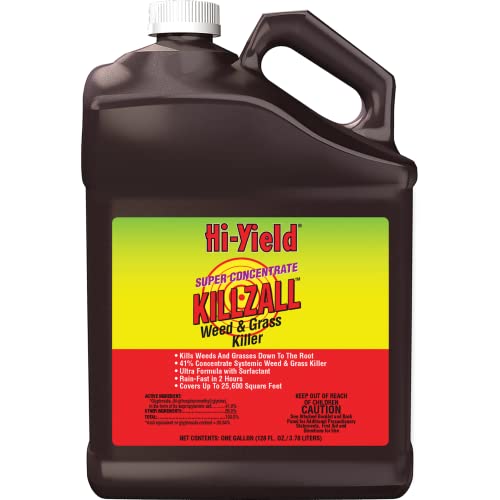
Hi-Yield Killzall Weed & Grass Killer 1 gal

Roundup Dual Action 365 Weed & Grass Killer 1.33 gal

Spectracide Weed Stop For Lawns Plus Crabgrass Killer 32 oz

Roundup Poison Ivy Plus Tough Brush Killer2 32 fl. oz.

Roundup Weed & Grass Killer4 Concentrate 1 gal

Roundup Dual Action Weed & Grass Killer Plus 4 Month Preventer

Control Solutions Eraser Weed & Grass Killer Concentrate 1 Gallon
More Details On Our Top Picks
This 2.5-gallon container suits property owners who need a lot of coverage without breaking the job into tiny refills. Glyphosate 41% is a systemic herbicide, which means it moves through the plant instead of just scorching the top, so it fits stubborn grass and brush along driveways, fields, and fence lines.
The trade-off is simple, it’s not meant for lawns, so your use case needs to be clearly separated from turf. Compared with smaller concentrates like the Hi-Yield 1-gallon bottle, this version makes more sense for acreage operators and long weekend cleanup projects.
Strong Points
- Large container suits broad property work.
- Root-level action helps with regrowth pressure.
- Handles annual and perennial grasses.
- Also targets broadleaf weeds and woody brush.
Things To Consider
- Not a fit for lawn use.
- Large format takes more storage space.
- Mixing and application call for care around ornamentals.
Core Details
Who It Suits Best
This fits acreage owners, rural properties, and anyone clearing long fence lines or rough ground. It suits you best when the job is large and the grass or brush is the main problem.
Where A Sibling Pick Shines
Hi-Yield Killzall Weed & Grass Killer 1 gal suits smaller DIY jobs where a lighter container is easier to store and pour. That option makes more sense for periodic touch-up work around a home lot.
That smaller Hi-Yield bottle keeps the same 41% glyphosate concentrate, but in a size that feels easier to handle for repeated home projects. It suits you better than the 2.5-gallon version when the job is broad but not farm-scale, especially around a large yard, outbuilding, or long strip of gravel.
The honest read is that concentrate pays off most when you’re comfortable mixing and measuring carefully. Owners often appreciate the flexibility, though a one-gallon jug still asks for a bit of storage discipline and a separate sprayer.
What We Like
- One-gallon size is easier to manage.
- Works well for larger areas that need mixing.
- Glyphosate 41% keeps the formula highly concentrated.
- Root-level action helps reduce repeat growth.
- Good fit for steady DIY maintenance.
Small Caveats
- You still need your own sprayer and mixing routine.
- Not the tidiest choice for very small touch-ups.
- Storage takes more room than a ready-to-use bottle.
Feature Rundown
Made For
This suits serious DIYers who want a concentrated bottle without jumping to bulk size. It also fits homeowners with a large lot and a separate sprayer already on hand.
Another Choice May Suit
Control Solutions Inc. Eraser Weed & Grass Killer Concentrate fits shoppers who want a simpler one-gallon option for broad outdoor cleanup. That pick makes sense for someone who wants fewer brand-specific decisions and a straightforward concentrate format.
The built-in Pump ‘N Go 2 sprayer changes the feel of this pick right away, because you’re not setting up a separate wand before you start. That makes it appealing for long driveways, patio edges, and repeated spot work where convenience matters as much as the formula itself.
The dual-action design also adds a preventative angle, so it’s aimed at people who want both existing growth addressed and future weed pressure reduced for a stretch of time. Compared with the simpler Hi-Yield concentrates, this one is more convenience-forward, though the trade-off is a more specialized setup.
Highlights
- Includes a Pump ‘N Go 2 sprayer.
- Dual-action formula handles current growth and prevention.
- Good fit for patios and driveways.
- 1.33-gallon size is manageable for home use.
Worth Noting
- The sprayer system adds another part to store.
- More specialized than a plain concentrate bottle.
- May feel more involved than a simple pour-and-mix option.
Details At A Glance
Whose Shelf It Belongs On
This suits homeowners who want an integrated sprayer and a formula that does more than one job. It also works well for people maintaining hardscapes where repeat growth is a familiar nuisance.
Where A Sibling Pick Shines
Roundup Weed & Grass Killer4 Concentrate suits you better when you want a simpler one-gallon concentrate for flower beds, walkways, and fence lines. That option keeps the setup more basic.
This Spectracide concentrate stands apart because it’s built for lawn use, not for clearing everything in sight. That matters in a way the previous Roundup and Hi-Yield picks don’t, since turf-safe targeting is a different job from bare-ground clearing.
Owners with mixed lawn weeds and crabgrass pressure will likely find it more relevant than a broad-spectrum fence-line product. The trade-off is that its usefulness is narrower, so it’s a better fit for maintained grass than for brushy, overgrown edges.
Upsides
- Designed with lawns in mind.
- Targets crabgrass alongside other weeds.
- Compact 32-ounce bottle stores easily.
- Good fit for routine turf maintenance.
Areas To Watch
- Less useful for brush or rough non-lawn areas.
- Smaller size suits targeted work more than large properties.
- You still need to match application carefully to turf conditions.
Feature Card
Right Fit For
This fits homeowners who maintain a lawn and need a concentrate aimed at turf weeds. It’s a sensible match for tidy suburban yards where crabgrass is part of the problem.
Swap It Out When
Roundup Weed & Grass Killer4 Concentrate suits you better for flower beds, walkways, and fence lines where lawn safety is not the main concern. That one is broader in use and better for non-turf cleanup.
Brush-heavy spaces are where this concentrate earns its place, especially along property borders, neglected corners, and overgrown fence runs. It’s aimed at tougher woody growth, including poison ivy, poison oak, poison sumac, wild blackberry, and kudzu, so it fills a very different role from the lawn-focused Spectracide bottle.
You’ll appreciate the narrower focus most when normal weed killers feel too generic for the job. The honest read is that it’s less of a general-purpose option, but for brush cleanup it gives you a more targeted tool to keep on hand.
Bright Spots
- Targets several difficult brush types.
- Useful for neglected edges and borders.
- Concentrate format supports controlled mixing.
- Compact bottle is easier to store than bulk jugs.
Points To Note
- Not the right fit for lawn work.
- Focused use case makes it less versatile.
- Brush cleanup can still take more than one pass depending on growth density.
Quick Facts
Built With In Mind
This suits people clearing brushy, neglected spaces where standard weed formulas feel too mild or too broad. It also fits property edges that need focused treatment rather than routine lawn care.
Another Choice May Suit
Roundup Weed & Grass Killer4 Concentrate is a better match for general outdoor cleanup around flower beds and driveways. That pick makes more sense for mixed yard maintenance instead of brush-specific work.
This one lands in the middle of the pack in the best way, because it keeps the job broad without getting too specialized. Use it around flower beds, walkways, driveways, and fences when you want a single concentrate that covers common problem spots without leaning into lawn-specific or brush-specific limits.
Compared with the dual-action Roundup products, this bottle is the cleaner choice for straightforward weed removal. It’s a sensible match for regular home maintenance, though you still need your own sprayer and the patience that comes with mixing concentrate.
Reasons To Buy
- Works across several common outdoor areas.
- One-gallon size supports repeat use.
- Good fit for fence lines and hardscape edges.
- More straightforward than dual-action formulas.
Room For Improvement
- Needs mixing and a separate sprayer.
- Less specialized than lawn-only or brush-only options.
- Storage takes more room than a compact spray bottle.
Technical Sheet
The Right Fit
This suits homeowners who want one concentrate for common around-the-house cleanup. It also works well for people with a few recurring trouble spots rather than one special problem.
Look Elsewhere When
Roundup Dual Action Weed & Grass Killer Plus 4 Month Preventer suits you better when you want a built-in prevention angle for hardscape areas. That version offers more staying power for patios and sidewalks.
This Dual Action version focuses on patios, driveways, and sidewalks, so it makes sense for the hard surfaces that tend to collect repeat growth. The 32-ounce concentrate covers up to 1,600 square feet, which gives you useful reach without jumping into a bulky jug.
The prevention window is shorter than the 12-month Roundup option above, and that difference matters for someone balancing convenience with upkeep. It’s a good middle-ground pick for hardscape maintenance, especially when you want less repeat work but don’t need the longest prevention span in the group.
Best Bits
- Built for patios, driveways, and sidewalks.
- Treats up to 1,600 square feet.
- Kills existing weeds and grasses down to the roots.
- Four-month prevention helps stretch maintenance cycles.
Honest Caveats
- Shorter prevention window than the 12-month Roundup option.
- Not the broadest fit for mixed yard jobs.
- Concentrate format still calls for careful measuring and storage.
Core Details
Perfect Match For
This suits homeowners who mostly battle weeds on hard surfaces and want a prevention step built into the job. It fits neatly into routine upkeep for entryways and paved paths.
Where Another Pick Suits Better
Roundup Dual Action 365 Weed & Grass Killer + 12 Month Preventer suits you better when longer prevention matters more than compact coverage. That option is the better match for people who want a longer gap between treatments.
Control Solutions keeps things simple, which is part of the appeal here. The one-gallon concentrate format gives you a familiar middle ground for broad outdoor cleanup, and that makes it an easy fit for property owners who want a straightforward jug without extra sprayer hardware.
Compared with the more specialized Roundup and Spectracide options above, this feels like a plain utility choice. That’s useful in a busy garage or shed, where a no-frills concentrate can earn its keep without asking for much thought.
Positives
- One-gallon format is practical for storage.
- Concentrate style supports flexible mixing.
- Good match for broad outdoor cleanup.
- Simple product shape makes shed organization easier.
Areas To Watch
- No built-in sprayer or accessory system.
- Less specialized than lawn-only or brush-only formulas.
- Needs careful handling during mixing and cleanup.
Feature Snapshot
Who Should Grab It
This suits homeowners who want a straightforward concentrate for general outdoor weed cleanup. It also fits people who already own a sprayer and want a plain refill-style option.
Consider Something Else When
Roundup Weed & Grass Killer4 Concentrate suits you better for flower beds, walkways, and fences where the label’s use-area guidance is more specific. That pick gives you clearer direction for mixed perimeter work.
How To Choose The Right Chemicals To Kill Weeds
Match The Formula To The Ground You’re Treating
Start with the place you’re treating, because that decides more than the brand name does. Lawn-safe formulas suit turf and crabgrass work, while bare-ground concentrates fit driveways, fence lines, and rough edges where you do not want anything growing back.
Brush-heavy corners call for stronger targeting than a general yard spray. For most properties, the label’s use area matters more than the bottle size.
Understand Concentrates Before You Commit
A concentrate is a product you dilute with water, so the real value comes from coverage and control. That setup helps on larger jobs, though it also means you need a sprayer, measuring discipline, and a place to store the jug.
Ready-to-use bottles are simpler, but they usually trade convenience for smaller coverage. Concentrates suit steady upkeep in garages, sheds, and utility spaces where you already keep garden tools.
Think About What You Want To Happen After The Weeds Die
Some formulas only address existing growth, while dual-action options add a prevention layer. That extra step helps on patios and sidewalks where weeds keep returning through cracks and seams.
Longer prevention can save repeat effort, but it also narrows the formula’s role. You should pay for that only when repeat growth is a real pattern in your yard.
Keep Storage, Mixing, And Surroundings In Mind
Large containers make sense for acreage and repeated work, yet they can be awkward in a small shed. Smaller bottles suit town lots and spot treatment, especially when the job is measured in sidewalks rather than acres.
Also think about nearby plants, because a broad-spectrum formula can be too blunt near ornamentals. Clear edges, careful mixing, and the right sprayer keep the job cleaner and easier to manage.
What To Weigh Before You Click
Where Shoppers Go Wrong
One common mistake is matching the bottle to the weed instead of the space. A brush killer can be overkill for a lawn, while a turf formula can feel too narrow for fence-line growth and rough ground.
Another slip-up is underestimating the setup. Concentrates need measuring, mixing, and a sprayer, so a simple container can still mean a little prep work in the garage.
The Upgrade Payoff
Higher-tier formulas often cost more because they save time, add prevention, or cover a more demanding use case. A sprayer-equipped bottle or a longer prevention window can matter a lot on patios, driveways, and long paths.
That upgrade is worth it when you’re treating the same areas again and again. For occasional touch-ups, a plain concentrate usually does the job without extra complexity.
Frequently Asked Questions
Do Chemicals To Kill Weeds Work Differently On Lawns And Driveways?
Yes, because lawn formulas are built with turf use in mind, while hardscape products focus on cracks, edges, and bare ground. Picking the wrong type can make the job harder than it needs to be.
What Does A Concentrate Offer That A Ready-To-Use Bottle Does Not?
A concentrate gives you mixing control and usually more coverage from a single container. The trade-off is that you need a sprayer and a bit more setup.
Are Prevention Formulas Worth It?
They make sense on patios, sidewalks, and driveways where weeds keep returning through seams. For one-off spot jobs, a simple kill-only formula can be enough.
Why Does Container Size Matter So Much?
Larger jugs suit acreage and repeated use, while smaller bottles are easier to store and handle. The right size depends on whether you’re treating one trouble patch or a long list of them.
What Should You Check Before Treating Brushy Areas?
Look for a formula built for woody growth, vines, or dense overgrowth rather than a basic lawn spray. That gives you a better match for poison ivy, blackberry, and similar problem plants.