Healthy lawn care starts with knowing what your soil actually needs. Some yards need compost to loosen tight ground, others need mulch to hold moisture, and a few need a pH adjustment or a microbial boost before grass really settles in.
That’s why this roundup covers more than one kind of amendment. You get composts for topdressing, soil conditioners for root support, and a couple of related helpers that make lawn prep easier in real-world use.
Quick Look At The Shortlist

The Andersons Dirt Booster Plus 20 lb.
TeraGanix TCM Soil Conditioner 16 fl oz

Ribbon Organics Organic Compost 7.9 Gallons

Old Potters Organic Compost 24 Quarts

Earth Science Fast Acting Lime Granules 5 lb

Blue Mountain Hay Organic Garden Straw Mulch 5 lb

R&M Organics Compost Soil Amendment 10 lb

Black Kow Composted Natural Cow Manure 8 qt
More Details On Our Top Picks
This is the sort of amendment that makes sense for a lawn needing a gentler reset, not a dramatic overhaul. The 20 lb. format works well for patch work, fresh beds, or a small yard where you want to improve the soil before grass settles in.
The honest read is that it suits hands-on lawn care more than quick cosmetic fixes. Compared with the liquid TeraGanix option below, this feels more like a physical soil starter you spread and work in, which helps when the ground needs structure as much as feeding.
Strong Points
- Dry compost starter is easy to portion for small jobs.
- Fits lawn prep, bed prep, and general soil refresh work.
- Works as a practical add-in before seeding or patching turf.
- The bag size stays manageable for storage in a garage or shed.
Things To Consider
- Dry amendments need spreading or mixing, so they take more effort than a liquid.
- For large turf areas, you may need several bags.
Core Details
Who Should Grab It
You benefit most here if you want a straightforward compost-style amendment for patching, reseeding, or improving a modest yard.
Where A Sibling Pick Shines
Ribbon Organics OMRI Certified Organic Compost 7.9 Gallons suits shoppers who want a more traditional compost bag for broader topdressing use.
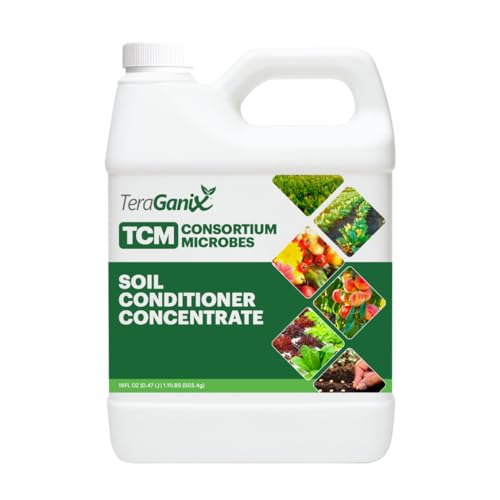
This liquid concentrate stands apart from the bagged compost options because it’s built for mixing, not spreading. For lawns with tired soil or new seed, that kind of format can be handy, especially when you want even coverage without hauling heavy material around.
One thing worth considering is that a microbial inoculant is more specialized than a plain compost amendment. That makes it attractive for gardeners who like measured application and root-focused care, while the Earth Science lime below serves a very different need, namely soil pH adjustment.
What We Like
- Liquid format mixes into watering routines with less bulk to store.
- The concentrate form stretches across multiple applications, depending on dilution.
- Useful for seed-starting areas and stressed lawn sections that need a gentler touch.
- Pairs well with existing lawn care routines that already involve liquid feeding.
- Smaller bottle footprint is practical for garages, shelves, or tool corners.
Minor Gripes
- Needs careful mixing, so it asks for a bit more attention than a bagged amendment.
- Liquid care products are less intuitive for shoppers who want a simple scoop-and-spread option.
- Best results depend on using it consistently rather than treating it like a one-step fix.
Feature Snapshot
Made For
You fit this pick best if you want a liquid soil conditioner for lawns, seedlings, or garden areas that need a root-supporting boost.
Another Choice May Suit
The Andersons Dirt Booster Plus 20 lb. is the easier call for anyone who wants a simple dry amendment for spreading over soil.
For a classic compost job on a lawn, this is the cleanest fit in the group. The 7.9-gallon bag gives you a manageable amount for topdressing, edging, or feeding a smaller plot without overcommitting storage space.
Compared with the liquid TeraGanix conditioner, this is the more familiar spread-it-and-work-it option, which tends to suit lawn owners who want substance underfoot rather than a diluted treatment. The trade-off is simple: you handle more material, but you also get a real compost bag with a straightforward job.
Highlights
- Bagged compost is easy to use for topdressing and soil refresh work.
- 7.9-gallon size is practical for small to mid-sized projects.
- Organic compost format fits gardeners who want a more traditional soil amendment.
- Works well around lawns, beds, and other outdoor growing spaces.
- OMRI listing helps signal a more defined organic gardening fit.
Points To Note
- Bag volume is modest, so larger lawns may need repeat purchases.
- Like any compost, it still calls for spreading and some physical effort.
Technical Sheet
Whose Shelf It Belongs On
You’ll appreciate this most if you want a direct compost bag for a lawn, raised bed, or general soil-refresh project.
Look Elsewhere When
Old Potters Organic Compost 24 Quarts suits a mixed indoor-outdoor setup better, especially when you want a plant-based compost blend in a smaller container.
This plant-based compost leans toward broad usefulness, which helps when your lawn project overlaps with containers, beds, or a few indoor starts. The 24-quart format is easier to handle than a larger bag, and that matters in a garage or apartment storage space.
On the flip side, this is less of a dedicated lawn-topdressing sack than Ribbon Organics. It’s a better fit for mixed gardening jobs, especially where you want one compost-style product to pull double duty.
Upsides
- Plant-based composition suits gardeners who want a compost-style growing medium.
- 24-quart size keeps handling and storage more manageable.
- Works across indoor and outdoor growing tasks, which reduces clutter in your shed.
- Useful for home gardens, lawn-adjacent spots, and general soil improvement.
Small Caveats
- It reads more like a multi-use compost blend than a pure lawn specialist.
- Large yards may move through the bag quickly.
Details At A Glance
Best Suited To
You’ll get the most from this if you want one compost-style product for houseplants, garden beds, and lighter lawn work.
Swap It Out When
Black Kow Composted Natural Cow Manure 8 qt is the more compact choice for a smaller manure-based amendment in tight storage spaces.
This is not compost in the classic sense, and that distinction matters. It serves a correction role for soil that’s too acidic, which can be just as important as adding organic matter when a lawn looks tired or uneven.
The granule format is easy to spread and simpler to store than bulky bags, especially for small suburban yards. Compared with the compost-heavy picks above, it plays a narrower role, but that role can be the right one when your soil needs a pH adjustment before anything else.
Bright Spots
- Granules spread cleanly across lawn areas without liquid mixing.
- Handy for homeowners who need a soil-correction step rather than another compost layer.
- 5 lb. bag is compact and easier to stash between uses.
- Pairs well with broader lawn-improvement routines that already include feeding or topdressing.
Areas To Watch
- It solves a different problem than compost, so it won’t replace a true amendment bag.
- Smaller size may feel limited for larger lawns.
Feature Rundown
Right Fit For
You fit this best when your lawn care plan starts with soil correction rather than composting.
Not Your Match When
Blue Ribbon Hay Organic Garden Straw Mulch 5 lb makes more sense for moisture retention, seed coverage, and surface protection.
Straw mulch belongs in this roundup because lawn care is not only about feeding the soil, it’s also about protecting the surface. For newly seeded areas or garden edges, this kind of cover helps hold moisture and keeps the top layer calmer while seedlings get established.
The trade-off is that straw mulch is a surface material, so it supports the work rather than replacing compost. Compared with Earth Science lime, it addresses moisture and coverage instead of chemistry, which gives it a very different role in your yard plan.
Best Bits
- Useful for seed beds, flower beds, and lawn-adjacent protection.
- Organic straw format supports moisture holding on exposed soil.
- Handy as a compost companion when you want surface cover after spreading amendments.
- 5 lb. size is easy to carry and store.
Worth Noting
- It covers and protects, but it does not feed soil the way compost does.
- Loose straw can be messy to move around in windy conditions.
- Works best as part of a broader lawn or bed routine, not as a standalone fix.
Core Details
The Right Fit
You’ll like this most if your lawn project includes new seed, exposed soil, or bed edges that need a protective top layer.
Another Choice May Suit
Ribbon Organics Organic Compost 7.9 Gallons is the stronger choice when the job is soil improvement first and surface cover second.
This manure-based amendment is aimed at lawn and garden use, so it sits in a useful middle ground for mixed property care. The 10 lb. package feels especially sensible for raised beds, smaller lawns, or the kind of yard where you want a single amendment with moisture support.
Compared with Black Kow’s smaller 8 qt. format, this one gives you a different scale and a more lawn-friendly mindset. The low-odor angle matters too, because storage near living space or a busy shed can be easier to handle when the product doesn’t call attention to itself.
Reasons To Buy
- Manure-based composition gives it a distinct compost-amendment role.
- Designed for both garden plants and lawns, which adds flexibility.
- Moisture retention can help in dry spells or lighter soil.
- Lower odor profile is helpful for routine storage and handling.
Softer Spots
- Bag size may be small for larger turf projects.
- Like most dry amendments, it still requires spreading and cleanup.
Spec Overview
Best Suited To
You’ll appreciate this most if you want a manure-based amendment for lawn care, raised beds, or a mixed garden setup.
Where Another Pick Fits Better
Black Kow Composted Natural Cow Manure 8 qt is the better match for container growers who want a smaller manure compost for pots and tea mixes.
This is the most compact manure compost in the group, and that makes it useful for pots, small beds, and blend-in jobs where you don’t want a bulky bag taking over the shed. For container growers, it feels like a practical pantry staple rather than a special-purpose project product.
It differs from the larger R&M bag by leaning into a smaller, more targeted format, which is often easier to handle for regular top-ups. The mention of compost tea also makes it more flexible for gardeners who like mixing uses, though the smaller size means lawn coverage stays limited.
Positives
- Compact 8 qt. size is easy to store and carry.
- Useful for potted plants, raised beds, and small soil-refresh tasks.
- Composted cow manure brings a familiar garden amendment style.
- Works well as a measured add-in for container mixes.
- Handy for gardeners who like smaller, repeatable applications.
Room For Improvement
- Smaller volume limits how much lawn coverage you can tackle at once.
- It makes more sense for containers and beds than wide turf areas.
Feature Card
Perfect Match For
You fit this pick best if you want a compact manure compost for containers, smaller beds, or spot treatments.
Reach For A Different Pick When
Ribbon Organics Organic Compost 7.9 Gallons is the better fit for broader lawn topdressing and bigger soil-building jobs.
How To Choose The Right Composts For Lawns
Match The Amendment To The Problem
Start with the soil issue, not the product label. A true compost bag works best for topdressing and adding organic matter, while a liquid conditioner is better for root-zone support and a lime granule addresses acidity instead of feeding.
That split matters in real yards because one patch may be compacted, another may be dry, and a third may simply need pH correction. Blue Ribbon, The Andersons, and Earth Science each solve different parts of that puzzle.
Pay Attention To Format And Handling
Bagged compost is straightforward, but it takes lifting, spreading, and cleanup. Liquid concentrate reduces bulk, while straw mulch is easier to place as a surface layer but won’t replace soil-building material.
That’s why storage space matters as much as the ingredient list. A small shed, a tight garage, or a backyard with stairs can make a 20 lb. bag feel very different from a 16 fl oz bottle.
Check Coverage Against Yard Size
A small bag can still be the right call for spot work, raised beds, and reseeding, but it will not stretch far across a full lawn. The 7.9-gallon Ribbon Organics bag makes more sense for larger compost jobs than the 8 qt. Black Kow container.
For patch repair, the reverse may be true. Smaller packages reduce waste and are easier to use before they dry out or clutter your shelf.
Think About How Often You’ll Reapply
Some yard care routines need repeat applications through the season, while others are more of a one-time reset. A liquid conditioner or a compact manure amendment fits recurring touch-ups better than a heavy bag meant for broad topdressing.
The right pick usually matches your routine, not your wish list. For steady maintenance, convenience matters just as much as ingredient quality.
What To Weigh Before You Buy
Common Shopping Slip Ups
One common mistake is treating every soil product as though it does the same job. Compost, mulch, lime, and liquid inoculants each solve a different problem, so the label has to match the yard issue.
Another misstep is ignoring package size. A tiny container looks tidy online, then turns out to be too small for a lawn patch that needed broader coverage.
What The Higher Tier Buys
More expensive options in this category usually bring tighter ingredient focus, better-defined use cases, or a more convenient format. That can mean a liquid concentrate for precise mixing, a soil amendment with a more specialized role, or a compost bag that is easier to apply where you want it.
The upgrade makes sense when you value control or convenience more than sheer volume. For a broad lawn refresh, a plain compost bag may be enough, but targeted soil care often benefits from the extra specificity.
Frequently Asked Questions
Are composts for lawns the same as mulch?
No, compost feeds and improves soil, while mulch mainly covers the surface. Straw mulch can support compost work, but it does not replace it.
Which product type works best for reseeding a patchy lawn?
Bagged compost or a light soil amendment usually makes the most sense for reseeding. The surface should stay workable, and the seed still needs air and moisture balance.
Do liquid soil conditioners replace compost?
No, liquid conditioners play a different role because they mix into watering or treatment routines. They fit better as a targeted soil-care step than as a bulk amendment.
How do you choose between a small bag and a larger bag?
Pick the bag size that matches the area you actually plan to cover. Small bags are easier for spot work, while larger ones are better for broader topdressing.
Why would lime be in a compost roundup?
Lime helps correct acidic soil, which can be a major part of lawn improvement. It belongs here because healthy lawn care often starts with the soil, not just the compost layer.