
In dim garden corners, these perennials bloom in low light, especially where morning sun, loose soil, and steady moisture give them enough energy to flower well. In deep shade, many of them still live happily, but the display usually shifts toward foliage and shorter bloom periods.
Use these plants for dim borders, tree-covered corners, and woodland beds that need color without full sun. The focus here is on reliable bloomers, low-growing picks, and planting choices that make shaded spaces look finished.
What Shade Really Means In A Flowering Border
A maple canopy can change a bed from bright to dappled by midday. That matters because most flowering plants for shade still want 3 to 6 hours of sun, while morning sun with afternoon shade often sets buds better than dim light all day.
Partial shade, dappled light, and full shade aren’t the same condition. Partial shade brings a few direct hours, full shade sits under rooflines or dense tree cover, and woodland shade shifts as leaves open and close through the day.
Partial Shade Gives The Steadier Bloom
Morning light warms stems and dries dew before fungal growth gains ground. In that setting, shade-tolerant flowering perennials can build stronger crowns, store more energy, and open more flowers over a longer stretch.
That’s why a bed that gets sun until lunch can outshine a spot that stays gray all day. Better bloom, tighter foliage, and less stretching point to smarter plant choices in the next section.
Full Shade Calls For Lower Expectations
Deep shade still has value, but the plant list gets narrower. In those pockets, leaf texture, spring bloom, and clean form matter as much as flower count, and the most dependable perennials for shade rely on foliage to keep the border attractive.
Shade works as a growing condition, not a design flaw. Once the light level matches the plant’s need for carbon gain, the rest of the border starts to make sense.
That distinction opens the door to dependable plants that keep the border performing when conditions stay right.
Reliable Bloomers That Earn Their Place
A spring bed under deciduous trees can carry real color before the canopy closes. Bleeding heart, hellebore, astilbe, and foamflower each bring a different habit, which gives you room to shape bloom, foliage, and season length without crowding the bed.
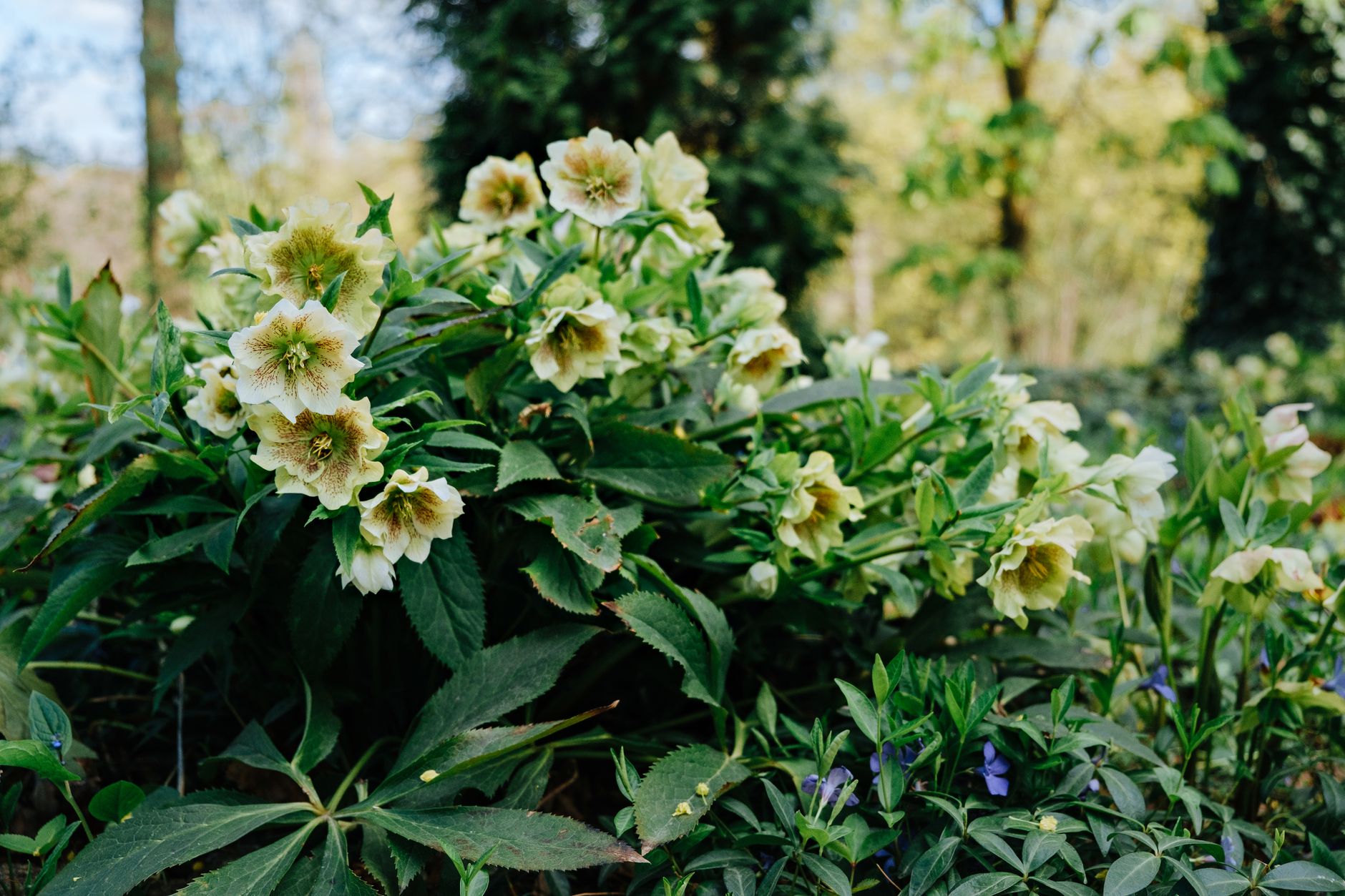
Bleeding heart opens arching stems loaded with pendant flowers in cool spring weather. Hellebore starts even earlier, and its leathery leaves stay useful after bloom, while astilbe waits for steady soil moisture and rewards you with feathery plumes that hold in part shade.
Flowers That Carry The Show
Bleeding heart is prized for its bloom display, not for evergreen foliage. Hellebore brings cup-shaped flowers in late winter to early spring, and foamflower spreads low, then sends up airy white wands that read well in a woodland garden.
Coral bells, or Heuchera, sit in the middle ground. The leaves carry the border for months, and the flower stems add small bells that feed pollinators without dominating the scene. That split between floral show and leaf color helps you choose the right plant for each gap.
Plants That Bridge Spring Into Early Summer
Brunnera, barrenwort, and Jacob’s ladder extend color beyond the earliest flush. Brunnera opens small blue flowers above heart-shaped leaves, barrenwort handles dry shade once settled, and Jacob’s ladder gives ferny texture with soft blue bloom in cooler weather.
These are the kinds of shade perennial flowers that keep a border from fading after the first round of bloom. They also help you layer the bed so the scene still reads well once the louder plants finish.
Their staying power matters most where lower plants can stitch the bed together after taller ones fade.
The Low-Growing Choices That Make A Border Work

A path edge disappears fast under plants that flop or surge past knee height. Low-growing shade perennials stay visible, hold an edge, and tuck beneath shrubs without swallowing neighboring stems, which is why height matters as much as flower color.
Foamflower, coral bells, and barrenwort are dependable in small spaces because their mounds stay neat. Tiarella often reaches 8 to 12 inches tall, Heuchera varies by cultivar but stays compact, and Epimedium forms a graceful carpet that suits layered shade garden design.
| Plant | Typical Size | Seasonal Interest |
|---|---|---|
| Foamflower | 8 to 15 inches tall, 12 to 18 inches wide | Spring bloom, textured leaves |
| Coral bells | 12 to 18 inches tall, 12 to 24 inches wide | Colored foliage, airy flower stems |
| Barrenwort | 8 to 12 inches tall, 18 to 24 inches wide | Leaf texture, spring flowers |
| Jacob’s ladder | 12 to 24 inches tall, 12 to 18 inches wide | Spring bloom, fine foliage |
Height and spread tell you more than flower color alone. A compact plant that holds its outline keeps the front of the bed readable, while a looser type works better one row back where it can drape without hiding the edge.
With the front edge sorted, the real challenge shifts belowground, where roots answer to water and air.
Use a repeat rhythm of three or five plants rather than one of each. Repetition keeps a shady border calm, and calm spacing makes each bloom look sharper.
Soil, Moisture, And Drainage In Shaded Beds
Shade can hide two opposite problems at once. Under trees, roots steal water and the topsoil turns dry; in heavy clay, low light slows evaporation and water sits too long, so the same plant may fail for opposite reasons in two nearby beds.
Rich, well-drained soil solves more than hunger. Organic matter feeds soil structure, holds moisture around roots, and still leaves air space that roots need for respiration. Root hairs absorb water and minerals best when oxygen reaches the root zone, so compacted mud can weaken growth even in a shady border with good light.
Dry Shade Under Trees
Large roots from oak, maple, and birch often pull water from the same zone where your perennials try to settle. Foamflower and barrenwort handle that better than astilbe, which wants more consistent moisture for strong bloom.
That pattern explains why a planting under mature trees needs a different palette than a bed beside a north wall. Match the plant to the root pressure, and you avoid the slow decline that starts with curled leaves and ends with thin bloom.
Heavy Soil That Stays Wet
Clay holds water for a long time, and low light slows drying. Hellebore, hosta, and some coral bells tolerate that better than plants that resent standing wet crowns, but even tolerant plants need air in the root zone.
Mulch helps here because it buffers temperature swings and cuts surface evaporation. A 2 to 3 inch layer of shredded bark, leaf mold, or composted leaf mulch keeps roots cooler and steadier through the season without sealing the soil shut.
That steady root zone sets the stage for smarter planting choices, especially when light limits how hard flowers can work.
Planting For Better Bloom In Lower Light

A bed planted in bands works better than a random mix of pretty plants. Put the sun-hungry choices where they catch morning light, cluster the moisture lovers together, and keep aggressive roots away from smaller crowns so each plant has space to perform.
Morning sun matters because light drives photosynthesis early in the day, and that early energy helps flower buds form. The Royal Horticultural Society has long stressed that many shade plants still want brightness, not darkness, which matches what you see in a border that flowers well at the front and fades at the back.
Group Plants By Water Need
Astilbe, ligularia, and Japanese forest grass like steadier moisture. Hellebore, epimedium, and barrenwort handle drier shade better, so mixing them in one tight cluster can leave one plant overwatered and another starved.
Grouping by water need also makes irrigation simpler. You can soak one zone deeply, skip another, and avoid watering the whole bed on the same schedule just because the flowers look related.
Pair Blooms With Leaf Texture
Hostas are prized for foliage, not showy bloom, and that matters in shade where leaves carry the design for months. Coral bells do the same job with color in the leaf blade, while flowers appear as a bonus instead of the main act.
Missouri Botanical Garden and North Carolina State Extension both describe hosta as a shade stalwart with broad leaves and coral bells as a versatile mound for part shade, which fits the way mixed borders stay attractive between bloom cycles.
That balance between bloom and texture also makes the next planting decision easier, because your light level decides which plants should lead and which should support the show.
Those tradeoffs narrow the field to a workable shortlist, grouped by how much shade each corner actually gets.
A Practical Shortlist For Different Shade Conditions
Partial shade gives you the widest range. Hellebore, bleeding heart, astilbe, coral bells, and foamflower all work well there, while true full shade narrows the list to foliage-led plants with short flowering windows and strong leaf structure.
Spring is the strongest season for low light blooming plants because leafless trees let in more sun. Later in the year, hosta and coral bells carry the bed, and that shift matters more than a single bloom flush. The USDA Plant Hardiness Zone Map still matters here, because winter limits shape which perennials survive long enough to prove themselves.
| Shade Condition | Dependable Picks | Best Season For Bloom |
|---|---|---|
| Partial shade | Bleeding heart, astilbe, coral bells, foamflower | Spring into early summer |
| Full shade | Hellebore, hosta, barrenwort, epimedium | Late winter through spring |
| Dry shade | Epimedium, barrenwort, coral bells | Spring bloom plus lasting foliage |
| Moist shade | Astilbe, ligularia, foamflower | Late spring to midsummer |
A simple decision frame works well here: choose by light level, then by soil moisture, then by the look you want across the whole season. Partial shade favors brighter bloomers, dry shade favors tough leaf forms, and moist shade gives you the broadest range of shade perennial flowers that still look composed in a real garden.
Taken together, those differences make it easier to choose plants that suit the garden instead of fighting it.
Wrap Up
Shade gardens work best when you match the plant to the light, not the label to the wish. Morning sun, decent drainage, and a bed grouped by moisture needs will do more for bloom than any decorative trick, and the right mix of flowers and foliage keeps the space useful after the petals fade.
FAQ
What blooming perennials like shade?
Bleeding heart, hellebore, astilbe, foamflower, coral bells, and brunnera all handle shade well, especially in partial shade with morning sun. Your best choice depends on how much light reaches the bed and how steady the soil moisture stays.
Are there any flowers that bloom in full shade?
Yes, but the list is shorter than for partial shade. Hellebore, foamflower, barrenwort, and some hosta varieties flower in full shade, though bloom tends to be lighter and foliage carries more of the display.
What is the best low-growing blooming perennial?
Foamflower is one of the strongest low-growing choices because it stays tidy, flowers in spring, and fits the front of a border without taking over. Coral bells and barrenwort are close rivals, especially where you want leaves to stay attractive after bloom.
What perennial flowers don’t need a lot of sun?
Hellebore, hosta, epimedium, barrenwort, and foamflower need less direct sun than most bloomers. They still do better with bright shade or dappled light than with deep, dim corners that stay wet.
Which shade-loving perennials bloom the longest?
Astilbe, coral bells, and some hellebores give you one of the longer display windows in shade, especially in a moist bed with morning sun. Their exact bloom length depends on cultivar, temperature, and how much stress the roots face.