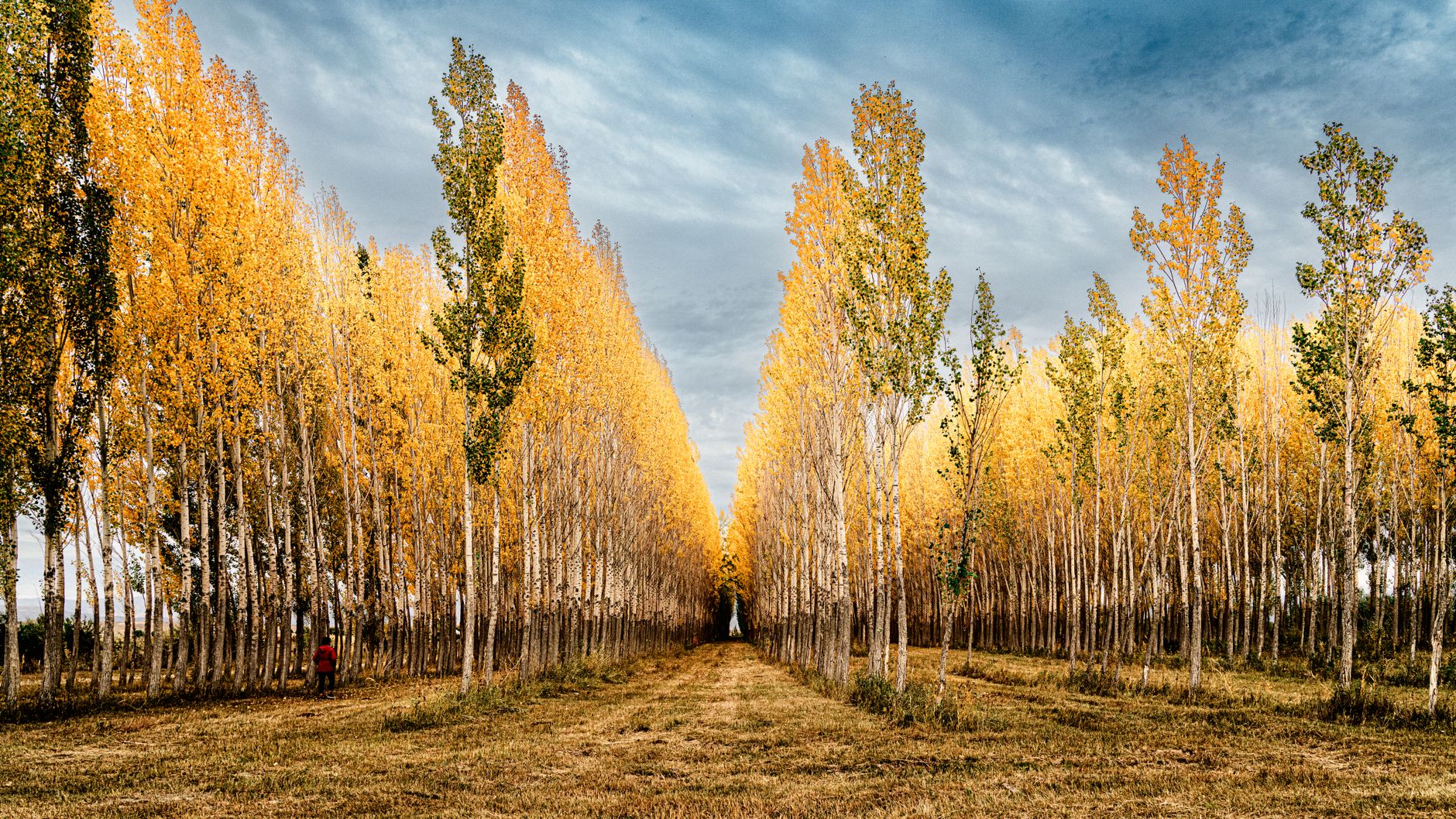

Poplar trees are fast-growing hardwoods in the genus Populus that can add several feet of height each year in sun and moist soil. They give quick vertical cover, useful shelter, and a tall, narrow form, though they usually live shorter lives than slower hardwoods.
Species choice, growth habits, root spread, site fit, and care all matter here, especially if you need shade, shelter, timber, or a windbreak and want the tree to match the job.
Why Poplars Earn Their Reputation
Several temperate hardwoods grow quickly, but Populus species usually push height faster than most. A young stem can gain several feet in a season, which is why these trees show up in shelterbelts, broad plantings, and working sites where speed matters more than long life.
The tradeoff is easy to see. Fast cell expansion and quick canopy gain produce wood that is lighter and shorter-lived than oak or hickory. Early presence comes at the cost of some staying power, so the tree fits a purpose-driven plan rather than a forever placement.
Poplars belong to the willow family, Salicaceae, and that helps explain their strong water use and rapid shoot growth. The genus Populus includes cottonwood, aspen, and black poplar, each with its own habit, but all share a strong drive to build new wood fast.
That appetite for quick wood also shapes the tree’s form, from towering stems to wide-spreading roots.
The Height, Habit, And Roots Behind The Speed
A mature tree in this group can reach 20 to 30 meters, and some cottonwoods climb higher in open, moist ground. The crown usually stays narrow to broad-oval, so vertical mass comes first and dense shade follows later.
Poplars like full sun, steady moisture, and soil that drains well after rain. That mix supports photosynthesis and keeps roots supplied with oxygen, which matters because roots need air as much as water.
Root Spread And Water Access
The poplar tree root system spreads wide and shallow in search of moisture. That is one reason these trees line streams, drainage ditches, and riverbanks so well, where seasonal wet soil gives them a clear advantage over drier-site hardwoods.
Those same roots can lift sidewalks, crowd pipes, and run well beyond the canopy line. A tree that grows fast above ground often grows just as boldly below it, so placement deserves more thought than a quick glance at the trunk size.
The University of Minnesota Extension notes that cottonwoods and other poplars thrive in moist bottomlands and riparian zones because their root systems tolerate periodic flooding better than many upland trees. That ecological fit explains why they dominate along waterways and open floodplain edges. In your own site planning, moisture and room matter more than a pretty label, so expect the same pattern on the ground.
Site conditions explain much of that pattern, and they also help separate the many poplar types.
Species And Hybrids That Shape The Category

Populus deltoides, the eastern cottonwood, brings fast height and a strong shelterbelt presence across much of the central and eastern United States. Populus tremuloides, the quaking aspen, stays lighter in form and works better in cooler regions with open space and sharper winters.
Populus nigra, the black poplar, matters in breeding and restoration work because it contributes straight stems and broad adaptation. Breeders use those traits to shape hybrid poplar lines that grow fast, stay straighter, and resist some common diseases better than a single wild species.
Hybrids Bred For Form And Health
Hybrid poplar blends often bring the fastest juvenile growth in the group. The goal is usually clear: a straight bole for timber or biomass, steadier growth across a site, and better field performance than older seedling stock under pressure from canker or leaf disease.
The best poplar tree species for your site depends on your goal. Eastern cottonwood fits big rural plantings and streamside edges, aspen suits cooler northern plantings with room to spread, and hybrid poplar works well where uniformity matters more than ornament. You can narrow the choice quickly by matching winter cold, soil moisture, and the amount of open ground you have.
A good nursery tag can save years of regret here. Species choice changes everything from trunk shape to wind tolerance, so the right name on the label matters as much as the size of the plant at planting time. That sorting also helps you avoid buying the wrong clone for your climate, which is where a lot of failures start.
Those failures usually show up in the numbers, where growth claims meet actual performance outdoors.
Growth Rates In Real-World Terms
In favorable soil with full sun and enough moisture, some young trees can gain 5 to 8 feet in a year, with the strongest growth in the early years. That pace slows as the tree settles into larger wood and wider branching.
Site quality changes the numbers fast. Deep moist soil, long summer light, and mild winters support stronger extension growth; compacted ground, drought, or shade pull the rate down hard. A tree near a creek will act very differently from one planted in a dry front yard.
Fast Youth And Slower Maturity
Early speed does not guarantee long-term strength. A tree that rockets upward at age five may still develop shorter service life, weaker limb structure, or storm damage later if the site is poor or the trunk unions are narrow.
Use the early growth window to your advantage. The first 8 to 12 years tell you far more about future fit than the trunk size at planting.
That difference matters most in landscape planning. You may want a quick privacy screen, a windbreak, or a buffer along a field edge, but the tree should still match the life span and maintenance level you can support. A fast start can save years, yet it can also create bigger pruning needs if you place it too close to structures.
When growth is that rapid, the tree’s value often comes from jobs other species handle less well.
Uses That Keep Poplars In Demand
Timber buyers value straight, light wood that machines easily and dries with less fuss than denser hardwoods. Poplar serves well in pulp, veneer core, pallet stock, matchsticks, engineered products, and biomass plantings where volume matters more than fine grain.
Silviculture also favors the genus in shelterbelts and restoration work. A fast row can interrupt wind, trap drifting snow, and stabilize a rough site while slower trees establish around it.
Shade, Screen, And Field Edge Roles
In open acreage, they can provide shade, but they are a poor fit for tight urban yards. The crown can be airy, limbs may shed in storms, and roots need room that small lots rarely provide.
For privacy screens, hybrid poplar rows grow fast enough to give quick height, yet the screen may thin as lower limbs age or break. A mixed planting with tougher companion trees often gives better long-term structure than a single row alone.
Cornell and state extension services have long treated poplar as a short-rotation tree because the species turns solar energy into stem volume with unusual speed. That biology explains why growers keep using it for pulp and biomass even when ornamental value is modest. You get the best result when speed solves a real site problem instead of filling space without a plan.
Because those jobs depend on the right setting, planting choices become the difference between asset and hassle.
Place these trees where speed solves a real site problem. A tall row beside a field or drainage corridor makes more sense than a lone specimen near a sidewalk.
Planting And Care That Reward Good Site Choice
Poplar tree care starts before the shovel touches the ground. Sun, water, drainage, and space decide more of the outcome than fertilizer ever will, so a well-matched site does most of the work for you.
A wide planting hole helps less than a free-draining root zone. Heavy clay that stays wet for days can slow establishment, while compacted subsoil can leave roots shallow and stressed. A tree placed too close to a drive or line will also create later conflict as the crown and root flare expand.
Site Checks Before Planting
- Full sun Give the tree six or more hours of direct light for steady extension growth.
- Moist, drained soil Choose ground that holds moisture without staying soggy after rain.
- Room to spread Leave generous clearance for both height and the wide root system.
- Species match Pair the site with a cottonwood, aspen, black poplar, or hybrid line that fits local conditions.
- Wind exposure Place the tree where shelterbelts or support plantings can soften hard gusts.
Pruning should stay light and selective, aimed at clearing broken wood and improving a single leader early in life. Heavy cutting can trigger weak regrowth, and those long, fast shoots rarely make tidy structure on their own.
USDA Plant Hardiness Zone ratings help narrow your choice, but moisture and soil texture still matter more for poplar than the zone number alone. A cold-hardy clone can still fail in dry ground, which is why local conditions outrank a map color every time. That same practical rule helps with poplar tree care in the first few seasons, when root establishment sets the tone for everything that follows.
Planting with intention is the real dividing line. The right species in the right spot can turn into a useful landscape tree with speed to spare, while a poor match becomes a maintenance problem before the trunk has finished thickening.
That contrast is the key takeaway, because poplars reward good placement and punish shortcuts quickly.
What To Remember
Poplars earn their place because they turn sunlight, water, and room into height faster than most temperate hardwoods. Quick screening, timber potential, or wind protection come only when the site can support the tree’s speed and spread. Match the species to the ground, and the tree does the rest.
FAQ
How fast do poplar trees grow?
In good sun and moist soil, young trees can add 5 to 8 feet in a year. Growth slows as the tree matures, but the early years are still far faster than many other hardwoods. That pace is why you often hear the phrase how fast do poplar trees grow in nursery conversations.
Are poplar trees good for shade?
They give quick height and broad cover, but the shade can feel airy rather than dense. For a large property, that works well; for a small yard, the size and root spread can create problems. If you want poplar trees for shade, you need room for the canopy and the roots.
Do poplar trees have invasive roots?
They can send roots far from the trunk in search of moisture, and that spread can interfere with pavement, pipes, or shallow foundations. The roots are not aggressive in every site, but they do need wide placement. The poplar tree root system is broad enough that you should treat setback distance as part of the planting plan.
What is the best poplar tree for a backyard?
A backyard usually calls for a smaller, carefully selected tree rather than a full-size cottonwood. If you still want a poplar, a compact hybrid from a reputable nursery and a large open lot give you the safest fit. That is the kind of setup where the best poplar tree species depends on available space more than on looks alone.
How tall do poplar trees get?
Many reach 20 to 30 meters, and some cottonwoods exceed that in open, moist ground. Final height depends on species, site moisture, sun, and the room available for the crown. Those are the same conditions that also shape how fast do poplar trees grow in the first place.
Are poplar trees a good choice for privacy screens?
They can work well for fast screening on acreage or field edges. A single-species row needs enough space and a plan for thinning lower limbs over time, so mixed plantings often hold shape longer. For long rows, fast-growing tall trees can create coverage quickly, but you still need a backup plan for age and wind damage.