If you want less yard work, less setup, and less guesswork, the best auto robot lawn mower can change how you care for your lawn.
You will find wire-free models, smarter mapping, and better obstacle handling across this year’s top picks.
From compact yards to tricky slopes, each option solves a different problem. The question is which one fits your space, your budget, and the kind of mowing you would rather never do again.
| Segway Navimow i110N Robot Lawn Mower (1/4 Acre) |  | Best Overall | Navigation: EFLS 2.0 RTK | Boundary Setup: Wire-free virtual | App Control: Yes | VIEW LATEST PRICE | Read Our Analysis |
| eufy E18 Robot Lawn Mower Wire-Free Vision Navigation |  | Best for Small Lawns | Navigation: Vision-guided | Boundary Setup: Wire-free virtual | App Control: Yes | VIEW LATEST PRICE | Read Our Analysis |
| ECOVACS Goat O1000 RTK Robot Lawn Mower |  | Best for Tough Terrain | Navigation: RTK/AI | Boundary Setup: Wire-free virtual | App Control: Yes | VIEW LATEST PRICE | Read Our Analysis |
| LawnMaster OcuMow Wire-Free Robot Lawn Mower |  | Best Budget Pick | Navigation: Optical | Boundary Setup: Magnetic wire/virtual fence | App Control: No app | VIEW LATEST PRICE | Read Our Analysis |
| ANTHBOT M9 Robot Lawn Mower with RTK Navigation |  | Best for Large Yards | Navigation: RTK/NRTK | Boundary Setup: Wire-free virtual | App Control: Yes | VIEW LATEST PRICE | Read Our Analysis |
| ECOVACS Goat A2000 LiDAR PRO Robotic Lawn Mower |  | Best for Dense Grass | Navigation: Dual-LiDAR | Boundary Setup: Wire-free | App Control: Yes | VIEW LATEST PRICE | Read Our Analysis |
| eufy Robot Lawn Mower E15 Auto Mapping | 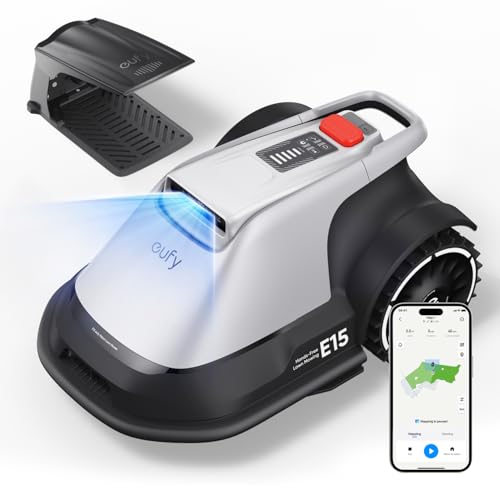 | Best Easy Setup | Navigation: Pure Vision | Boundary Setup: Wire-free virtual | App Control: Yes | VIEW LATEST PRICE | Read Our Analysis |
More Details on Our Top Picks
Segway Navimow i110N Robot Lawn Mower (1/4 Acre)
Should you want a wire-free robot mower that can handle a 1/4-acre lawn with tight passages, trees, and complex edges, the Segway Navimow i110N is a strong fit. You get EFLS 2.0, customized RTK positioning, and vision sensors for centimetre-level accuracy. Use the app to map virtual boundaries, and let AI-assisted Assist Mapping detect clear edges and the full work area. It mows in planned patterns, recharges intelligently, and finishes the job. Its 140° camera spots 150+ objects, while quiet 58dB(A) operation, multi-zone control, and a 3-year warranty add real value.
- Navigation:EFLS 2.0 RTK
- Boundary Setup:Wire-free virtual
- App Control:Yes
- Obstacle Avoidance:AI camera
- Multi-Zone:Yes
- Self-Charging:Yes
- Additional Feature:EFLS 2.0 positioning
- Additional Feature:140° AI camera
- Additional Feature:58dB quiet operation
eufy E18 Robot Lawn Mower Wire-Free Vision Navigation
The eufy E18 is a strong pick if you want a fully wire-free mower that can map your lawn on its own from day one, because its vision-guided navigation removes the hassle of boundary wires and manual setup. It can cover up to 0.3 acres on relatively flat lawns with slopes up to 18 degrees, and it handles multi-zone layouts, virtual no-go areas, and app-based route adjustments. It cuts neat 8 inch stripes, re-mows missed spots, avoids obstacles, and returns in rain or low light. Use it for lawns under 3.5 inches, but not for dense Zoysia or St. Augustine.
- Navigation:Vision-guided
- Boundary Setup:Wire-free virtual
- App Control:Yes
- Obstacle Avoidance:3D vision
- Multi-Zone:Yes
- Self-Charging:Auto return
- Additional Feature:V-FSD 1.0 vision
- Additional Feature:Ride-on-Edge cutting
- Additional Feature:GPS anti-theft
ECOVACS Goat O1000 RTK Robot Lawn Mower
ECOVACS’ Goat O1000 RTK is a strong choice if you want a wire-free mower for a small to mid-sized yard, especially one up to 1/4 acre. You do not need a perimeter wire because AI boundary recognition and automated mapping create a precise layout for you. AIVI 3D helps it avoid pets, wildlife, and garden items, while TruEdge and its U-shaped cutting pattern trim cleanly along edges and reduce touch-ups. Its slim body fits narrow paths, handles 24-degree slopes, and is ready for wet weather. Use the app to edit zones, set no-go areas, and fine-tune mowing settings.
- Navigation:RTK/AI
- Boundary Setup:Wire-free virtual
- App Control:Yes
- Obstacle Avoidance:AIVI 3D
- Multi-Zone:Yes
- Self-Charging:Yes
- Additional Feature:TruEdge edge mowing
- Additional Feature:45% climb ability
- Additional Feature:IPX6 waterproof
LawnMaster OcuMow Wire-Free Robot Lawn Mower
LawnMaster’s OcuMow Wire-Free Robot Lawn Mower is a strong fit if you want a simple, perimeter-wire-free option for small lawns. It covers up to 2,000 sq ft and does not require app setup, digging, or an outdoor power socket. You simply place it on the grass and press start. Its optical guidance, camera, and ultrasonic sensors help it dodge obstacles as small as 6 inches, while the No Go function and magnetic strip define the boundary. It mows for up to 3 hours, handles 35% slopes, and trims at 1 to 2.25 inches.
- Navigation:Optical
- Boundary Setup:Magnetic wire/virtual fence
- App Control:No app
- Obstacle Avoidance:Ultrasonic
- Multi-Zone:No
- Self-Charging:N/A
- Additional Feature:Drop and mow
- Additional Feature:3-hour runtime
- Additional Feature:35% slope handling
ANTHBOT M9 Robot Lawn Mower with RTK Navigation
If you want a wire-free mower that is quick to set up and precise enough for smaller yards, the ANTHBOT M9 stands out with its dual AI vision system and full-band RTK/NRTK guidance. You can create a virtual map in the app in about 10 minutes, then manage up to 30 zones, set no-go areas, and choose mowing paths. Its dual 150° HDR cameras help it avoid obstacles, while centimeter-level positioning keeps coverage tidy. It handles slopes up to 45%, cuts from 1.2 to 2.7 inches, self-charges, and resumes automatically.
- Navigation:RTK/NRTK
- Boundary Setup:Wire-free virtual
- App Control:Yes
- Obstacle Avoidance:Dual AI vision
- Multi-Zone:Yes
- Self-Charging:Yes
- Additional Feature:Full-band RTK
- Additional Feature:1,000+ object recognition
- Additional Feature:OTA wireless updates
ECOVACS Goat A2000 LiDAR PRO Robotic Lawn Mower
For homeowners who want a truly wire-free setup, the ECOVACS Goat A2000 LiDAR PRO stands out with HoloScope 360° dual-LiDAR mapping and 2 cm positioning, so you can mow under trees, along fences, and in shaded areas without a perimeter wire or RTK antenna. You will also get true edge trimming with its built-in TruEdge trimmer for driveways, sidewalks, flower beds, and irregular borders. Its 32V dual-blade system enhances torque for thick grass and uneven terrain. With app control, zone management, and a 50-minute recharge, it handles complex yards efficiently.
- Navigation:Dual-LiDAR
- Boundary Setup:Wire-free
- App Control:Yes
- Obstacle Avoidance:360° LiDAR
- Multi-Zone:Yes
- Self-Charging:Yes
- Additional Feature:HoloScope 360° LiDAR
- Additional Feature:Built-in TruEdge trimmer
- Additional Feature:50-minute recharge
eufy Robot Lawn Mower E15 Auto Mapping
eufy’s Robot Lawn Mower E15 stands out when you want a mower that maps your yard automatically and runs without a boundary wire or external station. You just place the base, open the app, and let its stereo cameras and AI build a full yard map. You can set zones, exclusion areas, and virtual walls with 0.2 m precision, then schedule mowing remotely. It detects obstacles, reroutes around them, and cuts in neat parallel lines. It also returns in rain or low light, tracks theft with GPS, and suits lawns up to 0.2 acres.
- Navigation:Pure Vision
- Boundary Setup:Wire-free virtual
- App Control:Yes
- Obstacle Avoidance:3D vision
- Multi-Zone:Yes
- Self-Charging:Yes
- Additional Feature:Vision SLAM navigation
- Additional Feature:GPS anti-theft
- Additional Feature:Rain recall return
Factors to Consider When Choosing an Auto Robot Lawn Mower
As you choose an auto robot lawn mower, make sure it fits your lawn size and can handle your yard’s layout. You should also look for strong route accuracy, reliable obstacle detection, and enough slope handling for uneven ground. Check the battery runtime as well, so it can finish the job without constant recharging.
Lawn Size Compatibility
To choose the right auto robot lawn mower, start by matching its maximum supported area to your yard size, since models can be designed for anything from about 1,000 to 2,000 sq ft or around 0.3 acre or 1/4 acre. Check the coverage rating carefully too, because some brands list square feet while others use acres, and you will want an apples to apples comparison. Do not max out the spec if your yard has multiple zones, narrow passages, or a tricky shape. Leave extra capacity so the mower can finish within its normal cycle. You should also consider slope and uneven ground, because a mower rated for the right area may still struggle if conditions are demanding. Pick a model that fits both your layout and your lawn size.
Navigation Accuracy
Route guidance accuracy can make a big difference in how well an auto robot lawn mower handles your yard, because tighter positioning lets it follow planned routes more precisely and miss fewer spots. When you compare models, look for centimetre level or 2 cm positioning if you want cleaner coverage and fewer repeat passes. Vision based mapping, RTK, and LiDAR can help you maintain control in complex lawns, especially under trees, near fences, and through narrow passages. Multi sensor systems that combine cameras with positioning technology often improve boundary recognition and route planning. You should also check how well the mower manages virtual boundaries and no go zones, since small mapping errors can reduce efficiency and safety around edges. Precise route guidance usually means neater mowing and less wasted motion.
Obstacle Detection
Even with accurate guidance, an auto robot lawn mower still needs strong obstacle detection to mow safely and efficiently. Look for a model that uses cameras and AI to recognize more than 150 common garden objects, including pets, rocks, toys, furniture, and small wildlife. A wide field of view, such as a 140 degree lens or dual 150 degree cameras, helps it spot hazards earlier in busy yards. Choose 3D obstacle avoidance rather than bumper only or ultrasonic sensing, since it can distinguish low, tall, and irregular shapes more reliably. Some mowers can detect objects as small as 6 inches, which helps protect garden features and nearby items. Safety focused units may reroute around obstacles automatically and return to base in rain or low light.
Slope Handling
Slope handling matters a lot because an auto robot lawn mower that cannot match your yard’s incline could slip, stall, or leave uneven cuts. Check the mower’s maximum slope rating before you buy, since models range from about 18° to 45% grade. If your lawn has moderate hills around 19° to 24°, pick a mower rated for that terrain instead of assuming every wire-free model climbs the same. On steeper sections, look for deeper tread wheels, stronger drive systems, and solid traction to keep the machine stable. Also, do not rely on the headline slope number alone, some mowers require nearly flat ground with only minor height changes. For the best safety and cut quality, choose a mower with a comfortable margin above your steepest slope.
Battery Runtime
Battery runtime is the next thing to check once you know the mower can handle your yard’s terrain. You want enough charge to cover your lawn without constant interruptions, especially when your yard is large. Some robot mowers can mow for up to about 3 hours on a single charge, which helps you cover more ground before stopping. If runtime is shorter, fast recharge and resume behavior can still keep the job moving. A mower that recharges in about 50 minutes gets back to work sooner and reduces downtime. When the mower has to stop often, total completion time increases even though cutting stays consistent. For bigger or more complex lawns, choose a model with strong runtime or self charging and resume features so coverage stays steady and efficient throughout the job.
App Zone Control
App zone control helps you break your lawn into separate work areas so you can schedule, monitor, and adjust each one from your phone. You can set custom no-go zones or virtual walls to protect flower beds, pools, and play spaces, and the best systems let you fine-tune boundaries with precision as tight as 0.2 m. Look for app tools that let you add, merge, split, or delete zones as your yard changes over time. If you have a large or tricky lawn, multi-zone routing matters because it lets the mower move between areas on its own and pick up mowing after recharging. Live map progress is also valuable, since it shows coverage and missed spots in real time.
Frequently Asked Questions
How Often Should Blades Be Replaced on Robot Lawn Mowers?
You should replace robot mower blades every 1 to 3 months, depending on grass thickness, mowing frequency, and blade quality. If you notice tearing, uneven cuts, or reduced performance, replace them sooner.
Can These Mowers Handle Steep Slopes and Uneven Terrain?
Like mountain goats, some robot mowers can handle steep slopes and rough ground well. You will need models with strong traction, good sensors, and slope ratings that match your yard. Otherwise, you may get skids, stalls, and uneven cuts.
Do Auto Robot Mowers Work Well in Heavy Rain?
Not really. You will get better results in light rain, but heavy rain can cause slipping, clumping, and uneven cuts. Pause mowing and resume once conditions dry to protect both your mower and your lawn.
How Secure Are Robot Lawn Mowers Against Theft?
They’re fairly secure: you can lock, track, and disable them. Add PINs, alarms, GPS, and geofencing. Thieves can still lift and sell them, but these measures make theft harder and recovery easier.
What Maintenance Do Robot Lawn Mowers Need Annually?
You’ll need to clean the sensors, replace the blades, inspect the wheels, update the firmware, check battery health, and test the charging contacts each year. Also clear away debris, tighten fasteners, and store the mower in a dry place during the off-season.