Broadcast spreaders can turn a weekend chore into a cleaner, steadier job, whether you’re feeding a patchy front lawn, laying down seed on a larger property, or handling winter salt on long driveways. The right choice depends on how far you need to cover, how much material you want to carry, and whether you’d rather push, carry, tow, or wear the tool. Some picks lean simple and compact, while others are built for bigger properties and heavier loads.
Quick Look At The Shortlist
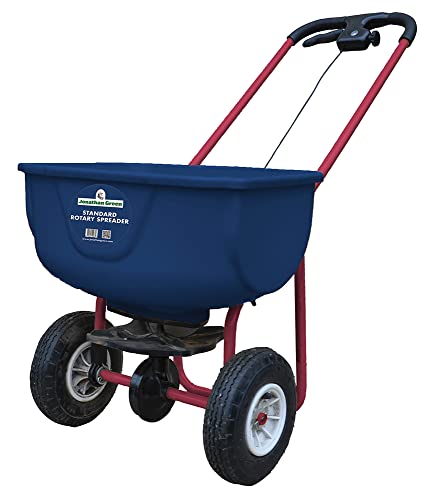
Jonathan Green New American Lawn Standard Rotary Broadcast Spreader 10,000 Sq. Ft.

Earthway 2750 Hand-Operated Bag Spreader/Seeder

Uniqwamo Handheld Power Spreader Compatible for Dewalt 20V/60V Battery

Chapin Tow-Behind Turf Spreader Auto-Stop Waste-Free Coverage 150-lb Capacity

Titan Attachments Professional Fertilizer Push Broadcast Spreader 50 lb

Spyker Ergo-Pro Walk-Behind Broadcast Spreader SPY80-1S

Buyers Products Grounds Keeper All Season Broadcast Walk Behind Push Spreader 100lb Capacity

Rozlchar Power Spreader Compatible for Dewalt 20V/60V 5,000 sq. ft.

Echo 60 lbs. Heavy-Duty Spreader RB-60

Chapin Chest Mounted Spreader Hard-to-Reach Lawn Areas 35-lb Capacity
More Details On Our Top Picks
For a typical home lawn, this push model keeps the job straightforward. The 10-foot broadcast width helps you cover more ground per pass, and the upright push position should feel kinder on your back than a low-slung spreader. You may still want to pay attention near edges, since wider broadcast paths can overshoot trim lines.
Compared with the hand-carried Earthway, this one makes more sense for a yard you cover in sections rather than in tiny patches. It also feels more approachable than tow-behind options like the Chapin 150-pound unit, which belong to much larger properties. The honest read is that this sits in the middle on simplicity and reach.
What We Like
- Upright pushing stance helps reduce lower-back strain during longer passes.
- Ten-foot spread width speeds up ordinary lawn coverage.
- Works for seed, fertilizer, lawn treatments, and winter melt material.
- Simple walk-behind format suits routine home maintenance.
Points To Note
- Wide scatter can be tricky along tight borders.
- Smaller yards may not need this much spread width.
- Like most push units, cleanup matters after damp material use.
Feature Snapshot
Who It Suits Best
Homeowners with medium lawns and a plain push-style routine will get the most out of it.
A Better Fit Elsewhere
Earthway 2750 Hand-Operated Bag Spreader/Seeder suits tight spaces and quick touch-ups better, especially for spot work around beds and paths.
Hand-carried spreaders make sense for narrow borders, small plots, and quick jobs around the yard. This Earthway model leans into that use case with a zippered top, a shoulder strap, and a molded base that should sit more securely than a plain sack-style carrier. For touch-up work, that mix is pretty practical.
The 25-pound capacity keeps it lighter than push units like the Jonathan Green, though you’ll refill more often on larger areas. The oscillating shut-off plate is the detail that matters most here, because smoother flow helps limit clumps and streaky coverage. It’s a sensible pick for people who want control more than speed.
Highlights
- Handheld format is easy to carry across uneven ground.
- High-RPM gearbox supports a smoother broadcast pattern.
- Oscillating shut-off plate helps steady material flow.
- Zippered top simplifies filling and closing the bag.
- Shoulder strap adds comfort for short seeding runs.
Softer Spots
- 25-pound capacity suits small jobs more than full-yard coverage.
- Bag-style carry can feel less stable than wheeled spreaders on long sessions.
- Cleaning after damp material use takes a little care.
Details At A Glance
Who Should Grab It
Small-yard owners and spot-treatment users who want a light, portable spreader will feel right at home with it.
Swap It Out When
Titan Attachments 50 lb Professional Fertilizer Push Broadcast Spreader fits better for broader lawns where a wheeled design saves effort.
This cordless handheld style suits a garage that already runs on DeWalt batteries. Because the battery is not included, the real value here comes from matching it to tools you already own, which can keep the setup simpler than starting from scratch. That makes it a tidy option for year-round use around seed, salt, and other granular material.
Compared with the Earthway bag spreader, this one trades muscle effort for powered convenience, though it still stays compact. You may find that useful for patios, paths, and small lawns where a full-size walk-behind would feel like overkill. The honest read is that compatibility is the main reason to choose it.
Bright Spots
- Compatible with DeWalt 20V and 60V batteries.
- Handheld format keeps storage simple in small garages.
- Useful for seed, rock salt, and seasonal yard tasks.
- Works well for quick passes around tight spaces.
Areas To Watch
- Battery is not included, so the tool-only format needs an existing setup.
- Handheld coverage is better for smaller areas than wide-open turf.
- Longer sessions can feel less relaxed than wheeled models.
Core Details
Built With In Mind
Homeowners who already keep DeWalt batteries around will get the cleanest fit from this spreader.
A Better Fit Elsewhere
Jonathan Green New American Lawn Standard Rotary Broadcast Spreader 10,000 Sq. Ft. makes more sense for larger lawns where a walk-behind format covers ground faster.
Large properties call for a different kind of spreader, and this tow-behind model is built for that pace. The 150-pound hopper gives you substantial carrying room, while the auto-stop feature helps cut waste at the headland or near the driveway turn. Behind an ATV, UTV, or lawn tractor, that setup makes long passes feel more orderly.
Compared with the push models in this list, this Chapin saves your walking for the places where it matters. Enclosed bearings and the dual-impeller system point to smoother material handling, though the trade-off is obvious, because you need towing equipment and storage space. For acreage, the layout is a strong fit.
Reasons To Buy
- 150-pound hopper reduces refill stops on larger jobs.
- Auto-stop helps avoid dumping material where you do not want it.
- Works with ATV, UTV, and lawn tractor setups.
- Dual-impeller system supports more consistent spread behavior.
- Enclosed bearings suit routine outdoor use.
Small Caveats
- Needs towing equipment, so it is not a casual walk-behind choice.
- Bulk and storage demands are higher than hand or push units.
- Best for larger grounds, not compact town lots.
Quick Facts
Whose Shelf It Belongs On
Property owners with a tow vehicle and a lot of ground to cover will get the most out of this setup.
Another Choice May Suit
Echo 60 lbs. Heavy-Duty Spreader RB-60 fits better for smaller properties where you still want a wheeled design without towing gear.
This push spreader sits in a useful middle ground for homeowners who want a simple wheeled tool without stepping up to towing gear. The 50-pound hopper should be enough for many suburban lawns, and the pneumatic tires help the unit roll more comfortably across uneven ground. The three-position handle gives you a straightforward way to adjust output without fuss.
Compared with the Jonathan Green pick, this Titan keeps the same general walk-behind idea but narrows the carrying capacity. That can be a smart trade for smaller to medium lawns, especially where storage space matters and winter salt duty is part of the plan. It feels like a sensible all-season yard tool, not a specialized machine.
Strong Points
- 50-pound hopper suits many ordinary yard tasks.
- Pneumatic tires help on rougher paths and mixed terrain.
- Three-position flow control supports more deliberate spreading.
- Useful for fertilizer, seed, and winter salt work.
Worth Noting
- Capacity is smaller than heavier walk-behind and tow-behind models.
- Push design still means you are doing the walking.
- Regular cleaning helps after wet salt or damp granules.
At A Glance
The Right Fit
Homeowners who want a manageable push spreader for both lawn care and winter material will appreciate this one.
Look Elsewhere When
Chapin Tow-Behind Turf Spreader Auto-Stop Waste-Free Coverage 150-lb Capacity is the better call for larger acreage and tractor-drawn work.
Some spreaders feel built for routine yard work, and this Spyker leans that way with a more comfort-forward stance. The 80-pound capacity lands above smaller push models like the Titan, so you can spend more time moving and less time refilling. For people who do regular lawn maintenance, that middle-high capacity is a sweet spot.
The trade-off is that it still asks you to push, but the larger hopper and Ergo-Pro framing make it easier to justify for frequent use. You may find it especially appealing for a property that needs repeated passes through the season. It is the sort of tool that quietly rewards steady upkeep.
Best Bits
- 80-pound capacity reduces refill frequency.
- Walk-behind format stays familiar and easy to steer.
- Ergo-Pro design suggests a more comfortable pushing posture.
- Fits regular lawn maintenance without moving into tow-behind territory.
Room For Improvement
- Still requires physical pushing, unlike powered handheld options.
- Best value tends to show up on larger recurring jobs.
Core Details
Who Will Love This
Frequent lawn caretakers who want more capacity than a basic push spreader without shifting to towing gear are the best match.
Reach For A Different Pick When
Uniqwamo Handheld Power Spreader Compatible for Dewalt 20V/60V Battery fits better for small patios and battery-tool households.
This Grounds Keeper model is aimed at property owners who want one spreader to handle several seasons. The 100-pound capacity gives it a stronger load profile than the Spyker, and the grate plus cover help keep dry material more manageable. That combination makes sense for seed, fertilizer, and winter salt duties across a year.
The enclosed gearbox is the practical detail to notice, because protection around moving parts usually matters once you start storing a spreader in the garage or shed. Compared with the Chapin tow-behind, this stays in push territory, so it fits people who want more control under their own pace. For medium to larger lawns, it is a strong compromise.
Positives
- 100-pound capacity stretches the time between refills.
- Included grate and cover help manage dry material.
- Works across seed, fertilizer, winter salt, and snow melt use.
- Enclosed gearbox should suit regular storage better than open designs.
Honest Caveats
- Push format still asks for steady effort over larger properties.
- Storage space matters more once hopper size increases.
- Cleanup after salt use deserves a little extra attention.
Spec Overview
Best Suited To
You get the most from this spreader on medium or larger lawns where push control still matters more than towing capacity.
Where A Sibling Pick Shines
Chapin Chest Mounted Spreader Hard-to-Reach Lawn Areas 35-lb Capacity makes more sense for narrow side yards and uneven spots.
This Rozlchar model is aimed at smaller outdoor spaces where a cordless spreader saves time and arm strain. Its 5,000-square-foot coverage figure gives you a clear feel for the scale, which fits many town lawns, gardens, and light farm tasks. Because it is tool only, the battery setup matters just as much as the spreader itself.
Compared with the Uniqwamo, this one gives you a similar battery-minded approach with a clearly stated coverage target. That makes the decision easier for someone balancing lawn size against a tool collection already built around DeWalt packs. The honest read is that it suits lighter-duty yards better than long acreage.
Upsides
- Compatible with DeWalt 20V and 60V batteries.
- 5,000-square-foot coverage fits many modest lawns.
- Good for lawns, gardens, and small farm tasks.
- Tool-only format keeps the footprint compact.
Minor Gripes
- Battery is not included.
- Smaller coverage range limits use on larger properties.
- Handheld format can feel less relaxed on longer passes.
Feature Rundown
Whose Shelf It Belongs On
It belongs with homeowners who want a cordless spreader for smaller lawns and already have the right DeWalt battery setup.
Skip It When
Jonathan Green New American Lawn Standard Rotary Broadcast Spreader 10,000 Sq. Ft. is the better choice for bigger lawns that need more walking efficiency.
The RB-60 sits in the middle of the pack in a useful way, with a 60-pound capacity that should suit many general lawn jobs. You do not get a long feature list here, so the appeal comes from the balanced size and the heavy-duty framing implied by the model name. For people who want a straightforward spreader without chasing specialty features, that can be enough.
Compared with the Titan 50-pound model, this Echo gives you a bit more load room while staying in push-spreader territory. The lack of extra detail also means you may want to compare it closely with the Spyker if comfort and longevity matter more than plain capacity. Sometimes the middle of the road is exactly where a simple yard tool belongs.
Plus Points
- 60-pound capacity works well for everyday lawn tasks.
- Push format keeps handling familiar.
- Heavy-duty build language suggests a sturdier utility focus.
- Good middle ground between compact and large-capacity models.
Areas To Watch
- Few detailed feature notes are provided in the source.
- Still requires manual pushing over the full yard.
- Coverage feel depends on your property layout and material type.
Feature Card
Perfect Match For
It suits homeowners who want a mid-capacity spreader for general yard work and do not need advanced extras.
Where Shoppers Go Wrong
Titan Attachments Professional Fertilizer Push Broadcast Spreader 50 lb makes more sense for those who want more details about flow control and tire setup.
Chest-mounted spreaders solve a specific problem, which is getting material into narrow or awkward areas without wrestling a full-size cart. This Chapin gives you a 35-pound enclosed hopper, adjustable flow control, and a side baffle for more directed placement, so it feels purpose-built for tricky ground. That focused design can be a relief on slopes, side yards, and tight passes near landscaping.
Compared with the push and tow picks above, this one is less about volume and more about precision. The smaller capacity is the trade-off, but the body-worn format can be the smarter choice when a wheeled spreader feels clumsy. For tight property layouts, it earns its place.
Positives
- Chest-mounted format helps in tight or awkward areas.
- 35-pound hopper is manageable for targeted work.
- Side baffle supports more directed spreading.
- Adjustable flow control gives you more material control.
Worth Noting
- Smaller capacity means more refills on larger lawns.
- Body-worn design is more specialized than a cart-style spreader.
- Best results come from steady pacing and careful setup.
Technical Sheet
Made For
Property owners who deal with narrow paths, slopes, or hard-to-reach sections will benefit most from this format.
Not Your Match When
Chapin Tow-Behind Turf Spreader Auto-Stop Waste-Free Coverage 150-lb Capacity is the better fit for large open properties and tractor use.
How To Choose The Right Broadcast Spreaders
Match Capacity To The Property
Capacity matters more than many people expect. A 25-pound bag spreader suits quick passes and small patches, while 100-pound or 150-pound hoppers make sense for bigger lawns, long driveways, or repeated seasonal jobs. Bigger capacity reduces refill stops, but it also means more weight to store and move.
Pick The Right Carry Style
Push models fit ordinary lawns, handheld and chest-mounted tools fit tighter areas, and tow-behind units suit acreage. The right style depends on how much walking you want to do and how precise the space gets around beds, fences, and paths. A smaller format can be the smarter choice in cramped yards, even when a larger spreader looks more impressive.
Look Closely At Flow Control
Flow control is the part that decides how much material leaves the hopper at once. Simple handles, shut-off plates, adjustable baffles, and enclosed gearboxes all affect how evenly seed, fertilizer, or salt moves across the ground. Uneven control can leave striped results, so this detail matters as much as capacity.
Think About Storage And Cleanup
Granular material can leave residue behind, especially after damp fertilizer or winter salt. Enclosed gearboxes, grates, and covers help, but any spreader benefits from a quick cleanout before storage. Compact tools are easier in small sheds, while larger tow-behind units need more planning.
Before You Click Buy
Common Shopping Slip Ups
A lot of mismatches start with property size. Compact handheld models are handy, but they get tiring on larger lawns, while oversized tow-behind units can feel awkward on a small lot. Matching the spreader to the terrain saves more frustration than chasing extra capacity.
Another common miss is forgetting the power source or attachment setup. Tool-only cordless models are appealing, yet they depend on batteries you already own, and tow-behind units need the right vehicle. That detail decides whether the spreader feels convenient or just complicated.
The Upgrade Payoff
Higher-tier spreaders usually spend money on comfort, control, and capacity. Enclosed bearings, better hoppers, stronger tires, and more refined flow systems can make long sessions feel smoother. That matters most on larger properties or for anyone who spreads often.
The upgrade is worth it when your current tool slows you down, spills material, or leaves you refilling too often. For small yards, a simpler model often makes more sense. For bigger spaces, paying for easier handling usually pays off in saved time and fewer laps.
Frequently Asked Questions
What size spreader works for an average yard?
A mid-size push model usually covers the needs of many suburban lawns. Larger properties start to justify heavier hoppers or tow-behind units.
Is a handheld spreader good for regular lawn care?
A handheld spreader works well for small yards, borders, and touch-ups. It is less comfortable for large open spaces.
What does broadcast spreader mean?
A broadcast spreader throws material outward in a wide pattern as you move. That helps cover ground faster than a drop-style approach.
Do you need a tow vehicle for every large spreader?
No, only tow-behind spreaders need a tractor, ATV, or UTV. Push and handheld models move under your own power.
Why does flow control matter so much?
Flow control affects how much material reaches the ground at once. Better control helps you avoid thin spots and heavy piles.
Closing Thoughts
You now have a clear range of broadcast spreaders, from compact handheld tools to serious tow-behind machines. The best choice depends on your property size, how often you spread, and how much physical effort you want to keep in the routine. For smaller jobs, a simple portable pick can feel just right. For larger lawns, a heavier walk-behind or tow-behind model earns its keep by cutting refill stops and smoothing the whole job out.