A clean spread pattern matters more than most people expect, especially on slopes, gravel edges, or patchy turf. The right spreader helps you cover ground without constant refills or awkward zigzags, and that matters whether you manage a small property or a larger commercial site. You’ll see walk-behind, tow-behind, and UTV-mounted options here, plus a few choices that make seasonal salt work easier too.
The Shortlist At A Glance

EarthWay 2150 Commercial 50 LB Broadcast Fertilizer Spreader

EarthWay 2050P 80lb Broadcast Spreader

Chapin Tow-Behind Turf Spreader with Auto-Stop Waste-Free Coverage

Titan Attachments 50 lb Professional Fertilizer Push Broadcast Spreader
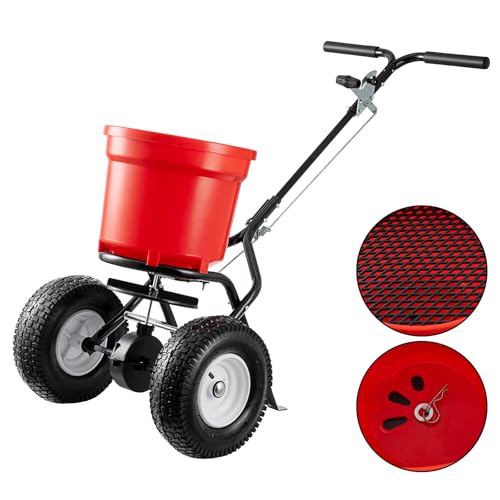
90 LB Broadcast Spreader Walk Behind

Buyers Products UTVS16 UTV/ ATV Broadcast Spreader

Buyers Products 3039632R Grounds Keeper All Season

EarthWay 2600A-PLUS Fertilizer Spreader
More Details On Our Top Picks
The 13-inch pneumatic stud tires make sense for bumpy yards, sloped driveways, and soft ground where smaller wheels can bog down. That rustproof poly rim detail matters too, because it gives you a sturdier setup for regular outdoor use without adding much fuss.
The clog-free grate is the other useful piece here, since it helps break up clumps before material reaches the hopper opening. Compared with the lighter EarthWay 2600A-PLUS, this model leans harder into rough-surface control, so you may prefer it for older lawns and uneven property edges.
Strong Points
- 13-inch pneumatic tires help the spreader roll across uneven turf with less jolting.
- Rustproof poly rims add a practical layer of outdoor durability.
- The removable grate helps keep clumped material from causing annoying jams.
- Walk-behind handling suits crews covering medium-sized properties without towing gear.
Things To Consider
- Hand pushing across larger acreage takes more effort than a tow-behind setup.
- The 50 lb hopper asks for more refills on wide lawns.
- Clumps still need basic material prep, especially after storage in damp sheds.
Core Details
Who It Suits Best
Property managers and home gardeners with uneven terrain get the most from this setup.
A Better Fit Elsewhere
Chapin Tow-Behind Turf Spreader with Auto-Stop Waste-Free Coverage suits larger properties where a tractor or ATV handles the work better.
An 80 lb hopper gives you more reach between refills, which is handy on broad suburban lawns or for routine property upkeep. The pre-assembled setup is a genuine time-saver too, especially compared with more build-heavy options like the Titan Attachments push spreader.
Side spread control is the detail that matters most here, because it helps keep material where you want it instead of spraying onto sidewalks or beds. The honest read is that this feels aimed at straightforward lawn work, not highly specialized groundskeeping, and that’s exactly why it fits so many households.
What We Like
- 80 lb capacity reduces refill stops on larger lawns.
- Pre-assembled delivery lowers setup hassle for busy weekends.
- Side spread control helps narrow the application path near edges.
- Rustproof poly hopper is easier to live with after wet-weather use.
Minor Gripes
- Push operation still takes effort on long property runs.
- Broader lawns can outgrow it faster than a tow-behind unit.
Feature Snapshot
Made For
Homeowners and grounds crews handling larger lawns with simple walk-behind routing.
Where A Sibling Pick Shines
EarthWay 2150 Commercial 50 LB Broadcast Fertilizer Spreader suits rougher terrain better, especially where bigger tires help.
A tow-behind spreader changes the pace of the job, and this Chapin model fits that style well for larger grounds. The 150 lb capacity and ATV, UTV, or lawn tractor compatibility make it a better match for acreage than the walk-behind EarthWay models above.
The auto-stop feature is the standout practical detail, because it helps avoid dumping material where you don’t want it during turns or stops. Enclosed bearings also support smoother rolling, which matters when the route includes long drives or rougher pasture edges.
Highlights
- Tow-behind format saves energy on large properties.
- 150 lb capacity cuts down on refill stops.
- Auto-stop behavior helps reduce waste at corners and pauses.
- Works with ATV, UTV, and lawn tractor setups.
- Enclosed bearings support smoother movement in outdoor conditions.
Points To Note
- Needs a tow vehicle, so it’s not the right fit for simple hand-push jobs.
- Storage takes more space than a compact push spreader.
- The added system complexity can mean more to maintain over time.
Details At A Glance
Who Should Grab It
Property owners managing big acreage with a tow vehicle already in the shed.
Another Choice May Suit
EarthWay 2050P 80lb Broadcast Spreader makes more sense for lawns that still need a walk-behind format.
This Titan model sits in the middle of the pack nicely, with enough hopper space for routine yard care without feeling oversized. The 10 to 12 foot spread range gives you a useful working lane, and that helps explain why it fits both fertilizer season and winter ice-melt work.
The three-position handle is the detail that gives you direct control, though it still takes a steady hand to keep coverage even near borders. Compared with the EarthWay 2050P, it feels a little more task-specific and a touch less polished, but the year-round angle gives it real value for mixed-property use.
Best Bits
- 50 lb hopper is manageable without being tiny.
- 10 to 12 foot spread range helps cover ground efficiently.
- Useful across fertilizer, seed, and ice-melt jobs.
- Pneumatic tires aid movement over uneven outdoor surfaces.
- Three-position control adds useful flow adjustment.
Room For Improvement
- Mid-size hopper still means refills on larger properties.
- Push use can feel repetitive during longer stretches.
- Winter salt work calls for careful cleaning after each use.
Feature Rundown
Whose Shelf It Belongs On
Homeowners who want one push spreader for both lawn care and winter maintenance.
Skip It When
Chapin Tow-Behind Turf Spreader is the smarter route for much larger acreage and tractor-based work.
The 90 lb hopper puts this model into serious lawn-care territory without forcing you into a tow setup. The 12.5-inch pneumatic tires help it roll over grass, gravel, soil, and rough patches in a way that feels better suited to bigger properties than smaller push spreaders.
That carbon steel frame with powder coating gives it a sturdier feel on paper, and the enclosed gearbox helps keep dirt and moisture away from the drive parts. You may still want to store it dry and clean the hopper after salt use, because mixed-season tools usually show wear fastest where residue lingers.
Upsides
- Large 90 lb hopper reduces refill interruptions.
- 12.5-inch pneumatic wheels handle rougher ground better than many small-tire push spreaders.
- Adjustable flow control helps tailor output to different materials.
- Carbon steel frame adds useful structure for outdoor work.
- Wide hopper opening makes loading less awkward.
Softer Spots
- The larger frame takes up more storage room.
- Heavy loads still need steady pushing on slopes.
- Salt and compost use call for regular cleanup.
Spec Overview
Best Suited To
Shoppers with large yards who want a push model but still need generous hopper space.
A Better Fit Elsewhere
Buyers Products UTVS16 UTV/ ATV Broadcast Spreader works better for larger properties where towing matters more than walking.
Mounted spreaders change the job from walking to riding, and that shift pays off fast across farms, grounds, and large estates. With a receiver hitch mount and 12V motor, this unit makes the most sense when your UTV or ATV is already part of the work routine.
The poly hopper with lid helps keep material contained between uses, and the adjustable flow gate gives you a more controlled feed path. Compared with the Chapin tow-behind, this model is a better fit for smaller towing platforms and tighter property routes, though it still asks for vehicle access.
Reasons To Buy
- 150 lb capacity supports long work runs with fewer refills.
- Receiver hitch mount keeps the setup centered behind the vehicle.
- 12V motor suits powered vehicle-based spreading.
- Adjustable flow gate helps match output to different materials.
- Poly hopper with lid helps protect stored material from the weather.
Areas To Watch
- Needs a compatible UTV or ATV, so it’s not a stand-alone tool.
- Mounted gear can be more cumbersome to store.
- The motor and gate assembly may need a little more upkeep than a push spreader.
Feature Card
Built With In Mind
Landscape crews and property managers who already use a UTV or ATV for maintenance.
Look Elsewhere When
EarthWay 2050P 80lb Broadcast Spreader is simpler for people who still want a walk-behind format.
Covered spreading gear usually earns trust by keeping material protected, and this walk-behind model leans into that idea with its included grate and cover. The enclosed gearbox is another useful touch, especially for winter salt and snow-melt work where grime tends to build up quickly.
At 100 lb capacity, it sits above the smaller walk-behind choices and feels well suited to grounds teams that manage seed, fertilizer, and seasonal salt in the same season. Compared with the EarthWay 2150, this one feels more enclosed and weather-minded, which may suit rough storage conditions a little better.
Bright Spots
- 100 lb capacity gives you more coverage than smaller push models.
- Included grate and cover help manage material and exposure.
- Enclosed gearbox supports tougher outdoor use.
- Works across seed, fertilizer, and winter materials.
Small Caveats
- Heavier loads can feel demanding during long pushes.
- Covered components still benefit from regular cleaning after salty use.
- Bulky storage may be awkward in small sheds.
Core Details
Perfect Match For
Grounds crews that want a covered walk-behind spreader for seasonal work.
Swap It Out When
Chapin Tow-Behind Turf Spreader is a better route for larger vehicle-led properties.
This EarthWay model keeps the footprint modest with a 40 lb hopper, which makes it easier to store in tighter garages or sheds. The all-terrain pneumatic tires help it keep moving across mixed ground, so the smaller size doesn’t feel like a full compromise.
Rust-proof polypropylene and an epoxy-coated steel frame give it a material mix that makes sense for regular outdoor handling. Compared with the EarthWay 2050P, you give up hopper size, but you get a more compact tool that suits smaller lawns and tighter storage spaces.
Positives
- 40 lb hopper keeps the unit compact and easier to store.
- All-terrain pneumatic tires improve rolling on mixed surfaces.
- Rust-proof polypropylene helps the hopper handle outdoor exposure.
- Epoxy-coated steel frame adds structure without a bulky feel.
Worth Noting
- Smaller capacity means more refill stops on bigger lawns.
- Compact size suits tight storage, not heavy acreage.
Feature Rundown
Right Fit For
Smaller properties and storage-tight garages that still need a dependable walk-behind spreader.
Not Your Match When
EarthWay 2050P 80lb Broadcast Spreader makes more sense for bigger lawns that need fewer refill stops.
How To Choose The Right Commercial Fertilizer Spreaders
Match Capacity To Your Property Size
Capacity, measured in pounds of material the hopper can hold, drives how often you stop to refill. A 40 to 50 lb push model works well for smaller lawns and tighter storage, while 80 to 150 lb options make more sense for larger grounds, farm lanes, or commercial routes. Bigger hoppers save time, but they also add bulk and weight, so the right choice depends on how much ground you cover in one session.
Walk-behind spreaders suit jobs where you want direct control around beds, trees, and sidewalks. Tow-behind and hitch-mounted designs fit larger properties because the vehicle handles the strain, leaving you to focus on coverage and flow settings.
Look Closely At Wheel And Drive Design
Pneumatic tires are air-filled wheels, and they help soften bumps on rough turf, gravel, and uneven soil. That matters more than it sounds, because a smoother roll usually means more even spreading and less fatigue over a long route. Larger wheels also help the unit move across soft ground without digging in as easily.
Enclosed gearboxes and bearings matter for longevity in dirty outdoor conditions. They don’t make a spreader maintenance-free, but they do help shield the working parts from moisture and grit, which is useful for anyone storing equipment in a shed or using it through winter.
Think About Material Control And Spread Width
Adjustable flow settings let you control how much material leaves the hopper, which helps when switching between fertilizer, seed, salt, or compost. Side spread control and auto-stop features become valuable near driveways, curbs, and planting beds, where overspray turns into wasted material fast.
Spread width matters too. A 10 to 12 foot pattern suits many residential runs, while wider towing setups help on acreage, fields, and broad common areas. The best match is the one that keeps your walking or driving lines efficient without putting material where it doesn’t belong.
What To Weigh Before You Decide
Common Shopping Slip Ups
Many people focus on hopper size and ignore the ground beneath the machine. A large unit with tiny wheels can still feel clumsy on uneven turf, and a compact spreader can be plenty for a smaller yard.
Another common miss is choosing a push model for a property that really wants a tow-behind or mounted setup. That choice saves money up front, but it often costs more in effort every season.
Where The Extra Money Goes
Higher-tier spreaders usually pay for stronger frames, better wheel setups, enclosed drive parts, and more precise flow control. Those details matter most on large properties, wet ground, or mixed-season use where the tool sees fertilizer, seed, and winter materials.
Spending up also makes sense when cleanup time matters. A lid, cover, or better-protected gearbox can reduce hassle after messy jobs, which is a real benefit for crews and property owners who use the same spreader repeatedly.
Frequently Asked Questions
What size spreader works for a typical suburban lawn?
A 40 to 80 lb walk-behind spreader usually fits that kind of use well. Larger yards or long drives may call for 90 lb or more.
Are tow-behind spreaders better than push models?
Tow-behind models suit larger properties because the vehicle does the hauling. Push models feel simpler for tighter areas and smaller storage spaces.
Can one spreader handle fertilizer, seed, and salt?
Several models in this roundup are built for multi-material use. Cleanup after salt matters because residue can linger in hoppers and gear housings.
What does an enclosed gearbox do for you?
An enclosed gearbox helps shield moving parts from dirt and moisture. That can be useful on rough ground or in winter conditions.
How do you keep spreading more even?
Use the flow setting that matches the material and keep your walking or towing pace steady. A spreader with side control or auto-stop can also help near borders and corners.