Backyard composting gets easier when the bin fits your space, your scraps, and the way you actually work outdoors. A compact tumbler suits a tidy patio corner, while a larger open bin makes more sense for lawn clippings, leaves, and garden trimmings that stack up fast.
This roundup helps you sort through tumblers, expandable bins, and a countertop caddy without second-guessing the basics. You get a clearer read on capacity, handling, upkeep, and the kind of setup that feels manageable in daily use.
The Shortlist At A Glance

Hourleey 43-Gallon Dual Chamber Compost Bin

VIVOSUN 300-Gallon Expandable Compost Bin

VIVOSUN 500-Gallon Expandable Compost Bin

VIVOSUN 220-Gallon Expandable Compost Bin

Compost Wizard Dueling Tumbler 7 Cubic Foot

Utopia Kitchen Countertop Compost Bin 1.3 Gallon

VEVOR Garden Compost Bin 80 Gallon
Marcytop 45-Gallon Dual Chamber Compost Tumbler
More Details On Our Top Picks
Hourleey leans into the tidy side of backyard composting, with a 43-gallon dual-chamber layout that keeps fresh scraps and finishing material separate. The sliding doors are handy in a normal patio or garden setup, because you can load one side while the other side rests, which keeps the process moving without turning the whole bin into a juggling act.
Compared with the open-frame VIVOSUN bins later in this list, this tumbler is easier to contain and easier to keep looking neat near a kitchen door or fence line. The trade-off is simple, drum-style composters usually ask for more turning and a bit more attention to moisture, so this suits you best when you like a cleaner routine more than a loose, dump-and-wait setup.
Strong Points
- Dual chambers support a steady batch rhythm.
- Sliding access helps with cleaner loading and unloading.
- 43-gallon size works well for modest yard waste.
- Tumbler format keeps material contained off the ground.
Points To Note
- Rotating drums need more active attention than open bins.
- Space planning matters, since the unit needs room to swing.
- Cleaning around the doors can take a little patience.
Core Details
Who It Suits Best
You get the most from this one in a smaller backyard or side yard where a neat, enclosed bin feels better than a loose pile.
Where A Sibling Pick Shines
VIVOSUN 220-Gallon Expandable Compost Bin suits you better when your yard throws off more leaves and clippings than a tumbler can comfortably handle.
The 300-gallon VIVOSUN takes a very different route from the Hourleey tumbler, because it gives you volume instead of a sealed rotating drum. That style makes sense for leaf piles, grass clippings, and mixed yard cleanup in a regular suburban space, especially when you want lots of room without overcomplicating the setup.
You may find this format more forgiving than a tumbler when your scraps come in waves, not neat little batches. The honest read is that open expandable bins can feel less polished, but they’re often easier to live with during peak yard season and simpler to place along a fence or compost corner.
What We Like
- Large volume handles seasonal yard cleanup well.
- Expandable form gives you placement flexibility.
- Simple layout keeps setup straightforward.
- Works well for leaves, lawn cuttings, and garden debris.
Small Caveats
- Open-bin style offers less containment than a tumbler.
- Big capacity can be too much for tiny yards.
- Needs a bit more space than compact drum options.
Feature Rundown
Made For
You’ll appreciate this most in a backyard that produces lots of leaves or clippings and has room for a larger compost zone.
A Better Fit Elsewhere
Hourleey 43-Gallon Dual Chamber Compost Bin suits you better when you want a tidier enclosure and a smaller footprint close to the house.
The 500-gallon VIVOSUN is the obvious volume play in this group, and that matters more than flashy styling. For large properties, fence-line leaf dumps, or garden beds that throw off a lot of plant waste, the extra room means you’re less likely to outgrow it after one busy season.
Compared with the 300-gallon VIVOSUN, this version is simply the bigger yard tool, not the subtler one. The trade-off shows up in placement, because a larger open compost zone needs more room and a bit more attention to shaping the pile, so it fits better with spacious yards than with tight courtyards.
Upsides
- Very large capacity suits high-volume yard cleanup.
- Expandable design can be arranged to match the site.
- Good fit for long compost cycles with repeated additions.
- Handles garden debris and seasonal leaf loads with ease.
Worth Noting
- Large footprint can overwhelm compact outdoor spaces.
- Open style asks for more routine pile management.
- Less tidy than a lidded tumbler near living areas.
Details At A Glance
Right Fit For
You should look here for a big yard that needs a spacious compost area and does not mind a more open layout.
Skip It When
VIVOSUN 220-Gallon Expandable Compost Bin makes more sense when your yard is medium-sized and you want a less demanding footprint.
Among the expandable VIVOSUN bins, the 220-gallon version lands in a sweet spot for many backyards. It has enough room for grass clippings, kitchen scraps, and a reasonable amount of leaves, but it stops short of turning your whole yard into a compost project.
That balance is useful when you want the flexibility of an open bin without the bulk of the 300- or 500-gallon versions. In most suburban setups, it’s the easier long-term fit because it leaves some breathing room for pathways, tools, and the rest of the yard.
Highlights
- Moderate capacity suits everyday yard waste.
- Expandable design makes placement less restrictive.
- Good middle ground between compact and oversized options.
- Simple format keeps upkeep straightforward.
Areas To Watch
- Open style offers less odor containment than lidded drums.
- May feel small for very large properties.
- Needs a dedicated corner to stay tidy.
Core Details
Built With In Mind
This one suits you best for regular backyard cleanup where you want room to grow but not an oversized compost footprint.
Look Elsewhere When
Compost Wizard Dueling Tumbler 7 Cubic Foot is the better choice for you when enclosed rotation and split batches matter more than raw volume.
Compost Wizard feels more structured than the open VIVOSUN bins, and that’s the point. Two rotating chambers, each holding 25 gallons, let you keep one side finishing while the other side takes new scraps, which works well for gardeners who like a cleaner batch cycle.
The 7-cubic-foot capacity lands in a practical middle range for small to medium outdoor spaces. The catch is that tumblers like this reward routine turning, so it fits best when you want a more hands-on compost habit without moving up to a huge yard bin.
Best Bits
- Two chambers make batch rotation more organized.
- Enclosed drum helps keep compost contained.
- Good size for regular gardening and plant care waste.
- Each side can run on a separate cycle.
Room For Improvement
- Needs regular turning to stay productive.
- Less suited to massive leaf piles than larger open bins.
- Compact drum format can limit volume for larger properties.
Technical Sheet
Whose Shelf It Belongs On
This fits gardeners who want a controlled, rotating compost routine in a space that stays fairly tidy.
Where A Sibling Pick Shines
Hourleey 43-Gallon Dual Chamber Compost Bin suits you better when you want a similar batch-style setup with a larger enclosed drum.
This is the kitchen-side helper in a list full of outdoor composters. The 1.3-gallon stainless steel body is sized for food scraps at the sink, so you can collect peels, cores, and small prep waste before carrying them outside, which is handy in a busy kitchen.
The charcoal filter is the feature that matters most here, because it helps keep the bin from becoming the thing everyone notices first on the counter. That said, a countertop caddy is not a replacement for a backyard bin, and it works best as the staging point between cooking and the main compost pile.
Positives
- Countertop size keeps scraps close during meal prep.
- Stainless steel finish feels suited to everyday kitchen use.
- Charcoal filter adds a useful layer of odor control.
- 1.3-gallon capacity is easy to carry outside.
Minor Gripes
- Small capacity means frequent emptying.
- Better as a staging bin than a true backyard system.
- Filter upkeep adds a little maintenance over time.
Feature Snapshot
The Right Fit
You’ll get the most out of this in a home that wants a neat indoor collection point before scraps head outdoors.
Another Choice May Suit
VEVOR Garden Compost Bin 80 Gallon makes more sense once you want a full outdoor compost station instead of a kitchen caddy.
VEVOR keeps the formula simple, and that works in its favor. An 80-gallon outdoor bin with a top lid and bottom door gives you a very familiar compost routine, with top loading for fresh material and lower access for finished compost.
The lightweight build and easy assembly language point toward a setup that suits first-time composters or anyone who wants a no-fuss bin in the garden corner. Compared with the larger VIVOSUN options, this one feels more approachable, though it does ask you to live within a smaller capacity than the huge open bins.
Bright Spots
- 80-gallon size works well for steady home composting.
- Top lid and lower door support simple day-to-day use.
- Lightweight build should be easier to move during setup.
- BPA-free material is a useful detail for material-conscious shoppers.
Softer Spots
- Smaller than the biggest yard bins in this roundup.
- Lid and door hardware may need occasional cleaning.
- Openable access points are more parts to keep track of.
Feature Card
Who Should Grab It
This fits you well when you want a straightforward outdoor compost bin that stays manageable without feeling tiny.
Skip It When
VIVOSUN 500-Gallon Expandable Compost Bin is the better call for very large yards that generate bulkier loads.
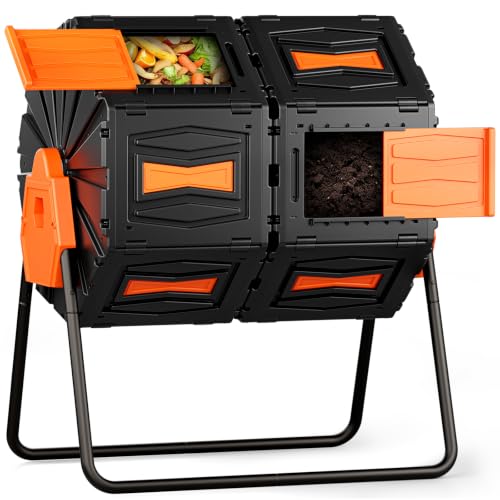
Marcytop brings the familiar two-chamber tumbler idea back into the lineup, but at 45 gallons and 170 liters, it gives you a little more room than the Hourleey while keeping the same basic batch-friendly approach. The orange door is a small visual touch, yet the real value is the split compartment setup, which lets you keep fresh waste moving while another section finishes.
That structure suits backyard cooks and gardeners who generate a steady mix of kitchen scraps and yard trimmings. The trade-off is the usual tumbler one, rotating bins reward regular attention, so this makes the most sense for you when you want order and separation more than a loose compost pile.
Reasons To Buy
- Dual chambers support a cleaner batch cycle.
- 45-gallon size gives a bit more room than smaller drums.
- Works well for mixed kitchen and yard waste.
- Easy-assemble design suits straightforward setup needs.
Honest Caveats
- Tumbler format still asks for regular turning.
- More capacity than compact drums, but far less than large open bins.
- Orange door styling may not suit every yard look.
Quick Facts
Best Suited To
You’ll like this most if you want a compact tumbler with enough room for regular household compost output.
Where Another Pick Fits Better
Compost Wizard Dueling Tumbler 7 Cubic Foot is the better match for you when you want a more established dual-bin setup with each side clearly separated.
How To Choose The Right Composters For Backyard
Capacity Should Match Your Yard Waste
The first thing to sort out is volume. A 43- or 45-gallon tumbler suits modest kitchen scraps and light garden trimmings, while 220, 300, or 500 gallons makes more sense once leaves and lawn cuttings start piling up in real life.
Open bins feel roomy because they are roomy, but that extra space only helps when you actually have enough material to fill it. For a small patio garden, a big open bin can feel awkward, while a compact drum may stay much easier to manage.
Tumbler Or Open Bin?
Tumblers work best when you want cleaner handling and a more contained setup near the house. They keep the material off the ground, and dual-chamber versions let you separate fresh scraps from a finishing batch.
Open bins are better for bigger yard jobs and people who don’t mind a less polished look. They’re simpler in shape, but they usually ask for more attention to pile balance, moisture, and placement.
Material, Access, And Cleanup
Access points matter more than many people expect. Sliding doors, top lids, and bottom doors all change how easy it feels to load scraps, turn material, and collect finished compost without making a mess.
Material choice matters too. Stainless steel feels right for an indoor caddy, while BPA-free outdoor plastic and bin-style frames tend to suit weather exposure and regular garden use.
Think About Your Compost Routine
Your best match depends on how often you plan to add waste and how much attention you want to give it. A rotating drum suits regular mixing, while a large open bin fits a slower, more relaxed rhythm.
For most backyards, the sweet spot sits between convenience and capacity, not maximum size. A compost system that fits your weekly routine tends to get used, and that matters more than a dramatic number on the label.
A Quick Reality Check Before You Order
Common Shopping Slip Ups
A lot of people focus on capacity first and forget about footprint. A large bin can be the wrong shape for a narrow side yard, and a drum that swings wide can feel cramped beside a fence.
Another common miss is overlooking access. A bin that’s hard to open, awkward to empty, or annoying to clean tends to get ignored, which is how compost projects stall out.
The Upgrade Payoff
Higher-tier composters often spend more on better chamber layouts, sturdier hardware, and easier loading or unloading points. Those details matter most when you compost year-round or deal with heavier yard waste.
The upgrade is worth it when you want less hassle around rotation, separation, or long-term durability. For lighter use, a simpler bin can be the smarter purchase because it keeps the whole routine easy and low-fuss.
Frequently Asked Questions
What size composter suits a typical backyard?
Many backyards work well with a 40- to 80-gallon unit for mixed kitchen scraps and moderate yard waste. Larger properties with lots of leaves usually feel better with 220 gallons or more.
Do tumblers work better than open bins?
Tumblers keep everything contained and make batch composting more structured. Open bins are easier to scale up for heavy seasonal cleanup.
Can you use kitchen scraps in an outdoor compost bin?
Yes, and that’s where a lidded tumbler or a bin with a covered top helps most. A countertop caddy like the Utopia Kitchen bin can also make kitchen collection simpler before you move scraps outside.
How often does a compost tumbler need turning?
That depends on the material mix and how active you want the process to be. Rotating models work best when you give them regular attention rather than leaving them untouched.
What makes a compost bin easier to live with?
Easy access, sensible capacity, and a setup that matches your yard size make the biggest difference. A bin that fits your routine is far more useful than one with extra space you never fill.