

Tomatoes are needy in a very ordinary way, they want steady moisture, even coverage, and less fuss around the root zone. A drip setup keeps water focused where it matters, which helps you manage raised beds, patio containers, greenhouse rows, or a backyard patch without dragging a hose around every morning. Some picks lean toward full-layout kits, while others make more sense as add-ons or hose-style options. The right match depends on how many plants you’re feeding and how much control you want over placement.
Quick Look At The Shortlist
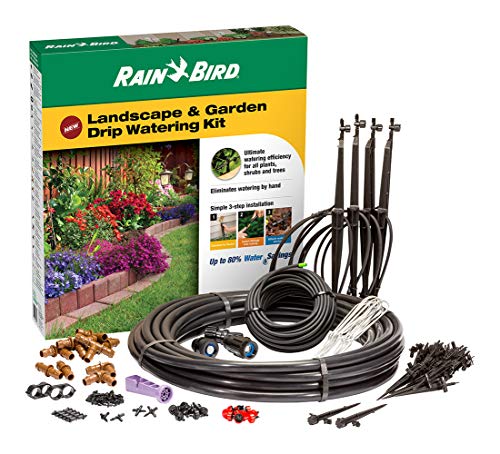
Rain Bird LNDDRIPKIT Drip Irrigation Kit

Bonviee 230FT Quick Connect Drip Irrigation Kit

Romanend 60pcs Adjustable Drip Emitters

Abakuku 230FT Quick-Connect Drip Irrigation Kit

LINEX Flat Soaker Hose 1/2″ x 50 ft

Landtouch 250FT Drip Irrigation System

Maotong 110ft Drip Irrigation System Kit

STARREY 100Ft 360° Copper Nozzle Drip Irrigation System

lucdnc 240FT DIY Automatic Drip Irrigation Kit
More Details On Our Top Picks
Rain Bird leans more flexible than rigid, which helps in tomato beds that don’t all need the same flow pattern. The mix of drippers, micro-bubblers, and micro-sprays gives you room to match root zones, wider bed ends, or awkward corners without rebuilding the whole line.
For a mixed backyard setup, that kind of versatility can be more useful than raw tubing length. The trade-off is that you’ll spend a little more time planning where each outlet goes, so it suits gardeners who like a tidy layout rather than a bare-minimum kit.
Strong Points
- Multiple outlet styles help you tune water delivery for different tomato sizes and bed shapes.
- Useful for gardens that also include herbs or leafy greens near the tomatoes.
- The varied spray options reduce the need for extra add-ons later.
- Good fit for gardeners who want a more tailored setup than a basic line kit.
Things To Consider
- Planning takes a bit more attention than with a plain hose-only kit.
- More parts can mean more sorting during installation and future maintenance.
- Works best in a layout where you know where each plant group sits.
Feature Snapshot
Who It Suits Best
You benefit most here if your tomato patch shares space with other plants and you want more than one watering pattern in the same run.
Where Another Pick Suits Better
Bonviee 230FT Quick Connect Drip Irrigation Kit is a cleaner fit for gardeners who want a longer, more straightforward run for larger tomato rows.
This kit feels built for a bigger tomato layout, especially where raised beds or greenhouse rows need one long, organized path. The 33-foot 5/16-inch mainline, 1/4-inch tubing, 40 emitters, and quick-connect format point to a system that’s meant to be arranged without a lot of guesswork.
Its stated 20 to 45 PSI range and up to 40 GPH output matter because they help you think about fit before installation, not after. Compared with Rain Bird’s more mixed outlet style, this one is more about straightforward coverage, which is usually easier for first-time DIY setups.
What We Like
- Long total tubing length supports larger tomato beds and stretched-out rows.
- Quick-connect fittings make layout changes less fussy.
- The included emitters help you start with a full working set.
- Good for greenhouses where neat routing matters.
- The pressure and flow range give you a clearer planning target.
Points To Note
- Longer kits can take a little more time to map out cleanly.
- Any emitter-based system benefits from occasional checking for clogs or uneven placement.
- The layout is more fixed than a hose-style option like LINEX.
Core Details
Made For
You’ll get the most from this kit in a backyard with multiple tomato rows, especially when you want the project to look organized rather than improvised.
Another Choice May Suit
Romanend 60pcs Adjustable Drip Emitters make more sense for gardeners who already have tubing and only need more control points.
Romanend is the most modular choice in this set, and that matters when your tomato plants are spaced unevenly or tucked into odd corners. These are adjustable emitters, so you’re buying control points rather than a full run, which is useful for growers already working with 1/4-inch tubing.
Compared with Bonviee and Abakuku, this is less about starting from zero and more about finishing a system that already exists. The honest read is that it suits tinkerers and gardeners who don’t mind matching flow to plant needs one emitter at a time.
Upsides
- Sixty pieces give you plenty of coverage for a sizable planting area.
- Adjustable output helps you fine-tune different tomato stages and bed spots.
- 360-degree delivery is handy around compact planting circles or mixed beds.
- Works well as a replacement or expansion pack for an existing line.
Softer Spots
- You need compatible 1/4-inch tubing, so this is not a complete starter system.
- Manual adjustment takes more attention than a fixed emitter layout.
- Small parts are easier to misplace during installation or seasonal storage.
At A Glance
Whose Shelf It Belongs On
This is the right match for gardeners who already have a tubing network and want more tuning control around tomato roots.
Swap It Out When
Maotong 110ft Drip Irrigation System Kit is a better fit for someone who wants a more complete starter kit rather than loose emitters.
Abakuku sits in the same broad lane as Bonviee, but it leans into a more classic hose-and-accessories approach for home gardens. The 230-foot length gives you room to route around raised beds, and the mix of 1/4-inch and 1/2-inch tubing points to a layout that can branch out without looking cramped.
For tomato growers who like to spread lines across a yard or greenhouse, that extra flexibility is useful. The catch is that more tubing sizes usually mean more planning at the start, so it rewards a careful installer more than a hurried one.
Positives
- The long run suits larger tomato sections and multi-bed gardens.
- Two tubing sizes give you a broader layout range.
- Quick-connect parts help keep assembly from feeling overly technical.
- Good choice for growers who want room to expand later.
Minor Gripes
- The more flexible layout also asks for more upfront planning.
- You’ll want to check fit carefully when combining different tubing sizes.
- Like most kit-style setups, it benefits from tidy storage between seasons.
Details At A Glance
Who Will Love This
You’ll appreciate this one most in a medium-to-large garden where you want a kit that can spread across several tomato rows.
Look Elsewhere When
LINEX Flat Soaker Hose 1/2″ x 50 ft is the easier call for gardeners who want one simple line along a bed rather than a branched layout.
For straight tomato beds, a soaker hose keeps things refreshingly simple, and LINEX is the most direct example here. Its flat profile is easier to lay out and move than a pile of loose tubing parts, which helps in long vegetable rows where you want water spread evenly along the bed.
The listed seep rate of 1.8 gallons per minute at 50 PSI gives you a concrete planning reference, though your actual setup still depends on pressure and bed layout. Compared with the kit-based picks above, this is the least fussy route for gardeners who want a broad, ground-level soak rather than pinpoint emitters.
Best Bits
- Flat hose shape is easy to position along a tomato row.
- Even-length watering suits beds that need broad coverage.
- The included stake helps keep the hose where you place it.
- Good for gardeners who want a simpler routine and fewer small parts.
Room For Improvement
- Less precise than emitter-based kits for individual plants.
- Works best in a bed-style layout rather than a scattered garden.
- Seasonal cleanup matters, because long hoses can be awkward to store neatly.
Key Specs
Best Suited To
You’ll get the best fit from this hose in a vegetable bed where tomatoes sit in a straight row and you want low-maintenance coverage.
A Better Fit Elsewhere
STARREY 100Ft 360° Copper Nozzle Drip Irrigation System suits gardeners who want more directional control around each plant rather than a single bed-wide soak.
Landtouch is the roomy, layout-first option in this group, with 50 feet of 1/2-inch main tube and 200 feet of 1/4-inch branch tubing. That split matters because it gives you a more deliberate backbone with smaller offshoots, which is helpful for tomatoes spread across beds, borders, or a greenhouse.
Compared with Abakuku, this one reads as a more clearly segmented system, and the brass splitter adds a sturdier feel at the connection point. The trade-off is that larger systems demand a bit more patience during installation, though the payoff is cleaner routing once everything is in place.
Highlights
- Very long total tubing supports wide planting areas.
- Main-and-branch design helps keep the layout organized.
- Brass splitter brings a more durable connection point feel.
- Good match for growers who plan to expand the system later.
- Useful for tomatoes in multiple zones rather than a single bed.
Areas To Watch
- Larger systems take longer to map out and route cleanly.
- Branch-heavy layouts need occasional checks so everything stays even.
- Storage is less convenient than with a shorter hose-style option.
Technical Sheet
Right Fit For
This is the pick for a larger home garden where tomatoes share space with several other plant rows and you want a more structured system.
Reach For A Different Pick When
Rain Bird LNDDRIPKIT Drip Irrigation Kit is the better move for gardeners who want more watering styles in a smaller mixed bed.
Maotong lands in a sweet middle zone, big enough for more than a tiny planter bed, but not so large that the layout feels like a project board. The included 1/4-inch tubing, emitters, and connectors make it a sensible starting point for tomato growers who want a DIY automatic irrigation setup without turning the weekend into a wiring puzzle.
Compared with Landtouch, this is a simpler package for a smaller footprint, and that makes it friendlier for first-timers working on one or two raised beds. You may find the 110-foot size easier to store and manage through the off-season, which is a practical advantage nobody thinks about until cleanup day.
Bright Spots
- Good mid-size length for a modest tomato garden.
- Includes the core parts needed for a DIY setup.
- Connectors and tubing make the system easier to assemble.
- Useful for raised beds where tidy routing matters.
Small Caveats
- Better suited to a smaller layout than a sprawling garden.
- Like most kit systems, it benefits from careful part organization during setup.
- Off-season storage is easier than with larger systems, but still needs some space.
Spec Overview
The Right Fit
You’ll like this best for a small-to-medium tomato setup where a clean DIY kit matters more than very long reach.
Another Choice May Suit
Bonviee 230FT Quick Connect Drip Irrigation Kit is better for growers who need a longer run across several beds.
STARREY stands out for gardeners who want more control at each watering point, because the 24 copper nozzles are adjustable and built for directional targeting. That can be a real help around tomato cages, uneven spacing, or greenhouse benches where one stream would waste water on empty soil.
Compared with Maotong’s simpler starter kit, this one leans harder into adjustability and precise placement. The trade-off is that more control also means more setup attention, so it suits the kind of gardener who doesn’t mind fine-tuning nozzle direction around each plant cluster.
Reasons To Buy
- Adjustable nozzle heads help aim water where tomatoes actually sit.
- Copper nozzles give the setup a more durable, planted feel.
- Good for greenhouse rows and beds with uneven spacing.
- Fine control makes it easier to avoid soaking empty gaps.
- Useful for gardeners who want a more precise DIY kit.
Worth Noting
- Adjustable parts ask for a little more setup time.
- Best results come from a careful layout rather than a quick throw-together run.
- Smaller nozzles can be worth checking during routine upkeep.
Feature Card
Perfect Match For
This suits tomato growers who want controlled watering around a smaller, more deliberate layout with plenty of fine-tuning.
Skip It When
LINEX Flat Soaker Hose 1/2″ x 50 ft is easier to live with for gardeners who want a simpler, less adjustable path along one long bed.
lucdnc is a roomy DIY kit for gardeners who want enough tubing to cover a broader tomato layout without moving into the most complex setup in the list. The mix of 5/16-inch and 1/4-inch tubing gives you a practical backbone-and-branch structure, which tends to work well in patios, lawns, and greenhouse beds.
Compared with Bonviee, this one reads as a more general-purpose kit, while still keeping the build flexible for different plant zones. That makes it a sensible fit for people who want a long run, adjustable emitters, and enough reach to adapt the system as the garden changes.
Best Bits
- Long total length supports wide tomato plantings.
- Two tubing sizes help build a more structured layout.
- Adjustable emitters give you flexibility around different plants.
- Useful across patios, lawns, and greenhouse areas.
- Good for gardeners who want room to expand the system.
Honest Caveats
- The larger layout needs more time to plan than a shorter kit.
- Mixed tubing sizes can feel a little more involved during first setup.
- Seasonal storage takes a bit more space than the shorter options.
Quick Facts
Whose Shelf It Belongs On
This belongs with tomato growers who want a flexible, long-run kit that can handle more than a small raised bed.
Where A Sibling Pick Shines
Maotong 110ft Drip Irrigation System Kit is the easier fit for gardeners who prefer a smaller starter build with less layout work.
How To Choose The Right Drip Irrigations For Tomatoes
Start With Your Garden Shape
Tomato irrigation works best when the layout matches the planting pattern. Long, straight beds often do well with a soaker hose like LINEX, while raised beds and greenhouse rows usually benefit from kits with branching tubing and emitters.
A mixed garden with tomatoes, herbs, and a few flowers calls for more control, which is where Rain Bird and STARREY make sense. A simple row of plants needs less hardware than a patchwork bed, and that difference saves both time and frustration.
Match Flow Control To Plant Spacing
Spacing matters because tomatoes rarely grow in neat little squares forever. Adjustable emitters are useful around cages, staked plants, and uneven gaps, while fixed outlet kits work better when each plant sits in a predictable spot.
Romanend and STARREY suit gardeners who like tuning each point, while Bonviee and lucdnc are better when you want a fuller kit with broader coverage. The more irregular your spacing, the more valuable adjustable flow becomes.
Think About Setup, Maintenance, And Storage
Some kits are easier to install, but that ease can come with less flexibility later. Flat hoses are simple to lay out and remove, while long systems with multiple tubing sizes ask for more careful routing and seasonal cleanup.
That trade-off shows up in real life after the first install, not just on paper. A tidy greenhouse or raised bed often rewards the extra planning, while a smaller backyard plot usually benefits from the least complicated design you can live with.
Things Worth Knowing First
Common Shopping Slip Ups
The biggest mistake is buying a layout that’s too complicated for the garden size. Another common miss is ignoring tubing compatibility, which matters fast when you already own a few parts and only need a match for 1/4-inch or 1/2-inch lines.
A second trap is choosing a system with too many control points for a simple bed. That kind of setup can feel more fiddly than helpful, especially around tomatoes that sit in one straight row.
What The Higher Tier Buys
Extra cost in this category usually goes toward longer tubing runs, brass connectors, adjustable nozzles, or more complete starter bundles. Those upgrades matter most in larger yards, greenhouses, or mixed beds where one-line simplicity stops being enough.
Paying more makes sense when you want cleaner routing or more precise watering around separate tomato groups. For a small row, the basic option often does the job without adding parts you won’t really use.
Frequently Asked Questions
Are drip irrigations good for tomato beds?
Yes, they help keep water focused near the root area instead of splashing all over the bed. That makes them a practical fit for tomatoes in raised beds, rows, and greenhouse runs.
Which type works best for beginners?
A simpler kit with quick-connect parts is usually the easiest starting point. Maotong and Bonviee are the most approachable here for a first tomato setup.
Do soaker hoses work for tomatoes?
They do, especially in straight garden beds. LINEX is the cleanest choice in this roundup for that kind of layout.
Are adjustable emitters worth it?
They are useful when tomato spacing changes or the bed includes a few awkward corners. Romanend and STARREY give you the most tuning freedom.
How do you choose tubing length?
Base it on the size of the bed, the number of rows, and how far the water source sits from the plants. Longer kits make sense fast in larger gardens, but they add storage and planning work too.
