You want new grass to settle in with less guesswork, and the right starter formula can make that first stretch feel far more manageable. This roundup focuses on fertilizers that fit seeding, sod, and early root development, so you can match the product to your yard size, application style, and tolerance for upkeep. Some picks lean granular and simple, others bring liquid convenience or larger coverage. The trade-offs matter, because a new lawn in a small front yard calls for a different approach than a broad patch behind the house.
The Shortlist At A Glance

Jonathan Green Veri-Green Starter Fertilizer 12-18-8 1,500 Sq. Ft.

Jonathan Green Green-Up Lawn Food 12-18-8 1,500 Sq. Ft.
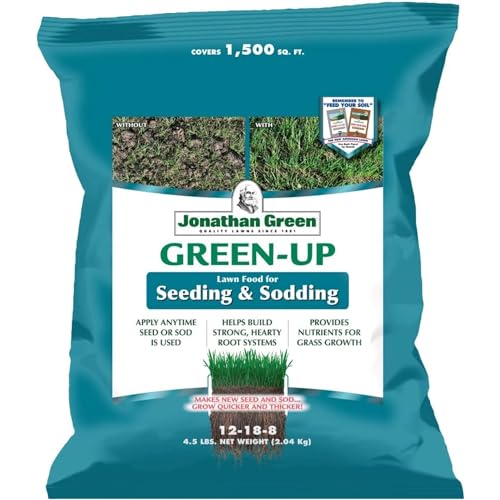
Jonathan Green Green-Up Lawn Food 12-18-8 1,500 Sq. Ft.

Fertilome New Lawn Starter Fertilizer 9-13-7 4 lbs

Sunday Lawn Kickstart Liquid Lawn Fertilizer 2 Pack 10,000 Sq Ft

The Andersons Premium New Lawn Starter 20-27-5 Fertilizer 18 lb

Yard Mastery 7-0-20 Summer Lawn and Turf Stress Granular Fertilizer Blend 45lb Bag
More Details On Our Top Picks
A 12-18-8 starter blend makes sense for a new lawn because the middle number, phosphorus, supports early root growth, which is exactly what fresh seed and sod need most. Jonathan Green’s 1,500 square foot coverage suits a small-to-medium patch, so you’re not stuck splitting a huge bag across a modest yard.
Compared with the liquid Sunday option later in this list, this one leans more traditional and easier to meter with a spreader. The honest read is that granular starter fertilizer usually rewards a steady application pace, so it fits homeowners who want a straightforward, no-fuss routine.
Strong Points
- 12-18-8 analysis gives new grass a root-first nutrient profile.
- 1,500 square foot coverage suits many front-yard reseeding jobs.
- Granular format stores neatly and is easy to spread evenly.
- Works well for seeding, sodding, and overseeding projects.
Things To Consider
- Coverage may feel modest for larger backyards.
- Granular products need a spreader or careful hand application.
- You’ll want to keep moisture and storage conditions dry.
Feature Snapshot
Who It Suits Best
You’ll like this most for a new or repaired lawn where root building matters more than fast top growth.
A Better Fit Elsewhere
The Andersons Premium New Lawn Starter 20-27-5 Fertilizer suits you better when you want a higher-analysis granular starter for a larger project.
This Jonathan Green bag sits close to the first pick because the 12-18-8 profile points in the same direction, toward early establishment rather than lush top growth. For homeowners reseeding a side yard or touching up a patch near the driveway, that consistency can be comforting.
One thing worth considering is that this product duplicates the starter-style nutrient balance of Item 1, so your choice may come down to packaging, availability, or simple preference. It suits a practical setup, especially when you already own a spreader and just want a familiar granular routine.
What We Like
- Starter-style nutrition is aligned with new grass needs.
- 1,500 square foot bag size is manageable for small jobs.
- Granular format is familiar for spreader-based application.
- Works for both seeding and sod placement.
Worth Noting
- It overlaps heavily with the other Jonathan Green starter in this roundup.
- Smaller coverage means larger lawns need multiple bags.
- You’ll still need even spreader calibration for clean results.
Details At A Glance
Made For
This suits you best for a straightforward reseeding project where you want a familiar starter ratio in a small area.
Swap It Out When
Jonathan Green Veri-Green Starter Fertilizer 12-18-8 1,500 Sq. Ft. is the better fit when you want a near-identical starter blend from the same brand with a cleaner sense of separation in the shortlist.
Same family, same analysis, slightly different positioning, and that makes this Jonathan Green option easy to compare with Item 2. The 12-18-8 ratio keeps the focus on root formation, while humates, a soil ingredient that can help nutrients move and exchange more efficiently, add a practical twist for gardeners who care about soil condition as much as grass color.
That extra soil-support angle makes it a neat fit for a yard that needs more than a quick cosmetic boost. The feed period is described as lasting up to two months, so your maintenance rhythm may feel calmer than with a short-cycle lawn food, though actual results still depend on weather, watering, and how evenly you spread it.
Reasons To Buy
- 12-18-8 starter balance suits fresh seed and new sod.
- Humates add a soil-supporting element beyond plain N-P-K.
- Up to two months of feeding can reduce reapplication frequency.
- Useful for overseeding, seeding, and sod installation.
- Small coverage keeps it practical for patch work.
Small Caveats
- Coverage is still limited to a modest area.
- Granular application calls for even spreading to avoid streaks.
- Soil benefits depend on the condition of your yard.
Core Details
Whose Shelf It Belongs On
You’ll appreciate this most as a homeowner who wants a starter fertilizer with a little more soil support built in.
A Better Fit Elsewhere
Sunday Lawn Kickstart, Liquid Lawn Fertilizer, 2 Pack fits you better when fast, hose-end application matters more than granular storage.
This Fertilome bag shifts the formula lower than the Jonathan Green starters, with a 9-13-7 analysis that still favors early lawn establishment. In smaller yards or patch repairs, that gentler profile can feel easier to slot into a basic lawn routine.
The 4-pound bag covers up to 1,000 square feet, so it’s built for compact spaces rather than broad renovation jobs. That makes it a sensible grab for someone working near a walkway, mailbox strip, or a modest side lawn where neat handling matters more than sheer volume.
Highlights
- 9-13-7 starter ratio keeps the focus on early growth support.
- 1,000 square foot coverage fits small lawn projects.
- Smaller bag is easier to store in a garage or shed.
- Useful for seed and sod start-up work.
Areas To Watch
- Coverage is the tightest in this roundup.
- Large lawns would need several bags.
- Smaller bags can mean more frequent restocking.
At A Glance
Built With In Mind
This fits you best for modest seeding or sod work where a smaller bag is more convenient than a bulk starter mix.
Where Another Pick Suits Better
Jonathan Green Veri-Green Starter Fertilizer 12-18-8 1,500 Sq. Ft. is the better match for a homeowner who wants a larger coverage area and a stronger starter balance.
Liquid lawn food changes the rhythm of the job, and this Sunday kit is built around that convenience. Two 42.3-ounce bottles and a hose-end sprayer mean you’re set up for fast coverage, which is handy for busy schedules or yards where pulling a spreader around feels like too much overhead.
Its 22-0-2 analysis leans heavily on nitrogen, with iron and potassium also listed, so it reads more like a broad greening and support formula than a classic starter blend. That makes it a different animal from the granular 12-18-8 products above, and that difference matters for a new lawn that already has seed in the ground versus one that just needs a quicker visual boost.
What We Like
- Liquid format spreads quickly through the included hose-end setup.
- Two-bottle kit covers a broad area.
- Nitrogen, iron, and potassium create a fuller feeding profile.
- No bagged granular mess to measure and pour.
Points To Note
- Liquid application may not suit every lawn-care routine.
- The nutrient profile is different from a root-heavy starter formula.
- You’ll want to rinse the sprayer after use to keep it ready.
Feature Rundown
Who Should Grab It
You’ll get the most from this in a busy household that wants fast application without dragging out a spreader.
Another Choice May Suit
Yard Mastery 7-0-20 Summer Lawn and Turf Stress Granular Fertilizer Blend 45lb Bag suits you better when you want a large granular bag for broader turf care.
The Andersons enters with a denser starter analysis than the earlier granular bags, and that 20-27-5 profile is the kind of detail you notice when your lawn project calls for a more concentrated feed. For a larger repair area, the 18-pound bag and up to 5,000 square foot coverage make it easier to cover meaningful ground without breaking the job into too many refills.
Compared with the two Jonathan Green blends, this one looks like the more assertive granular starter, though that doesn’t make it automatically right for every yard. You may find it especially useful on a fresh install where you want a stronger starter profile in a single bag, but soil conditions and spreader calibration still matter.
Upsides
- 20-27-5 is a higher-analysis starter profile.
- Up to 5,000 square feet of coverage fits bigger renovation projects.
- 18-pound bag offers a substantial but still manageable format.
- Granular form suits standard lawn spreaders.
Honest Caveats
- Higher-analysis fertilizer may feel like more than a tiny patch needs.
- Granular setup still asks for even spreading and cleanup.
- Larger bag weight may be less convenient to carry around the yard.
Spec Overview
The Right Fit
This suits you best for a larger new-lawn project where you want a concentrated granular starter.
Where Shoppers Go Wrong
Fertilome New Lawn Starter Fertilizer 9-13-7 4 lbs makes more sense when your lawn area is small and you want a lighter, more compact bag.
Yard Mastery takes a different lane from the starter fertilizers above, because 7-0-20 is built for turf support rather than seed-starting work. That means it fits better as a follow-on product for established lawns that need broader seasonal care, especially when you want a large granular bag that covers a lot of ground.
The 45-pound bag covers up to 15,000 square feet, with 3% iron and Bio-Nite also listed, so this is the broadest-coverage option in the roundup. The catch is simple: it’s not the first pick for raw seed establishment, but for a big yard that already has turf in place, it brings a more substantial maintenance role than the smaller starter bags.
Best Bits
- 45-pound bag covers a very large lawn area.
- 7-0-20 analysis suits turf maintenance better than seed-starting.
- 3% iron adds another listed ingredient to the mix.
- Granular format works with common spreaders.
Room For Improvement
- It is less aligned with direct seeding than the starter blends.
- Large bag size may be awkward to store in a tight shed.
- More product weight means more handling during application.
Technical Sheet
Built With In Mind
You’ll get the most from this on an established lawn that needs a broad granular feed for a large yard.
Look Elsewhere When
The Andersons Premium New Lawn Starter 20-27-5 Fertilizer 18 lb is the better match for a fresh seeding project that needs a true starter blend.
How To Choose The Right Fertilizers For New Lawn
Match The Formula To The Job
New seed, fresh sod, and overseeding all ask for a starter fertilizer, which usually means a formula that gives roots more attention than mature turf food does. The middle number in N-P-K, phosphorus, is the part that often gets emphasized for early root growth, so a 12-18-8 or 20-27-5 blend tells you a lot about the product’s intent.
That matters because a newly seeded patch in a sunny front yard doesn’t need the same feed style as an established backyard being maintained after summer stress. You want the label to match the stage of growth, not just the size of the bag.
Choose Granular Or Liquid Based On Routine
Granular fertilizer works with a spreader and tends to suit methodical yard care. It usually stores well, applies cleanly, and feels predictable for homeowners who already handle lawn work in one scheduled pass.
Liquid fertilizer fits a different rhythm. A hose-end setup can make a larger job feel simpler, though it also introduces sprayer cleanup and a less starter-specific nutrient profile in many cases.
Let Coverage And Yard Size Do The Sorting
Coverage is easy to overlook until you’re halfway through a lawn and short on product. A 1,000 or 1,500 square foot bag fits small renovation zones, while 5,000 to 15,000 square feet makes more sense for wider properties or multiple repair areas.
That translation is practical: a modest front patch, a walkway strip, or a small sod section can work with a compact bag, but a broad suburban lawn often needs something much larger. Storage and lifting comfort matter too, especially with 18-pound and 45-pound bags.
Think About Follow-Up Care
Starter fertilizer helps the lawn get moving, but your watering routine and spreader consistency still shape the outcome. Soil condition, rainfall, and mowing timing all affect how well a new lawn settles in after application.
The right pick is the one that fits your setup without becoming another chore. For many homes, that means choosing a straightforward granular starter first, then moving to broader lawn food once the grass is established.
What To Weigh Before You Choose
Common Shopping Slip Ups
One common mistake is grabbing a turf maintenance blend for a lawn that’s still trying to root. A starter formula belongs at the beginning of the process, not after the grass is already settled.
Another easy miss is buying too little coverage for the area you actually have. A small bag can be fine for a patch repair, but it gets frustrating fast on a larger yard.
Where The Extra Money Goes
Higher-tier starter fertilizers often pack a stronger analysis, wider coverage, or a more complete package for application. That can mean better fit for larger projects and less hassle from repeated bag purchases.
Liquids also cost more in convenience terms because the kit includes application gear and a ready-to-use format. That extra polish helps some households, especially where time and storage space are tight.
Frequently Asked Questions
What nutrient ratio works best for a new lawn?
Starter blends with more emphasis on phosphorus are the usual starting point for fresh seed and sod. A formula like 12-18-8 or 20-27-5 points in that direction.
Should you choose granular or liquid fertilizer?
Granular works well for spreader-based routines and compact storage. Liquid fits faster application and hose-end convenience.
How much coverage do you need?
Measure the area before you choose a bag. Small patches can fit compact coverage, while larger lawns need much more product.
Can a starter fertilizer be used on established grass?
Some homeowners use starter fertilizer during overseeding or repairs on existing lawns. A maintenance blend usually makes more sense for fully established turf.
What should you check before applying fertilizer?
Check your lawn area, spreader setup, and watering plan first. Even application and follow-up care matter as much as the product itself.
Closing Thoughts
Picking fertilizers for a new lawn gets much easier once you separate starter feed from general turf food. The Jonathan Green and ferti-lome options suit compact seeding jobs, The Andersons makes sense for a bigger granular project, and Sunday brings a different kind of convenience through liquid application. Yard Mastery belongs more in the established-lawn lane, which is useful to know before you mix goals. Match the formula to the lawn stage, the coverage to the yard size, and the format to your routine, and the rest feels far less messy.