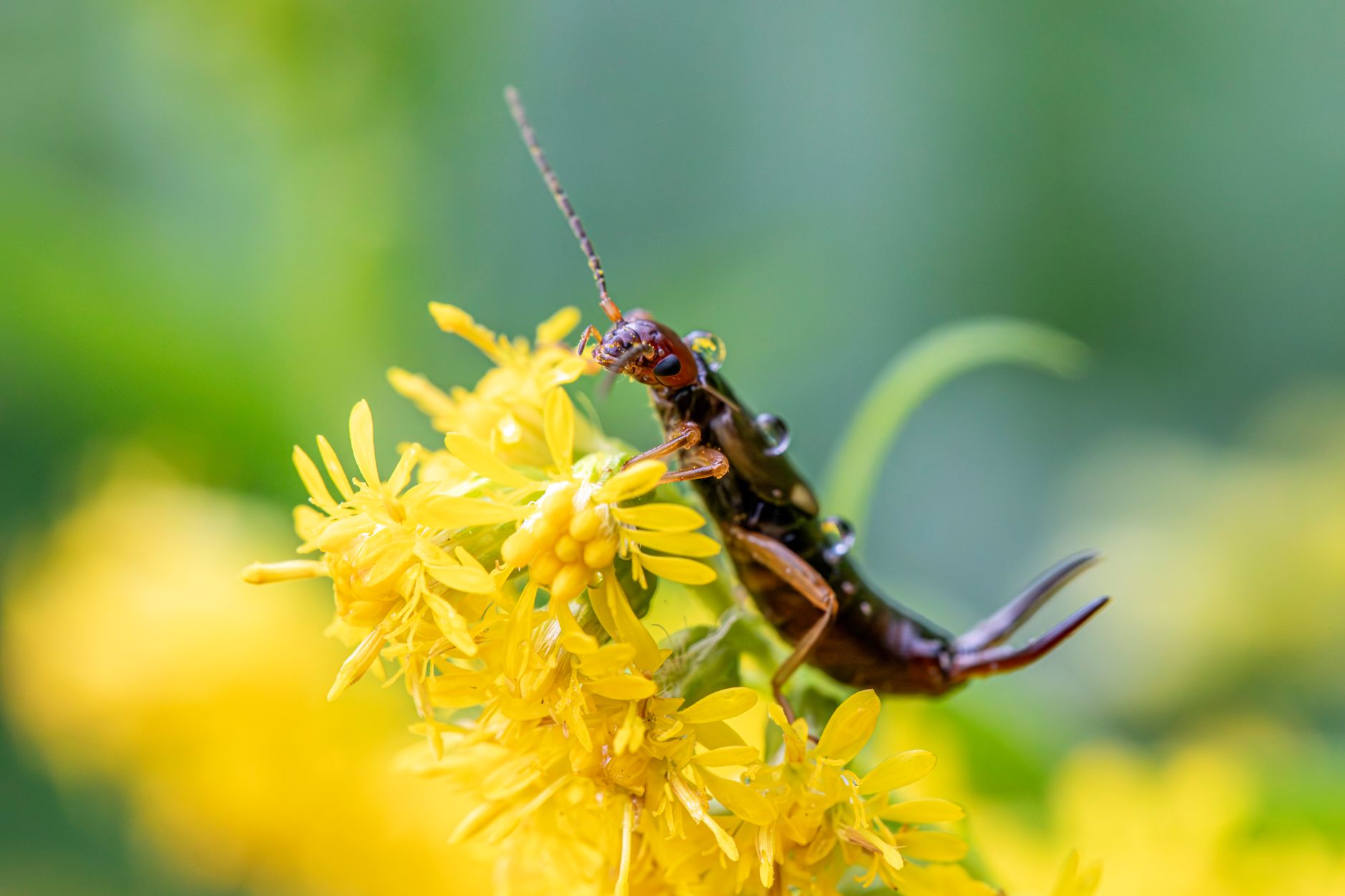

By cutting back damp shelter, blocking access to tender plants, and using traps or light treatments, you can keep nighttime feeding low. Ragged seedlings, chewed petals, and rough fruit skin after wet weather usually point to earwigs rather than a daytime pest.
If your beds stay moist, cluttered, or shaded, the problem can build fast. This overview covers damage clues, hiding spots, traps, barriers, and low-impact fixes for anyone protecting seedlings, salads, flowers, or ripening fruit.
Reading Earwig Damage in the Garden
Fresh chewing by morning often tells the story. Earwigs feed after dark, so lettuce, basil, petals, or fruit can look fine at dusk and ragged by sunrise.
Pattern matters more than a perfect ID. Earwig damage in the garden usually appears as irregular bites on soft growth, while slugs leave slime and larger holes, and centipedes do not eat plants.
What the feeding pattern looks like
Soft growth gets hit hardest. Tender coleus, marigold petals, bean seedlings, and strawberry skins may show uneven scraping that looks like tiny scissors worked along the edge.
That timing fits their habits. University of California IPM describes earwigs as mostly nocturnal, which explains why daylight scouting can look quiet even when fresh damage shows up after a damp night.
Why the timing points to earwigs
A bed that looks healthy at dusk and torn by morning points to night feeding. That clue separates earwigs from pests that chew all day and helps narrow the fix.
RHS notes that earwigs can also act as scavengers and sometimes help in the garden, so the goal is pressure control, not total removal. Pressure rises when the site offers moisture, shelter, and easy access to tender plants.
Once the feeding pattern is clear, the next question is where they spend the day, because hiding spots drive the problem just as much as the bites do.
Damp mulch and loose debris often explain why those bites appear just when the garden looks healthiest.
Conditions That Bring Earwigs Close
Moist, shaded ground draws earwigs quickly. Mulch, boards, stacked pots, dense ground cover, and decaying plant matter create cool cover where they rest by day and move out after dusk.
Excess watering and poor drainage make that shelter even better. A surface that stays wet longer gives earwigs more time to hide, while clutter around plants keeps the area damp between waterings.
Day shelters in plain sight
Flat, damp objects work well as hiding spots. A loose board behind tomatoes, a pile of fallen fruit under a tree, or a thick ring of mulch against stems can hold enough moisture for earwigs to stay close.
Compost can matter too. Fresh organic matter attracts scavengers, and a heap placed beside vulnerable plants can become a staging area rather than only a soil-making pile.
Water and structure shape pressure
Late overhead watering leaves leaves and soil wet into the night, which suits earwigs far more than a dry bed. Morning watering and better drainage shorten that window, so the surface dries before feeding starts.
That shift is the backbone of earwig control. After the habitat changes, the rest of the methods work with less effort because the insects lose the sheltered base they rely on.
Once those hiding places shrink, simple barriers and traps have a much easier job slowing the feeding.
Short cleanup beats long chasing. Better results come from removing cover and excess moisture than from waiting to spot every insect one at a time.
Simple Traps and Barriers That Reduce Feeding
Rolled newspaper and damp cardboard work because earwigs crawl into the folds for daytime shelter. Shake them into soapy water in the morning, then reset the traps before dusk.
Sticky traps serve a different purpose. They show where activity is heaviest, and under stronger pressure they can cut numbers around paths or bed edges, which gives tender plants more breathing room.
Rolled newspaper and cardboard traps
Place the roll beside the plant row, not in the open center of the bed. Earwigs favor edges and hidden seams, so a spot near a wall, stone border, or mulch line usually works better than a random place in the soil.
Rolled newspaper or damp corrugated cardboard is the easiest option because it turns the insect’s own shelter habit against it, and you can replace it every morning without special gear.
Sticky traps and row covers
Sticky traps work best as monitors before they become a control tool. A few catches near a shaded bed edge show where activity is concentrated, and that information helps place the next barrier with more accuracy.
Row covers protect tender plants by keeping earwigs off seedlings, blossoms, and soft growth. Fine mesh or lightweight fabric creates a physical barrier, which works especially well on salad greens, beans, and flowers with easily torn petals.
A quick protection list for tender beds
- Use edge traps Place cardboard traps along borders where earwigs move from cover to food.
- Cover seedlings Keep row covers sealed so nightly feeders cannot reach new growth.
- Check damp corners Focus on spots near hoses, compost, and thick mulch.
- Reset daily Refresh traps each morning before the bed dries and activity shifts.
That mix of trapping and blocking works best when pressure stays modest, and the next step is choosing treatments that fit a small infestation without upsetting the rest of the bed.
That lighter pressure opens the door to gentler fixes suited to a small, manageable outbreak.
Natural Treatments for Minor Infestations
Diatomaceous earth works only while dry. The powder comes from fossilized algae shells with sharp microscopic edges, and those edges wear down the waxy outer layer of crawling insects, so rain or heavy dew cuts the effect quickly.
Neem oil can help as a deterrent or suppressive treatment when numbers stay modest. It interferes with feeding and growth signals in many soft-bodied pests, so it works best after you clear cover and dry the site out.
Diatomaceous earth in dry weather
Dust a thin ring around the stem base or along the bed edge on a dry morning. Reapply after rain, because a wet crust turns the powder useless and leaves the route open again by nightfall.
Do not treat it as a wall of defense by itself. Earwig control works better when the powder sits in a dry, open lane created by cleanup and better watering habits.
Neem-based products for light pressure
Neem oil products fit mild infestations best, especially where tender ornamentals keep showing fresh nibbling. A light spray on leaf surfaces can make feeding less appealing without blanketing the whole garden in a heavy routine.
Boric acid sometimes appears in pest advice, but it belongs far from vegetables and pollinator-heavy flowers because misplaced dust can harm non-target life. For a home garden, the cleaner path stays physical first, then the gentler products only where pressure stays small.
Used sparingly, those softer approaches fit best within a steady maintenance rhythm that keeps populations from rebounding.
Keep support treatments narrow. The garden keeps more predatory insects, ground beetles, and other helpers when you reserve sprays and dusts for the spots that truly need them.
A Seasonal Routine for Keeping Pressure Low
Spring and wet summer spells need the most attention. Earwigs respond fast to damp weather, so a weekly walk through beds during those stretches catches fresh chewing before the problem spreads.
Seasonal earwig control works best as a habit, not a rescue plan. Clear shelter, limit moisture, check traps, and protect new growth before the feeding window opens wide.
Prevention at the start of the season
Start with a clean border around the beds. Remove leftover boards, thin mulch that sits against stems, and fix drainage dips before seedlings go in, because early shelter gives earwigs a foothold that can last all season.
That routine also helps beneficial insects. Predatory insects, centipedes, and ground beetles still move through a cleaner garden, while the worst hiding spots disappear.
Monitoring during damp periods
After rain, check traps and fresh growth at dusk or dawn. Night feeding rises after wet weather, and a quick look at lettuce, basil, strawberries, and flowers shows where pressure is climbing.
Use the least disruptive step that matches the damage. A few traps and a row cover may handle a small patch, while repeated leaf loss near a damp fence line may need cleanup, drying, and a dusting of diatomaceous earth in sequence.
Keeping the balance in the garden
Beneficial insects and earwigs are not locked in a zero-sum fight. Earwigs also eat decaying plant matter and some soft-bodied pests, so the goal is to trim their numbers where they damage plants, not to clear every insect from the bed.
That balance is where natural earwig repellent methods fit best. Habitat change, traps, and barriers keep pressure low without turning the whole garden into a chemical zone, and that is the long game that holds through the season.
The real payoff comes from repeating those small habits until they become the garden’s default defense.
What to Remember
The fastest path is simple: dry the hiding spots, clear the shelter, and block the plants they want. Once the bed has fewer cool, damp places to rest, traps and light treatments start doing real work instead of chasing a moving target.
FAQ
How do I get rid of earwigs in my garden naturally?
Start by removing boards, leaf piles, and crowded mulch, then water in the morning so the surface dries by night. Add rolled newspaper traps, sticky traps near edges, and row covers for seedlings or blossoms that keep getting chewed.
Do earwigs actually damage plants?
Yes. They can chew seedlings, soft leaves, flowers, and ripe fruit skin, especially during wet weather or high pressure. The damage usually shows as ragged edges, petal chewing, or shallow bites that appear overnight.
What attracts earwigs to the garden?
Dark, moist places attract them most, especially mulch, boards, dense ground cover, and decaying plant matter. Excess watering and poor drainage make the garden stay damp longer, which gives them better daytime cover.
Are earwigs harmful to people or pets?
Despite their alarming appearance, earwigs are not dangerous to people or pets. They can pinch if handled, yet the main concern in a garden is plant feeding, not bites or disease spread.
What is the best homemade trap for earwigs?
Rolled newspaper or damp corrugated cardboard works well because it copies the kind of shelter earwigs seek in daylight. Set it near a bed edge, then empty it in the morning before the insects move back out.
Do diatomaceous earth and neem oil work together?
They can be used in the same garden, but not on the same wet surface. Diatomaceous earth needs dry conditions, while neem oil works as a light deterrent on foliage, so each fits a different part of the problem.