
Blue plumbago is a warm-climate shrub with pale to sky-blue flower clusters that can bloom for months and, in frost-free yards, keep an evergreen, airy shape year-round. Its relaxed habit softens fences, borders, and beds without looking rigid.
This overview covers planting spots, care, pruning, containers, and the growing conditions that shape bloom quality for both warm and colder gardens, so it’s useful for anyone planning where to place one.
Meet Blue Plumbago And Its Signature Flowers
Clusters open like small blue sparks and keep coming long after many shrubs have finished. That long flowering season is why cape plumbago shows up so often in warm gardens.
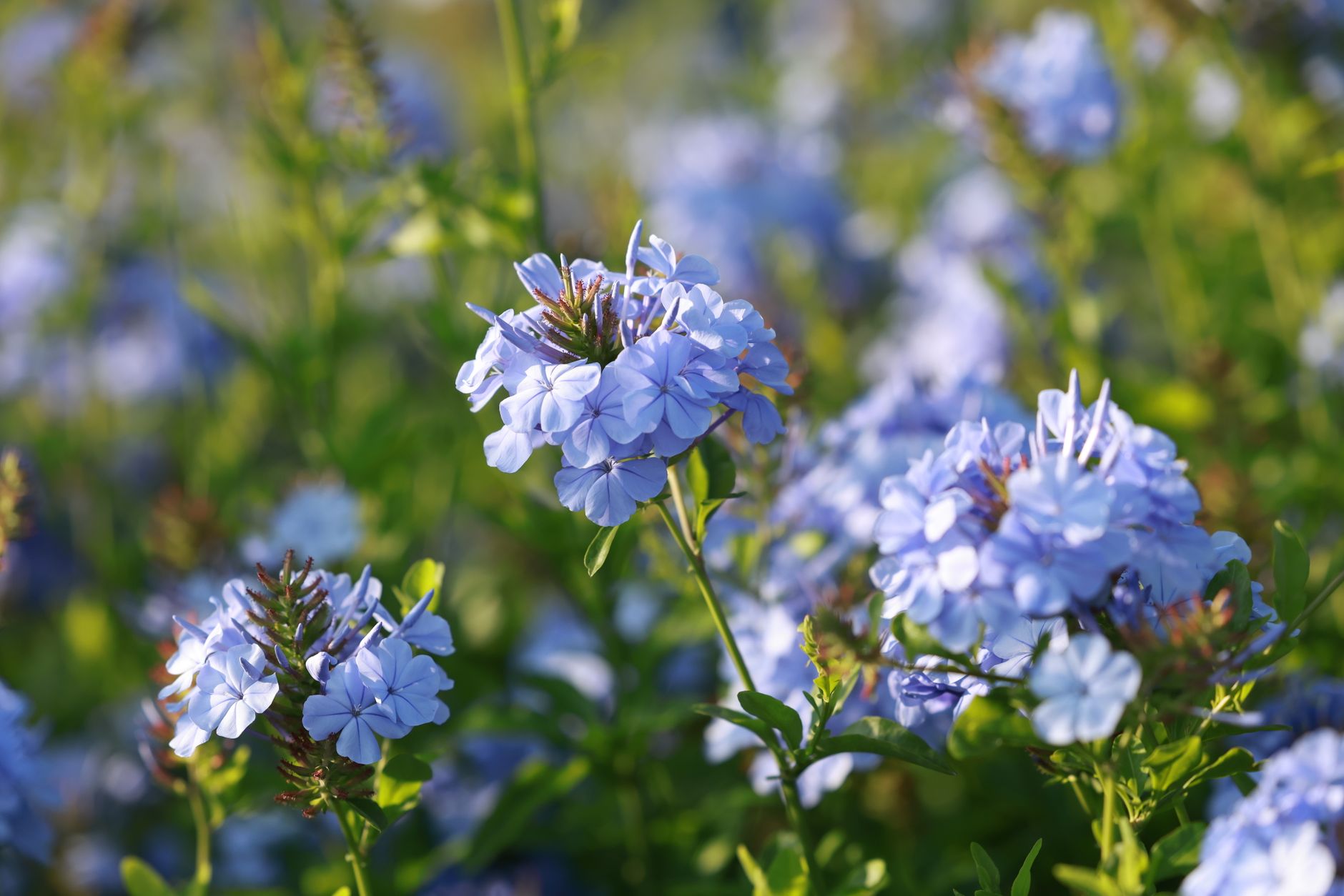
Plumbago auriculata is the botanical name behind cape plumbago and blue plumbago. The plant carries airy flower clusters in pale, clear blue that stand out from a path or patio. In frost-free regions, it behaves as an evergreen shrub, while colder gardens usually lose the top growth to frost and treat it as seasonal color.
The flowers are the main draw, but the form matters too. Stems lean and spill outward instead of standing rigidly upright, so the shrub looks light and airy rather than heavy. That shape makes it useful as a soft backdrop once you start planning where it belongs in the yard.
Flower clusters that hold visual weight
Each cluster contains many small blooms, so the plant reads as a broad wash of color instead of a few isolated blossoms. That mass effect is why a single shrub can anchor a whole corner of a bed.
Blue plumbago also changes character through the season. Fresh growth carries tighter clusters, then older stems open into a fuller veil, so your planting gains depth without needing extra plants.
Evergreen in warm zones, seasonal elsewhere
In frost-free climates, the shrub keeps foliage year-round and acts like a permanent structure. In colder areas, frost cuts it back and removes the woody top growth, which is why container planting becomes useful later in the season.
The USDA Hardiness Zone system gives you a better way to place it. Warm zones support longer growth and bloom, while colder zones call for a more flexible plan.
That flexibility starts with climate, because warmth and moisture decide how much bloom the shrub can sustain.
The Growing Conditions That Bring Out The Best Bloom
Full sun drives the strongest flowering, and shade usually trades bloom for lank growth. That pattern shows up fast because the plant stretches toward light instead of putting energy into flower clusters.
Well-drained soil matters just as much. Roots sitting in soggy ground lose oxygen, and root cells need oxygen for respiration, the process that keeps tissues active and moving water upward.
Sunlight that supports flowering
Six or more hours of direct sunlight gives the shrub the best chance to flower freely. Bright shade can keep it alive, but the bloom count drops and stems lengthen as they search for stronger light.
A south-facing wall, open border, or unobstructed bed edge works well in most yards. You get tighter growth, cleaner color, and fewer gaps between flowering flushes.
Soil drainage that keeps roots active
Loose soil with quick drainage suits the plant better than dense clay. A mix that sheds water after rain also lowers the odds of weak, pale foliage that signals root stress.
Raised beds and mounded planting spots help where native soil stays tight after watering. That small bit of elevation can improve root health in a noticeable way.
Watering that stays steady after establishment
Once established, the shrub wants regular watering, especially in heat or dry spells. Long dry gaps slow bud formation, then sudden soaking can shock the root zone and waste the water you just applied.
The plant handles short dry stretches better than waterlogged soil, so aim for a rhythm that keeps the root zone evenly moist. A deep soak after the top inch dries works better than frequent splashes at the surface.
Even moisture matters most once roots settle, especially where borders and beds need steady seasonal performance.
Skip crowded planting sites with heavy runoff. A bed that stays damp after irrigation holds the roots in wet soil too long and cuts bloom quality.
Planting Plumbago In Borders, Hedges, And Beds

Long stems and a loose outline make this shrub easy to place along a fence line or bed edge. You get color without a stiff wall, which matters in gardens that need movement as much as structure.
Blue plumbago fits mixed borders, informal hedges, and broad landscape beds because it fills space without feeling dense. Butterflies and other pollinators also visit the blooms, so the plant adds motion and life along with color.
Borders that need a soft edge
Along a border, the plant works as a mid-height filler that bridges taller shrubs and lower perennials. The blue flowers sit above the foliage, so nearby silver, white, or yellow plants gain contrast without competing for attention.
Three common pairings work well in warm gardens: lantana for extra color, agapanthus for a clean form, and rosemary for a drier edge with more texture. Each one handles sun, so the planting stays consistent.
Hedges with an informal line
Used as a hedge, the shrub gives a softer screen than clipped evergreens. The stems knit together, but they still move, which keeps the edge from feeling hard or boxy.
That spreading habit also means you can fill a long run without planting a solid block. The result feels lighter and more natural, especially near patios or pool areas.
Pollinator traffic that adds motion
Butterflies often work the blooms in warm weather, and that traffic makes the planting feel active. Nectar-rich flowers like these support a busy garden pattern that changes through the day.
Because the plant blooms over such a long stretch, the pollinator draw lasts longer than a brief spring flush. That long run is one reason it earns a place in sunny beds.
Because those blooms linger, placement becomes a design choice as much as a gardening one.
Care Routines That Keep The Shrub Tidy And Flowering
Steady care keeps the plant from turning into a loose tangle of pale stems. The work stays simple: water at the root zone, feed lightly, and cut back growth that runs beyond the space you gave it.
Plumbago plant care also depends on timing. A little cleanup after bloom flushes keeps the shrub in motion, while a hard cut at the wrong point can delay the next round of flowers.
Watering and feeding with restraint
Deep watering helps more than frequent shallow drinks because roots follow moisture downward. A mulch layer can slow evaporation, which matters in hot sites where the topsoil dries fast.
Use a light fertilizer plan rather than heavy feeding. Too much nitrogen pushes leafy growth at the expense of blooms, and you end up with a fuller shrub that flowers less.
Pruning that keeps growth young
Plumbago pruning works best as a size-control tool and a renewal cut. Trim weak, long stems after a strong bloom run so the plant pushes fresh side growth from lower nodes.
That fresh growth carries the next flowers. Stems left to age too long turn woody and thin, and the shrub starts to look tired even when the root system is still healthy.
Cleanup after heavy flowering
Heavy flowering can leave behind spent clusters and a loose outer outline. A quick trim removes that clutter and resets the shape before the next flush begins.
August and late summer often show the clearest need for this kind of work in warm gardens. The plant responds with denser tips, and the blue color sits closer to eye level.
Regular trimming pays off by keeping growth compact enough to suit pots and other portable plantings.
Use hand pruners on a dry morning. Clean cuts leave less ragged tissue, and you can spot the stems that need shortening without fighting wet foliage.
Cold-Climate Options For Containers And Seasonal Use

Warmth decides the plant’s long-term habit. In frost-free climates, it can return year after year as an evergreen shrub; in colder places, frost ends the outdoor cycle and container planting becomes the practical route.
Blue plumbago still works well in colder regions, but your plan shifts from permanent shrub to seasonal accent. That change affects pot size, overwintering space, and how much effort you want to spend moving it.
Containers that keep roots portable
A large pot gives the roots room while keeping the plant movable. Drainage holes are nonnegotiable, because a container that holds water behaves worse than open ground after a storm.
Place the pot where sunlight hits hard, then shift it to a protected spot before frost. A porch, bright garage, or sheltered patio can extend the useful season by several weeks.
Seasonal use in colder regions
In a colder yard, treat the shrub like a warm-season accent rather than a permanent structure. That approach keeps expectations realistic and lets you enjoy the bloom window without fighting winter damage every year.
A single container by a door, pool edge, or deck rail can deliver more visual impact than several stressed in-ground plants. The moveable setup also gives you control over light and water.
A portable setup helps, but it also makes problems easier to spot before they spread.
| Growing setup | Winter behavior | Best use |
|---|---|---|
| Warm in-ground bed | Returns as evergreen growth | Permanent border or hedge |
| Cold-climate container | Needs sheltered placement | Seasonal patio color |
| Frost-prone in-ground bed | Top growth dies back | Short-term summer display |
Trouble Spots That Often Show Up In Blue Plumbago
Weak bloom nearly always points back to light, drainage, or water rhythm. The shrub wants energy from sun, oxygen at the roots, and a stable moisture pattern; break any one of those and the display thins out.
Leggy growth comes from the same pattern plus excess shade. Long internodes form as stems chase light, and the plant spends its effort reaching instead of flowering.
Weak bloom from low light
Dense shade cuts flower production fast. The plant survives, but the bloom clusters stay sparse and the color looks scattered rather than full.
Move the shrub into brighter exposure or thin nearby canopy growth. A shift of even a few hours of direct sun can change the flowering pattern over one season.
Legginess from cramped or shaded sites
Overcrowding pushes stems outward and upward as they search for space. The shrub then loses its rounded shape, which makes the center look hollow even when the outer stems are green.
Regular pruning helps, but site placement matters more. A plant in a narrow strip against a dark wall will always need more correction than one in open light.
Poor growth from wet soil and irregular watering
Heavy clay and standing moisture slow root activity. On the other side, long dry gaps can stall new shoots and leave the tips brittle during heat.
The fix is steady moisture with good drainage, not extra water dumped in a hurry. That balance keeps roots working and gives you fuller flowering through the season.
- Check light first: More sun usually means more bloom and tighter stems.
- Test drainage: Water should move through, not linger around the root ball.
- Trim after bloom: Shortening long stems pushes fresh growth.
- Watch leaf color: Pale, thin foliage often signals stress below ground.
- Keep watering even: Dry-to-flood swings weaken flowering rhythm.
One practical detail matters late in the season: a shrub that still carries fresh green tips is healthier than one that has gone all woody and bare. Those tips are where the next wave of flowers begins.
Healthy new growth points to the real takeaway: keep the plant vigorous, and the flowers keep coming.
What to Remember
Blue plumbago rewards sun, drainage, and steady care more than fussy feeding or heavy handling. Give it room, keep the soil moving water, and trim back tired stems after a flush, and the shrub stays useful as a long-blooming blue accent in warm beds or portable containers.
FAQ
Does blue plumbago come back every year?
In frost-free climates, yes, it returns as an evergreen shrub and keeps its structure through winter. In colder places, frost damages the top growth, so many gardens treat it as a seasonal plant or move it into a protected container.
Does plumbago like sun or shade?
It flowers best in full sun. Bright shade can keep the plant alive, but bloom count drops and stems stretch toward light, which leaves you with a looser, less floriferous shrub.
What are common problems with blue plumbago?
Weak bloom, legginess, and slow growth show up most when the plant gets too little sun, sits in heavy soil, or faces uneven watering. Those three stress points explain most of the trouble you see in the garden.
Does blue plumbago spread?
Yes, it spreads by widening stems and filling space around the crown. That habit is useful in borders and informal hedges, but you still need pruning to keep it inside the area you planned.
How do you care for a blue plumbago plant?
Give it full sun, well-drained soil, and regular watering once established. Add light feeding, then prune after heavy bloom to keep the shrub compact and encourage fresh flowering growth.