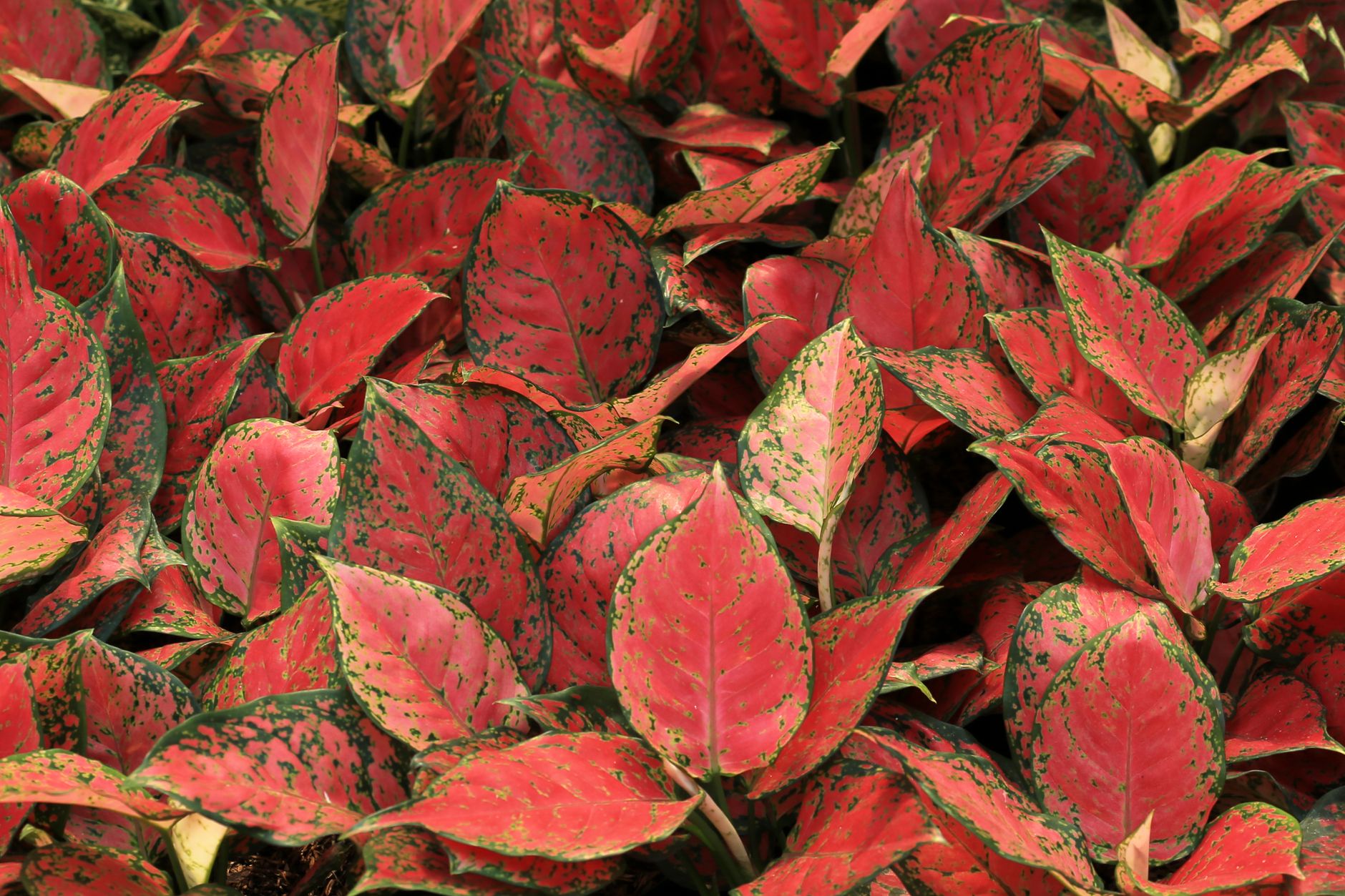

A compact Chinese evergreen, it shows rose, pink, and green leaves that hold their best color in bright, filtered light. It fits shelves, desks, and small rooms, and it keeps its painted look without demanding constant attention.
This overview covers aglaonema siam aurora care for anyone choosing a colorful houseplant for a home, office, or low-effort plant collection. It includes light, watering, humidity, safety, and routine upkeep.
The Look That Made Siam Aurora Popular
Broad leaves do the heavy lifting here. Rose, soft pink, and deep green streak across each blade in irregular patches, so every stem looks a little different and the plant still reads as colorful foliage in a plain pot.
Aglaonema belongs to the Araceae family, the same group as philodendrons and peace lilies, and Siam Aurora sits in the red Chinese evergreen category sold in garden centers and houseplant shops. It keeps a compact, full shape that suits a desk, a side table, or a narrow shelf.
Royal Horticultural Society guidance treats aglaonema as an ornamental foliage plant, which fits this plant well because the leaves are the feature. That also means steady leaf quality depends more on placement than on heavy feeding or frequent pruning.
Why the color reads so strongly indoors
Steady indoor light brings out the pink and red markings far better than harsh sun does. Leaf pigments look richer under bright, indirect light, while deep shade makes the same plant look flatter and greener.
A living room corner near a north or east window often suits the plant better than a hot patio door. That placement affects the visual payoff right away, and it sets up the aglaonema lighting requirements that matter next.
Color stays brightest when leaves receive filtered light rather than harsh direct sun.
Light That Keeps The Colors Rich
Bright, indirect light gives the strongest color and the steadiest growth. A spot a few feet from an east window, or behind a sheer curtain near a south or west window, helps the leaves avoid bleaching while still feeding new growth.
Lower light is tolerated, which is one reason red chinese evergreen stays popular in apartments and offices. The tradeoff is obvious: the pink areas can shrink and the plant may stretch toward the window. Direct sun is the real problem because it can scorch the leaf surface and wash out the coloration.
Place the plant where you can read by daylight without a beam of sun striking the leaves. That light level usually keeps color vivid without the pale patches that follow scorching.
Reading the leaves for light stress
Pale new leaves usually point to too little light, while tan patches or crisp edges usually point to too much. A healthy plant keeps a steady red and green mix with upright stems and leaves that face outward instead of curling hard toward the glass.
A small adjustment works well: move the pot a foot at a time, then watch the next flush of leaves. That measured change improves color without shocking the plant, and the same approach helps with water next.
As moisture levels settle in, drainage becomes the other half of keeping roots healthy.
Watering And Drainage In Balance

Evenly moist soil keeps roots active without drowning them. The potting mix should feel lightly damp after watering, then dry a little at the top before the next pass, because soggy roots lose oxygen and slide into rot.
Good drainage matters just as much as the watering schedule. A pot with holes, plus a loose mix that drains fast, keeps water moving through instead of pooling around the root ball. That is the real aglaonema watering guide in practice, since the plant prefers consistency over drama.
Once the plant settles in, the routine gets easier. You water less by the calendar and more by feel, and the pot tells you what to do through weight, surface dryness, and the look of the leaves.
A simple watering rhythm that works
- Check the top inch. Water after the upper layer dries and the pot still feels slightly cool below.
- Soak through once. Send water through the soil until it drains from the bottom.
- Empty the saucer. Standing water keeps roots wet long after the mix should have drained.
- Watch the leaves. Limp foliage can signal thirst, while yellowing lower leaves can point to excess moisture.
- Keep the mix airy. Perlite or fine bark improves drainage and lowers the chance of root rot.
That rhythm is easier than strict weekly watering, and it works especially well for a plant that wants steady care rather than a rigid schedule. A terracotta pot dries faster than plastic, so your container choice shifts the pace too.
Root rot starts with poor oxygen
Waterlogged soil crowds air out of the root zone, and roots need oxygen for respiration. Without that exchange, cells weaken and rot organisms move in faster than the plant can replace damaged tissue.
That mechanism explains why drainage beats guesswork. Dry, airy pockets let roots keep working, while a dense mix turns the pot into a stagnant box, and the next section picks up the room conditions that shape that balance.
A stable mix only works when the surrounding air and temperature stay equally steady.
Humidity, Warmth, And Everyday Indoor Conditions
Average indoor humidity suits this plant better than tropical steam. Standard home humidity, often around 30 to 50 percent in many US homes, gives enough moisture in the air for stable growth without needing a cabinet or misting routine.
Warm temperatures help the plant keep moving. Aim for a normal room range and keep it away from cold windows in winter, drafty doors, and heating vents that blast dry air. Sudden swings make leaves sulk faster than a steady, modest temperature does.
That low-drama environment fits the plant’s growth habit. A stable room lets leaves unfurl at a regular pace, and you avoid the stop-start pattern that shows up after repeated cold snaps or hot blasts from appliances.
Stability matters more than tropical humidity
Leaf cells lose water through stomata, tiny pores that open and close to manage gas exchange. Warm, steady air keeps that process moving at a normal pace, while cold drafts slow it down and stress the tissue at the edges first.
That is why a hallway near an exterior door causes more trouble than a shelf across the room. The plant does not need a rainforest, but it does need a room that behaves like the same room all day.
Those conditions matter because daily care holds the foliage best when the room itself stays consistent.
Routine Care That Preserves The Foliage
Dust settles fast on broad leaves, and a thin film can dull the red and pink markings within a few weeks. Wiping each leaf with a damp cloth restores the sheen and helps the plant keep capturing light cleanly through the leaf surface.
That matters because leaf surfaces are not just decorative. They carry chlorophyll for energy capture, and dust blocks part of that process while also flattening the color you paid attention to in the first place.
Use soft water on a cloth, then support the leaf from below as you wipe. Rough handling can crease the blade and leave marks that stay visible for months.
Minimal pruning and repotting keep it easygoing
Pruning stays light: remove only damaged or yellowing leaves at the base, and use clean snips so the cut stays tidy. Repotting comes up when roots fill the container or the mix breaks down, which is often a simple matter of moving up one pot size rather than starting over.
Fertilizer can stay modest during active growth, because too much feed encourages weak, stretched growth with less attractive color. A balanced houseplant fertilizer at a diluted strength during spring and summer is enough for most indoor settings.
A small checklist helps keep the plant sharp without turning care into a chore:
- Wipe leaves monthly. Clean foliage keeps color vivid and surface dust low.
- Trim damaged leaves. Removing them redirects energy to healthy growth.
- Rotate the pot. Even light exposure keeps the shape full on all sides.
- Refresh the mix. Loose potting medium supports better drainage over time.
That kind of maintenance suits the plant’s low-maintenance reputation, and it pairs well with a final issue that matters in any home shared with pets or children.
That easy routine still leaves one important concern for households with curious pets or children.
Toxicity And Safety Around Pets
Aglaonema is toxic if chewed or ingested, according to ASPCA guidance on common houseplants in the aroid group. The plant contains calcium oxalate crystals, sharp needlelike structures that irritate the mouth, tongue, and throat on contact.
You do not need to avoid the plant outright, but placement matters. Keep the pot on a high shelf, behind a barrier, or in a room that pets and small children do not reach easily. Curiosity and chewing are the real risks, not mere proximity.
That safety step belongs in responsible houseplant care the same way drainage belongs in root health. A well-placed pot lets you enjoy the color without creating a household hazard, and that is the last piece of the care puzzle.
What to do around curious nibblers
Pet owners can place the plant where paw traffic never reaches it, such as a hanging planter or a mantel with no jump path. For households with toddlers, a stable stand works better than a floor pot that invites touching.
ASPCA lists aglaonema among plants that can cause mouth irritation and vomiting after chewing. That makes distance the practical answer, not panic, and it keeps the plant part of a safe indoor setup.
Chewing the leaves can trigger mouth irritation and vomiting, so a few precautions go a long way.
What to Remember
Red aglaonema siam aurora stays at its best in bright, indirect light, evenly moist soil, and a normal room with steady warmth. Keep the leaves clean, the pot draining well, and the plant out of reach of pets that like to chew, and the color stays the feature that draws attention.
FAQ
How do you care for a Red Aglaonema Siam Aurora indoors?
Place it in bright, indirect light, water after the top inch of mix dries, and keep it in a warm room with average humidity. Clean leaves with a damp cloth and use a pot with drainage holes so the roots stay airy.
How much light does Siam Aurora need?
Bright, filtered light gives the strongest color, though lower indoor light is tolerated. Direct sun can scorch the leaves and fade the red and pink markings, so a sheer curtain or a few feet back from the window works well.
How often should I water Aglaonema Siam Aurora?
Water after the top inch of soil dries, then let excess water drain away completely. The exact rhythm changes with pot size, room temperature, and mix texture, so the pot feels like a better guide than the calendar.
Why are the leaves on my Siam Aurora turning yellow or brown?
Yellow leaves often point to too much water, poor drainage, or aging lower foliage. Brown or crisp patches usually point to direct sun, dry air, or a draft that stresses the plant at the leaf edge.
Is Aglaonema Siam Aurora toxic to pets?
Yes. Aglaonema contains calcium oxalate crystals that can irritate the mouth and throat if chewed or swallowed, so place it where pets and children cannot reach it easily.
How fast does a Siam Aurora grow?
Growth stays moderate indoors, with new leaves appearing faster in bright, indirect light and slower in dim rooms. The plant stays compact for a long time, which is part of why it works so well on shelves and desks.