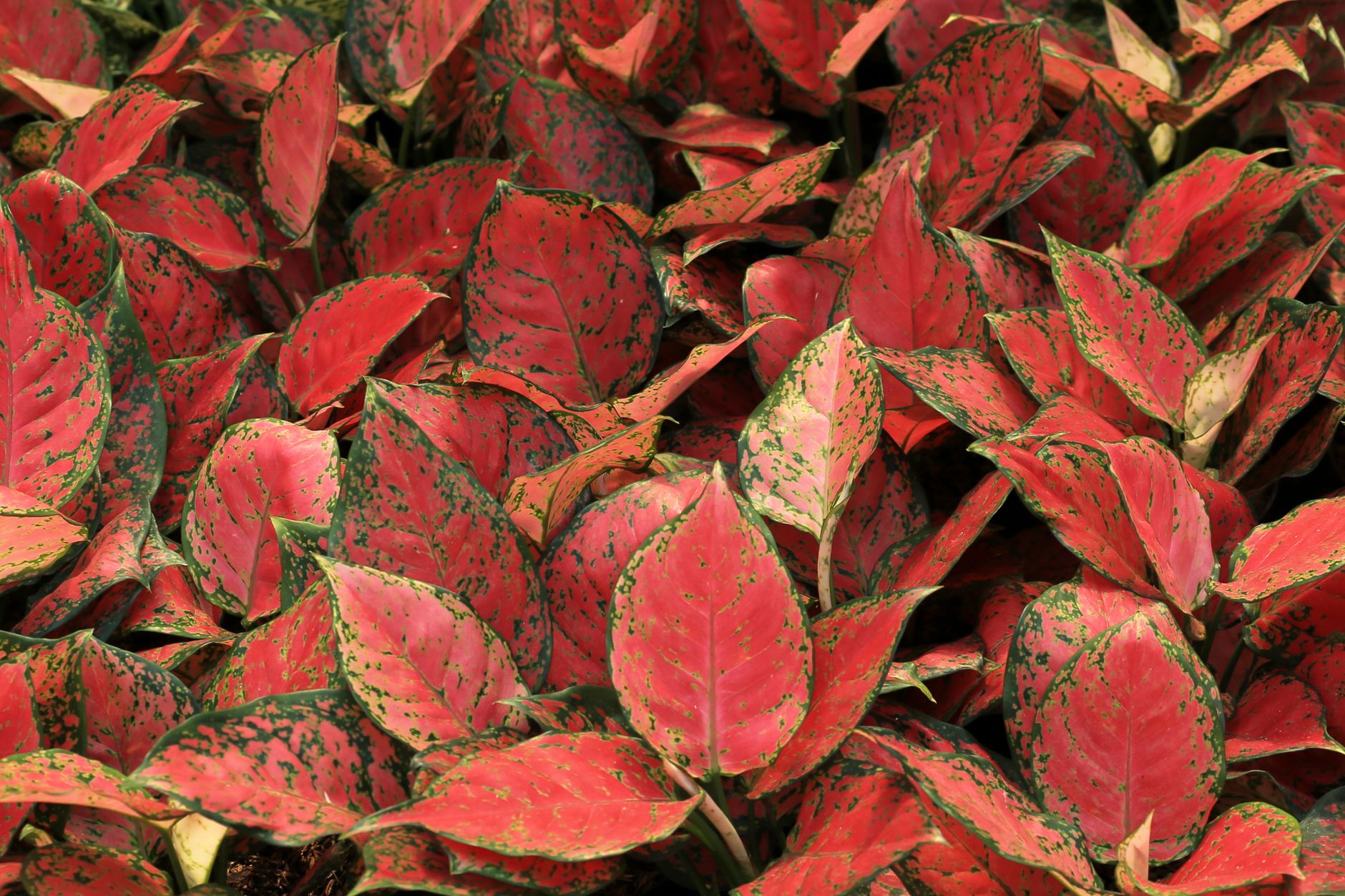

Glossy leaves in red, pink, silver, and green make this colorful tropical houseplant look handsome with far less effort than many foliage plants. Give it bright indirect light, careful watering, and steady humidity, and the color holds better instead of fading toward plain green.
This guide covers red aglaonema, the Chinese evergreen for anyone who wants bold foliage without fussy upkeep, and walks through selecting vivid cultivars, setting indoor conditions, and avoiding common care mistakes.
The Red Aglaonema Look And Why It Stands Out
One leaf can look hand-painted, with rose bands, silver streaks, and dark green edges on the same stem. That mix gives the plant a polished tropical look, even on a shelf that never gets direct sun.
The appeal is straightforward: you get vivid color without the high-light demand that many houseplants need. Chinese evergreen has earned its place in homes for that reason, and the Royal Horticultural Society lists Aglaonema among shade-tolerant tropical plants suited to indoor use.
Missouri Botanical Garden describes Aglaonema as an evergreen genus with broad leaves and strong indoor performance. That matters because evergreen foliage stays presentable through the year, so your room keeps its color without a dramatic seasonal drop.
Color Patterns That Read As Living Decor
Many cultivars are chosen for variegation rather than flowers. The red tones can sit in the center, flare along the veins, or wash across the whole blade, and silver patches sharpen the contrast like metallic trim.
Common houseplant forms such as ‘Siam Aurora’, ‘Red Valentine’, and ‘Creta’ show how different the same plant group can look. One with narrow red edges suits a tidy desk, while a broader pattern fits a larger corner plant.
A Starter Plant That Is Easy To Recognize
The broad, glossy leaves make this plant easy to spot in a mixed collection. Even a young plant carries the same tropical foliage character as a mature one, so size does not matter for impact.
That visual reliability helps you compare it with other beginner plants. A pothos trails, a snake plant stands upright, and aglaonema reads as a compact, colorful shrub, which makes placement decisions easier before you bring it home or move it.
That clear visual profile also sets up the next choice: the cultivar you buy determines how much red you keep once the plant settles indoors.
Picking the right cultivar matters because indoor conditions determine whether that red intensity stays vivid or fades.
Choosing A Cultivar That Keeps Its Color
A brighter spot can deepen leaf color without forcing the plant into harsh light. That balance matters, because thin red pigment can fade at the edge of direct sun and go muddy in dim corners.
Red aglaonema care starts with the cultivar name on the label, since the pattern is not just decoration. A plant sold for blush-pink leaves will react differently than one selected for dark green margins and red centers, even under the same lamp or window.
Cultivars With Distinct Leaf Patterns
- ‘Siam Aurora’ carries red margins and a green center, which gives you a clear two-tone look.
- ‘Red Valentine’ shows heavier red and pink coverage, so the plant reads warmer from a distance.
- ‘Creta’ mixes deep red, green, and some silver, which suits rooms that need contrast.
- ‘Lady Valentine’ often shows softer pink-red veining, a good fit for bright shelves.
Those patterns are not fixed ink. Chlorophyll still drives photosynthesis, while anthocyanins create the red and pink tones you see, so color shifts with light and stress levels.
Light Levels That Change Leaf Color
Brighter indirect light usually tightens contrast and strengthens red tones. A window with a sheer curtain, an east-facing sill set back a foot or two, or a bright room without direct rays all work better than a hot western blast.
Lower light keeps the plant alive, but the red can soften and the leaves may look more green than scarlet. That trade-off is useful in a dim hallway, yet a plant in a brighter room tends to hold the color pattern you noticed in the nursery.
Once you match the cultivar to the light you actually have, the indoor setup becomes the part that protects the color you paid for.
Color held by the right cultivar still depends on the home it enters, especially light, warmth, and humidity.
The Indoor Conditions That Keep Chinese Evergreen Happy

A warm room and steady air movement do more for this plant than dramatic care routines. Aglaonema likes the same indoor comfort zone that suits many tropical foliage plants, which is why it behaves well in living rooms and offices.
Bright, indirect light is the sweet spot for most varieties. The plant can handle low light, but you get better leaf color and fuller growth when the sun is filtered rather than absent.
Temperature And Humidity That Suit Tropical Growth
Room temperatures in the 65 to 80 Fahrenheit range fit it well, and cooler drafts slow growth fast. Moderate to high humidity helps leaves stay flexible, especially in winter heat from vents that dries the air around the plant.
University of Florida IFAS Extension notes that many tropical houseplants suffer when air stays dry for long periods. That matters here because dry air does not just dull the foliage, it can also make leaf edges curl and age faster.
Placement That Avoids Stress
Set the pot away from harsh afternoon sun, a heater vent, or a door that opens to winter air. A bright console table, bathroom shelf with window light, or desk near a sheer-curtained window gives more stable conditions.
That placement choice pays off in leaf color and shape. A plant that leans toward the window or sheds older leaves on one side is telling you the light is too directional, so rotate the pot from time to time and keep the growth even.
Stable placement protects color, but water management is where many indoor plants go wrong, and this one is no exception.
Even with steady placement, poor watering can quickly undo a healthy setup and invite root stress.
Watering And Soil That Prevent Root Problems
Wet roots are the fastest route to trouble. The potting mix should stay evenly moist, but the root zone still needs air, which is why a dense, soggy blend leads to decline faster than many new plant owners expect.
Overwatering is a major cause of root rot in aglaonema, and root rot is not just a root issue. Damaged roots stop moving water and nutrients upward, so leaves yellow, droop, and lose their clean finish even before the plant looks visibly sick.
The Mix And Drainage Your Pot Needs
A chunky, well-draining potting mix gives the roots oxygen between waterings. A blend with peat or coco coir plus perlite and bark holds moisture without packing down like clay.
Choose a pot with drainage holes, then empty the saucer after watering. That simple habit keeps the lower root zone from sitting in runoff, which matters more than fancy fertilizer or a decorative cachepot.
When runoff never lingers, the roots stay healthier and the rest of the care routine becomes much simpler.
A Watering Rhythm That Follows Drying Soil
- Check the top layer with your finger, and water after the upper inch feels dry.
- Water through fully until excess runs from the bottom, then let the pot drain.
- Slow down in winter because cooler rooms and lower light reduce uptake.
- Watch the pot weight since a light pot usually means the mix has dried farther down.
Cold water can shock tropical roots, so room-temperature water is the safer choice for regular watering. The plant responds better when the root zone stays steady instead of swinging from dry to chilled.
Routine Red Aglaonema Care For Healthy Growth

Dust on the leaves is more than a cosmetic issue. It blocks light from reaching the leaf surface, and in a plant already grown for color, dull dust can hide the pattern you want to see.
Red aglaonema care stays simple once the basics are set: steady light, modest feeding, and the occasional tidy-up. That routine keeps growth balanced without pushing soft, weak stems.
Leaf Cleaning And Pot Rotation
Wipe the leaves with a damp cloth every few weeks so the surface can catch light cleanly. A soft wipe also lets you spot scale bumps, torn tissue, or pale patches before they spread across the plant.
Rotate the pot a quarter turn every week or two. That keeps the stem from leaning toward one side and gives each leaf a fair share of light, which matters more in rooms where the window sits off-center.
Feeding And Repotting Cues
Light fertilizer during active growth supports new leaves, but heavy feeding can push soft growth that bruises easily. A balanced liquid houseplant fertilizer at a dilute rate during spring and summer is enough for most indoor specimens.
Repotting becomes sensible when roots crowd the pot, water moves through too fast, or the mix stays compacted after watering. Aglaonema does not want a giant container, so move up only one size and refresh the soil rather than overpotting it.
One practical rule helps here: the plant should fit the pot, not disappear in it. A container that is too large stays wet too long, and that extra moisture can set the stage for root decline before new leaves ever appear.
That same root-first logic makes yellowing, drooping, and faded color easier to decode before you reach for the wrong fix.
That root-first approach also makes warning signs easier to read before a small issue turns into decline.
Yellowing And Drooping Leaves, Diagnosed Early
Leaf change rarely arrives out of nowhere. Yellowing, limp stems, or faded patterning usually trace back to water, light, or temperature, and the plant gives enough clues for you to sort the cause before the whole crown slips.
Start with the root zone and move upward. That order matters because root damage shows above ground in the same way a blocked pipe shows at the faucet, with weak flow and poor response long before the source is obvious.
Yellow Leaves Point To Water Or Light Problems
Yellow foliage often means the mix stayed wet too long or drainage failed. A sudden move from low light to bright sun can also pale the leaf surface, because the tissues have to adjust faster than they can adapt.
Check the pot for runoff and the soil for sour smell or compacted texture. University of Florida IFAS Extension notes that poor drainage is a frequent cause of indoor plant decline, and aglaonema is no exception.
Drooping Leaves Reveal The Direction Of Stress
Underwatering gives leaves a limp, thin feel and a pot that becomes very light. Overwatering can look similar at a glance, but the stems feel softer, the soil stays dark, and the roots may already be struggling.
Cold stress changes the picture again. A plant set near a draft or cold window may droop even with adequate water, because low temperature slows root activity and water movement inside the stem.
Scorch Faded Color And Root Rot Show Up In Distinct Ways
Scorch leaves tan or bleach patches on the side facing the window, while faded color looks flat and washed out across the whole blade. Root rot usually brings a sour smell, dark mushy roots, and leaves that collapse instead of perking up after watering.
That pattern gives you a fast triage tool. Sun damage points to placement, faded color points to light quality, and rot points to the pot and watering pattern, so the fix starts with the right problem instead of a random adjustment.
With those symptoms sorted, you can keep the plant steady for years instead of chasing problems one at a time.
Once those clues are clear, the plant has a far better chance of staying balanced long term.
What To Remember
The color in aglaonema comes alive when the plant gets bright indirect light, steady moisture, and warm indoor air. Once you match those three conditions, the foliage stays richer, the stems stay sturdier, and the plant behaves like a dependable tropical accent rather than a drama queen.
FAQ
Is red aglaonema a good houseplant?
Yes, it suits indoor growing because it tolerates lower light and brings strong leaf color to rooms that lack direct sun. You still get better results with bright indirect light, steady watering, and a well-draining mix.
Where is the best place to put aglaonema?
A spot near a bright window with filtered light works best, such as one softened by a sheer curtain. Keep it away from hot afternoon sun, heating vents, and cold drafts so the leaves stay even and colorful.
How do you take care of a red aglaonema plant?
Give it bright indirect light, water after the top inch dries, and keep it in warm indoor air with moderate humidity. Dust the leaves, rotate the pot, and use a light feeding schedule during spring and summer.
What are common red aglaonema problems?
Yellow leaves, drooping, faded color, and root rot show up most often. Poor drainage, overwatering, low humidity, and sudden light changes are the usual triggers, so the pot, the room, and the watering rhythm deserve a close look first.
Can red aglaonema grow in low light?
Yes, it can stay alive in lower light, which is part of why Chinese evergreen is so popular indoors. The trade-off is weaker color contrast, so brighter indirect light gives you better leaf pattern and fuller growth.
How often should you repot red aglaonema?
Repot only after roots crowd the container, water moves through too quickly, or the soil no longer drains well. Moving up one pot size and refreshing the mix is enough for most plants, and it reduces the chance of soggy roots.